


About the author: Desmond Lachman is a senior fellow at the American Enterprise Institute. He was previously a deputy director in the International Monetary Fund’s Policy Development and Review Department and the chief emerging market economic strategist at Salomon Smith Barney.
In gauging the economic outlook, there is always a wall of worry as to what can go wrong that might derail the economic recovery. The real question is how high that wall might be. Unfortunately, as we enter 2024, there are financial-system, external-economic, and geopolitical reasons to think that the worry wall is presently unusually high.
At the beginning of 2022, the U.S. Federal Reserve’s shift to an aggressive cycle of interest rate hikes to regain inflation control contributed to the failure of First Republic Bank and Silicon Valley Bank, the second- and third-largest U.S. bank failures on record. The Fed’s rate increases reduced the value of the banks’ large Treasury bond portfolios. That in turn precipitated a run on those banks as uninsured depositors questioned whether those banks were solvent.
Fast forward to today, we find that the U.S. banking system still has unusually large mark-to-market losses on its bond portfolio of around $600 billion as a result of higher interest rates. This makes the system vulnerable to a potential wave of commercial real estate loan defaults. Property developers will soon have to roll over around $500 billion in maturing loans at considerably higher interest rates than those at which the loans were originally contracted.
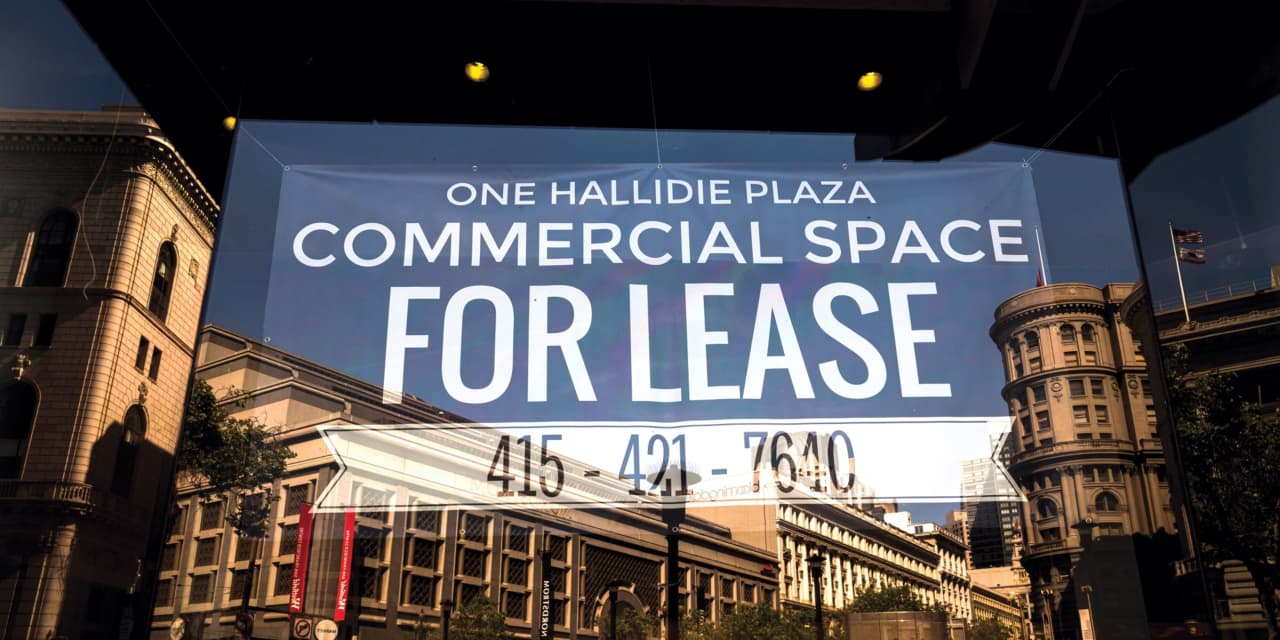
It is difficult to overstate the commercial property sector’s woes. In the pandemic’s aftermath, a large proportion of workers now work at least part of the week from home while shoppers are increasingly shopping online rather than at the malls. As a result, office vacancy rates have surged to levels similar to those recorded in the depths of the 2007-2009 recession. Vacancies must be expected to rise as leases continue to expire. Meanwhile, Morgan Stanley warns commercial property prices could decline as much as 40%.
All of this makes it difficult to see how property developers are going to avoid defaulting on their maturing loans. As a sign of things to come, it has to be of concern that major U.S. commercial property investors, such as Brookfield and Blackstone, have walked away from some mortgages and are handing back the keys to the lenders.
The commercial property sector’s woes could trigger a new regional bank credit crunch. Commercial property lending constitutes a significant portion of the regional banks’ overall loan portfolio. heightening the chances of another round of the regional bank crisis. A recent National Bureau of Economic Research study suggested that over 300 regional banks could fail if interest rates were to stay at their present level. Such a crunch would hit hard the all-important small and medium-sized companies that account for almost half the country’s economic activity and employment.
The risks at home are now being compounded by heightened geopolitical tensions abroad. The Russia-Ukraine and Israel-Hamas hot wars pose particular concerns for global energy and food supplies. Meanwhile U.S.-Chinese relations appear to be at a low point that could cause trade disruptions and renewed tensions over Taiwan’s status.
As if this were not enough reason to worry, the external economic outlook is troubling. The Chinese economy is being challenged by the bursting of its outsized property and credit market bubble. The German economy has succumbed to recession. The European periphery is more indebted today than it was at the time of the 2010 European sovereign debt crisis. And Europe has banking sector and commercial real estate worries of its own.
Maybe we will be as lucky in 2024 as we were last year in avoiding an economic recession. However, it would seem that all the clues are pointing in the opposite direction and that there could be other unknown downside risks that could materialize.
Guest commentaries like this one are written by authors outside the Barron’s and MarketWatch newsroom. They reflect the perspective and opinions of the authors. Submit commentary proposals and other feedback to [email protected].
Read the full article here

