


Unlock the Editor’s Digest for free
Roula Khalaf, Editor of the FT, selects her favourite stories in this weekly newsletter.
Countries at the United Nations climate summit in Baku struck a final deal on the broad rules to launch carbon trading markets, almost a decade after being first proposed.
The agreement passed at the UN COP29 climate summit late on Saturday night will allow countries and companies to trade credits for cuts in carbon emissions to offset their carbon footprints.
The carbon trading mechanism had first been formally sketched out in the 2015 Paris agreement on limiting climate change, as a way for polluters to pay for other countries to cut emissions on their behalf.
But it has proved controversial over fears it will not result in the promised removal of carbon from the atmosphere.
The head of delegation for a group of heavily forested countries, including Bolivia and the Democratic Republic of Congo, Kevin Conrad, said “properly regulated, markets can become a force for good, and start to reverse the market failures causing environmental and atmospheric destruction”.
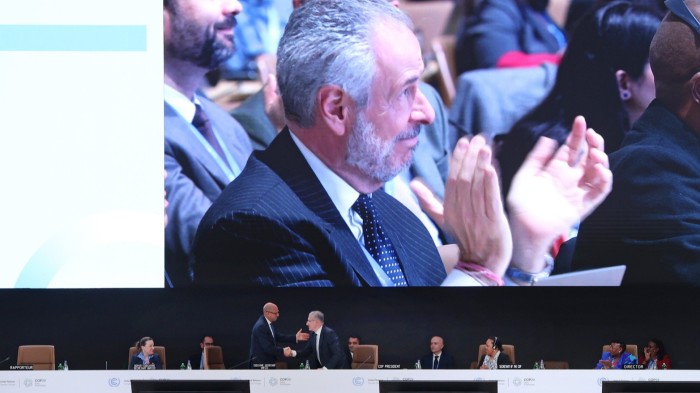
The birth of the market prompted cheers and standing ovations by UN negotiators in the first session of the final plenary, in a rare breakthrough at the summit that was otherwise on the verge of collapse.
States and companies will be able to trade credits meant to represent one tonne of carbon dioxide saved or removed from the atmosphere, under mechanisms subject to loose oversight by the UN and designed to avoid double-counting of emissions cuts.
The final agreement overcame a quarrel about a proposed UN registry for tracking the flow in emission claims, with the US forced to compromise on how much power this registry should have.
Host country Azerbaijan made the issue of carbon emissions trading a priority, pushing successfully on the first day of the two-week summit for countries to adopt an initial element of the global market.
In subsequent negotiations to settle the rules, it drove the participants to overcome their disagreements. This included on a series of trade-offs between requiring more rigorous accounting and easing the pathway to get the market off the ground, with a rule book on principles for how credits should be traded, counted and checked.
Countries and companies took advantage of the prospective launch of the market by signing preliminary deals in recent weeks. Commodity trader Trafigura announced a “pilot” carbon project to help Mozambique develop carbon restoration projects.
Some experts warned however that the new market could face many of the same greenwashing allegations that have plagued the existing unregulated trade in credits between companies.
These have caused the voluntary credit markets to shrink from $1.4bn in 2022 to $1.1bn last year, based on MSCI Carbon Markets estimates.
“The deal leaves a lot of trust in the hands of [countries] which is a problem because the rules themselves are not yet net zero [emissions] aligned,” said Injy Johnstone, a research fellow at the University of Oxford.
The concerns were echoed by Isa Mulder of Carbon Market Watch, who said the “dangerously loose and opaque” deal enshrined a “free-for-all” approach.
UN carbon market experts will continue to discuss which types of credits countries can buy. For example, some countries would like to sell credits linked to hypothetical CO₂ that is not emitted, for example from protecting a forest, closing a coal mine or cooking on a stove using gas rather than wood as fuel, to cancel out real greenhouse gas emissions.
These types of credits could ultimately lead to more CO₂ entering the atmosphere, some experts say, in part because it could lessen the incentive for polluters to make plans to cut their underlying emissions.
One negotiator described discussions as “very, very tough” before ultimately settling on a “buyer beware” approach which will rely mainly on transparency to shame countries which fall into bad practice.
The money raised by carbon deals could help contribute to the climate finance needs of poorer countries, which economists estimated at $1.3tn a year.
But others expressed caution about the solutions provided by carbon emissions trading. Brazil’s environment minister Marina Silva said it was not a “panacea” for boosting finance to developing countries.
Read the full article here

