


Unlock the Editor’s Digest for free
Roula Khalaf, Editor of the FT, selects her favourite stories in this weekly newsletter.
The writer is managing partner and head of research at Axiom Alternative Investments
Markets are so used to dealing with recurring fears of shutdowns in Washington that US government bonds sometimes rise amid such tensions, even if only because Treasuries are seen as a haven in times of turmoil. But markets are not likely to grant France such largesse if a current stand-off over the national budget leads to its rejection by parliament
We have had a foretaste of a possible reaction with the spread on yields on French government over German debt widening out to the highest levels since the Eurozone crisis. At one point, yields on benchmark French bonds briefly rose above those of Greece.
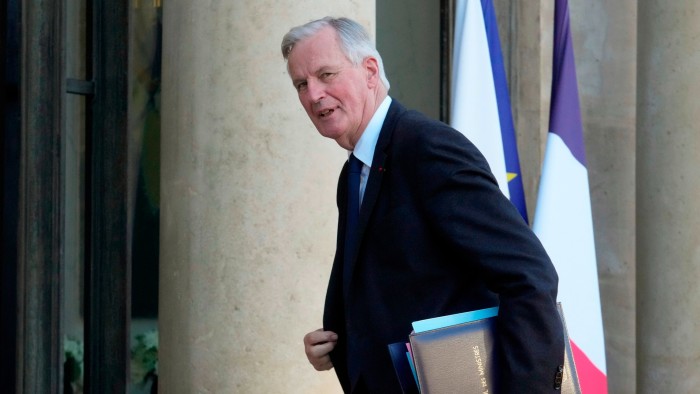
But first, is a French shutdown a likely scenario? Given the convoluted political calculations, I do not know if the French budget will get parliamentary approval. Prime Minister Michel Barnier might well have to deploy the “take it or leave it” constitutional procedure, the infamous article 49.3, which enables the government to override lawmakers. But that would trigger a no-confidence vote in parliament and if lost, the budget would be rejected.
What would happen if the budget was rejected? There is considerable legal debate in France around this — and this is the first major problem. Markets hate murky scenarios. If no one can clearly explain what the process is to get through this with state expenses being paid, this is a concern.
The crux of the problem is that the key parts of the constitution — article 47 and article 45-4 of the law on finance laws — mostly deal with delays in proposing or voting the budget. There is no clear rule on rejected budgets, except that no debt can be raised without parliamentary approval. The only broadly similar case happened in 1979-1980 and was solved with a last-minute law and a constitutional court ruling.
Obviously, the political cost of rejecting budgets will increase with the fear of payment default, but with political shenanigans ongoing, the risks and stakes are high.
There is, however, one “get out of budget jail free” card. Under article 16 of the constitution, President Emmanuel Macron could — probably — argue that the continuity of the French state is at stake and impose a budget by presidential decree. This “threat” could be enough to ensure that no shutdown happens, and that parliament has every incentive to find a solution, even a short-term one.
But none of this will go down well with markets. Two rating agencies have already put France on a negative outlook. A constitutional crisis could trigger an early downgrade. With French bonds rated double A minus by S&P already trading on par with triple B minus rated Greek sovereign debt, I expect the impact of a cut to be muted.
As for French banks, I calculate about 93 per cent of their exposures are booked “at cost” value and as such, are immune to market volatility. So the banks can afford to wait for a longer-term solution instead of crystallising any losses by selling.
I also do not think that the European Central Bank or the European Commission would change course. The commission has backed the proposed French budget, and I do not expect it to formally comment until a new one is fully adopted by parliament. As for the ECB, the final arbitrator of Eurozone government bond markets, shutdown fears would provide a rationale for market intervention and support for bond prices. But the ECB could very well wait for a little volatility to help French politicians get their act together before stepping in.
Investors are a different story. Long-term, “real-money” investors in double A-rated government bonds (think life insurance companies, Japanese banks and so on) hate uncertainty. They want boring, predictable returns. And short-term, speculative investors love to play on those fears and bias. The main issue with a failed budget will be the sheer complexity of the situation. Political turmoil, without a stable government, will make communication exceedingly difficult and markets volatile. The longer-term damage to market credibility could be significant.
So let us not fool ourselves: heading into the new year without a budget, and with a caretaker government trying to explain that debts will be paid somehow, will remind the French people of a famous quote in Mathieu Kassovitz’s film, La Haine, telling the story of a man falling from a 50-storey building: “So far, so good. But what matters is not the fall, it’s the landing.” The good news is that the EU has always been better at managing the landing than the fall.
Axiom has investment positions in European and French bond markets
Read the full article here

