


Stay informed with free updates
Simply sign up to the Middle Eastern politics & society myFT Digest — delivered directly to your inbox.
The writer is director of regional security at the International Institute for Strategic Studies and co-editor of the newly released ‘Turbulence in the Eastern Mediterranean: Geopolitical, Security and Energy Dynamics’
If there ever was a time to use superlatives about Middle Eastern affairs, the year 2024 is it. The cascade of events that began in October 2023 has been nothing short of dizzying. If the momentous mixture of tragic, spectacular and strategic episodes will take time to settle, what has already happened will undoubtedly have long-lasting effects.
The diverse and already brittle Levantine societies are undergoing drastic historical transformations. In doing so, they are unlikely to find much external help given both local reluctance and global fatigue. The region’s reordering is accompanied by great violence and renewed competition.
The Palestinians are experiencing unprecedented suffering in Gaza at the hands of the Israeli military. Hamas’s failed bloody bet, and the inability of its partners to come to the rescue, are a reminder, if one was needed, that the only course for Palestinian statehood is its internationalisation and a negotiated outcome. The coalition for a two-state solution organised by Saudi Arabia, other Arab states and European nations has emerged as the most likely vehicle for this. Palestinians would need to be convinced that it is more than a symbolic diplomatic dance but they must also demonstrate ownership of the process, something only a long-awaited reform of the Palestinian Authority would do. However, such aspirations remain exposed to Israeli intransigence and the potential ire of Donald Trump.
In parallel, Israeli society has gone from extreme trauma to military triumph in just over a year. This has reinforced the belief that Israel can only count on its military might and that expansionism in Gaza, the occupied West Bank and now southern Syria is not only justified but required. The unconditional support Israel obtains from the US and several European states has allowed it to dismiss the necessity of a fair peace that would deliver security for all.
But this security-only mindset has perverse consequences. It is costly, it increases reliance on the US, and it alienates existing and would-be partners in the neighbourhood, who fear that Israel will expand the conflict by hitting Iran’s leadership and nuclear facilities. The reputational toll of the Gaza war is immense and legal liabilities loom. The authority of Benjamin Netanyahu and his radical acolytes seems secured just as internal fractures over the nature of the Israeli state grow.
For the Lebanese, an opposite dynamic is at play. A hubristic Hizbollah must reckon with the collapse of its military strategy, ideological narrative and overall credibility. Reviving its resistance ethos is a tall order given the need to lick its deep wounds, the sudden loss of Syria and its constituency’s dire straits. Many Lebanese who sense an opportunity face two opposing forces: they understand they won’t get more chances to reform their state but they also recognise the danger of provoking a wounded Hizbollah, which could ignite domestic strife.
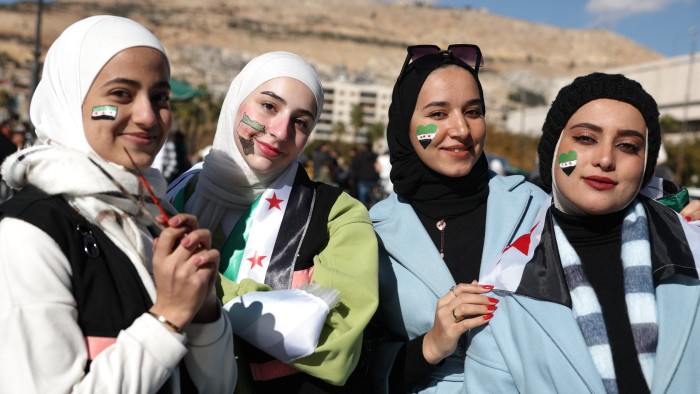
Above all, Syrians have their first taste at freedom after decades of oppression. The rot of the Assad regime allowed for its rapid collapse, devoid of feared scenes of mass sectarian violence. Instead, the new Islamist administration in Damascus has shown restraint and some wisdom. Securing peace, however, will require huge feats of magnanimity and dedication to inclusive governance despite internal and external spoilers.
At the very least, Syrians can take pleasure from the fact that they exposed the flaws of realpolitik. It is a supreme irony that, a decade ago, most Arab and western states wanted the Assad regime gone but Syrians were divided. As of early December, many Arab and western states wanted Assad to stay but Syrians largely united to impose internal change. They will now need foreign goodwill. To reach Arab-Kurdish reconciliation, Turkish moderation and US diplomacy will be crucial. To reassure the Alawite community, Russian intermediation could help. The Gulf states could help neutralise Iranian influence.
Iran is the undeniable loser in all of this. It partnered with militias to grow its influence in broken states and over divided societies. It expected these groups to advance its interests, instead it was pulled into wars they initiated. Turkey took advantage, outsmarting Tehran in Syria, the central geopolitical arena in the region.
Many in western capitals will find comfort that until now, these historical transformations have been surprisingly contained. No massive migration crisis, no prolonged state-on-state war, no large out-of-area terrorist attack, no sustained impact on oil prices, no consequential disruption of global trade. This is the complacency that prepares the way for unwelcome surprises.
Read the full article here

