


Stay informed with free updates
Simply sign up to the Chinese politics & policy myFT Digest — delivered directly to your inbox.
In the last two weeks I have visited Beijing and Hong Kong. This visit made clear that in today’s world, the US is a revolutionary — more precisely, a reactionary — power, while supposedly communist China is a status quo power. In this respect, the EU has much in common with China. China’s rulers like the way the world and China itself are going. The EU is not quite that complacent. Aware of its economic and security challenges, its elites know that it has to change a great deal. But they, too, vastly prefer the world that US President Donald Trump is trying to destroy to the chaotic one he is trying to create.
For an outsider to draw any clear conclusions from a brief visit to this vast country is heroic, if not idiotic. Nevertheless, I have visited the country at least once a year since 1993, apart from during the pandemic, followed the evolution of the country’s economy closely and made a number of friends among its western-educated policy elite. The rise of China has been far and away the biggest economic and political story of my lifetime. Heroic or not, one must try to make sense of what Trump means for China and China means for the world.
This, then, is what I have learnt.
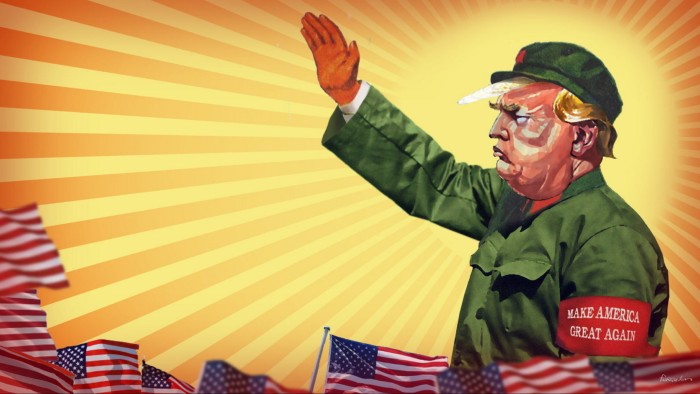
First, my Chinese interlocutors thought of the upheaval in today’s US in relation to their own cultural revolution that began almost 60 years ago. Mao Zedong used his prestige as an insurrectionary leader to wage war on China’s bureaucratic and cultural elites. Trump is also using his power as the elected leader of an insurrectionary movement to overthrow the bureaucratic and cultural elites of the US. Intense dislike of the cultural revolution is widely shared among at least older members of today’s Chinese elite. They do not like Trump’s revolution either.
Second, many of those who managed to escape the China of the 1980s and 1990s to become educated in elite western universities admired the values they saw there and hoped to see them embedded in their own country. The rule of law, personal freedom and modern science seemed to them admirable ideas. For such people, what is now happening in America is painful. These regrets over the US’s betrayal of its own principles are not unique to China.
Third, they recognise that what is happening to the US has clear upsides for their own country. It has dawned on just about everybody by now that Trump’s signature is worthless. A man who is trying to demolish the Canadian economy is not going to be a reliable friend to anybody else. So, the alliances the US will need to balance China in its own neighbourhood or, for that matter, anywhere else are likely to be very fragile. This applies even to Japan and South Korea, let alone other neighbours. In this environment, China, the Asia-Pacific’s principal trading power, as well as a rapidly rising military power, is bound to dominate not just the region, but well beyond that. Even Europe, concerned about Russia and so openly abandoned by the US, will seek a friendlier relationship with China. Trump’s “America First” is bound to mean America alone.
Fourth, DeepSeek has given the Chinese a big boost in confidence. They believe that the US can no longer block their rise. One good friend of mine explained that Xi Jinping has three objectives: regime stability; rising technology; and a growing economy. They are even more confident of the second today than they were a few years ago. This is not just about DeepSeek, but also about Chinese domination of the “clean energy sector”. Many think that China’s demographic challenges are bound to destroy the economy. But the problem right now is too few good jobs, not too few workers. It is a demand problem, not one of potential supply. That will remain the case for a long time, because of surplus rural workers.

Fifth, this demand problem is indeed huge, as I have argued in the past, but it is not insoluble. In my discussions in China the focus was, as it has been for many years, on relatively short-term issues, such as the weakness of the property sector, the impact of falling house prices on household balance sheets, the consequences of these changes for local authority finances and falling retail prices. All this reminds one of Japan’s post-bubble economy. Yet these are in fact structural, not cyclical, problems. The underlying reality is that, as happened earlier with Japan and South Korea, the ability to invest China’s vast savings (still over 40 per cent of GDP) productively has now collapsed. One proof of this is the huge jump in the incremental capital output ratio — the ratio of the investment rate to the rate of economic growth. (See charts.)
During the early part of this century, the demand hole was partly filled by a huge current account surplus. Then, when this became impossible, after the financial crisis, the still bigger hole that then emerged was filled by a huge surge in investment in real estate and infrastructure. The former is already falling. But investing even more in manufacturing just guarantees ever more excess capacity and thus protection aimed against the inevitable surges of Chinese exports. Thus, the Europeans will follow Trump’s example. Indeed they will do so because of the diversion of China’s exports to their markets that will follow from his example.
Nowadays, Chinese policymakers refer to “investment in consumption”. It is an interesting concept. Yet the chief requirements are to lower the savings rate by shifting income towards households, developing the social safety net and increasing public consumption.
In sum, the Chinese believe they can survive Trump’s onslaught. Indeed, many believe it may help them, by destroying US credibility and perceptions of its competence. That does not mean China is sure to triumph. But, as is normally the case for big powers, their biggest challenges are at home, not abroad.
Follow Martin Wolf with myFT and on X
Read the full article here

