


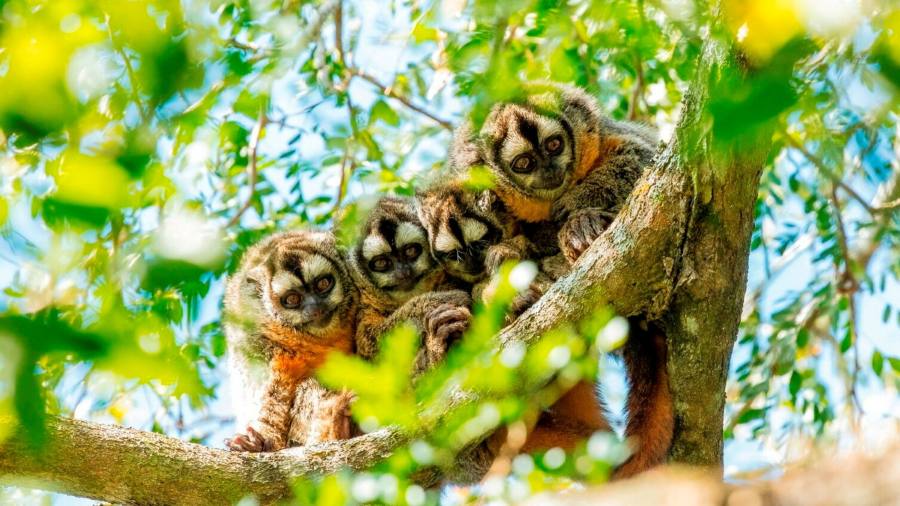
A global team of scientists has discovered how to make more accurate predictions of genetic mutations that cause disease in humans after applying AI techniques to an expanded primate DNA database.
The project combined the genetic information of about 800 primates belonging to 233 species of apes, monkeys and lemurs. An AI algorithm based on the genomic database was then used to analyse the DNA of 454,000 human participants in the UK Biobank project, with the results showing “greatly improved genetic risk prediction”, the researchers said.
“We have demonstrated that the more we learn about genetic variation in non-human primates, the better we can make predictions about what mutations are likely to cause disease in humans,” said Jeffrey Rogers of Baylor College of Medicine, one of the consortium leaders.
The consortium’s work will boost insights into human genetics and aid health research, particularly for groups who are not well covered by previous medical studies, while improving guidance for conservationists seeking to protect dwindling primate populations. Results were published on Thursday in the journal Science.
The academic researchers teamed up with Illumina, the US company making DNA sequencing equipment, to identify 4.3mn common genetic variants found in the genomes of 233 primate species. To predict their health effects, they trained an AI algorithm called PrimateAI-3D with data about these mutations and the three-dimensional structures of the proteins they produce.
“You can train a generative language model such as ChatGPT on existing text from Wikipedia and elsewhere,” said Kyle Farh, Illumina vice-president for AI. “We used analogous deep learning architecture but our data come from millions of years of natural selection.”
The scientists then applied PrimateAI-3D to identify potentially harmful human mutations, using DNA and medical data from 454,000 volunteers who have donated samples to UK Biobank.
The results were particularly successful at finding rare genetic variants that confer a high risk of common disease. Farh said PrimateAI-3D was 12 per cent more accurate overall than any previous method of assessing genetic risks of developing health problems such as cardiovascular disease and type 2 diabetes.
An advantage of the new technique, he added, was that it applied equally well across humanity — overcoming bias towards populations with white European ancestry inherent in existing assessments of genetic risks, which are based primarily on data from these groups.
“It is a step towards the implementation of genetic-based medicine for diverse non-European populations,” Farh said.
The genomic research also has important implications for the primates themselves.
For Rogers, “the biggest surprise was to learn that the level of genetic variation in primate species is typically two, three or even four times higher than in humans. This gives us a perspective on human genetic variation which is very low, even among people in Africa, by the standards of other primates.”
Ancestral humans are believed to have lost genetic diversity when populations dwindled to very low numbers tens or hundreds of thousands of years ago.
Primate genetic diversity, found even in very rare and endangered species, could also boost animal conservation, Rogers added: “If we can save the habitats, there’s enough genetic variation in the surviving populations.”
Jean Boubli, professor of tropical ecology and conservation at Salford university and a leading member of the consortium, called its work a “game-changer in studying many aspects of primate evolution. Many of these species are under threat and the results here could help with conservation efforts,” he said.
Read the full article here

