


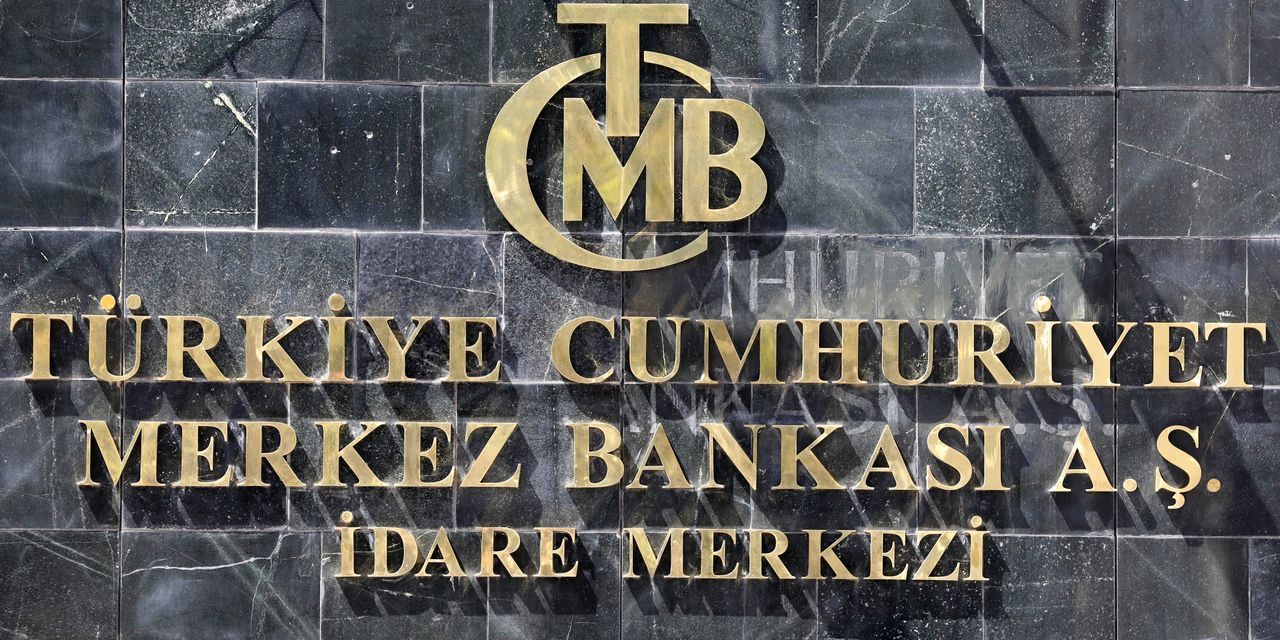
The Turkish government has appointed its first first female central bank governor, Hafize Gaye Erkan, a former Goldman Sachs banker who may face an uphill battle in trying to rebuild financial stability and credibility for the country.
Erkan replaces Şahap Kavcıoğlu, who held the position for just over three years and will now head up the country’s Banking Regulation and Supervision Agency, according to a government announcement dated Thursday. Under his tenure, Kavcıoğlu yielded to pressure from President President Recep Tayyip Erdoğan, cutting interest rate cuts from around 19% to the present 8.5%.
Erdoğan’s unorthodox view that rate cuts would help ease price pressures instead drove inflation to above 85% by October 2022, sending the lira into a downward spiral. Inflation has since dropped to just over 39%, but remains the highest among all Organization for Economic Cooperation and Development countries.
Erkan brings years of Wall Street banking experience and risk management expertise to the table. According to her LinkedIn profile, she spent seven years working as co-chief executive and executive officers and a board member at First Republic Bank, which was taken over by JPMorgan Chase & Co. in May.
For nine years, she headed up financial group analytics at Goldman Sachs and was also a board member at luxury jeweler Tiffany & Co. She has a Ph.D in financial engineering and applied mathematics from Princeton University and completed an advanced management course at Harvard University.
The lira has continued to fall to record lows since the late May re-election of Erdoğan, and his recent appointment of respected Finance Minister Mehmet Şimşek, who has promised “rational” policies and vowed to “prioritize macro financial stability.”
Friday saw the lira
USDTRY,
drop another 0.2% against the dollar to 23.373, still at record highs after a bruising week that saw the currency fall 11% amid reports state banks were no longer intervening to support the currency.
Ipek Ozkardeskaya, senior analyst at Swissquote Bank, said Erkan is expected to try and bring in more conventional monetary policy.
“The latter will require higher interest rates, waning FX interventions, which will first lead to a further lira depreciation to catch up a year-and-a-half coma – an expensive coma – then hopefully stabilize the FX pricing at a market-determined level so that Turkey could again have a monetary policy,” the analyst said.
Until then, investors may see a rough summer, with “waves” of lira selling and another surge in inflation until the currency stabilizes as Turkish banks stop selling dollars.
Erkan also faces an establishment steeped in a culture of pleasing Erdogan, even as her background and international experience seem “designed to regain credibility in the eyes of foreign investors,” Wolfango Piccoli, co-president at global CEO advisory firm Teneo, told clients in a note.
As the first female, she may find it a challenge to “adapt to Ankara’s working culture, where allegiance and obedience often matter more than merit and knowledge,” he said.
Neither will rebuilding the credibility of the Turkey’s Central Bank after years of mismanagement be easy, said Piccoli. Erkan needs to start with a fresh monetary policy committee of members with knowledge and expertise, a tough task under Erdogan, he said.
The risk expert also highlighted the appointment of Kavcıoğlu as new head of the banking regulator (BDDK), saying he’s just as unqualified for that post as his former job heading up the central bank.
“Appointing Kavcioglu – a cheerleader of Erdogan’s ‘new economic model’ – as head of the banking regulator is a powerful reminder that Erdonomics can bite back anytime,” said Piccoli, adding that during Simsek’s previous stint as finance minister, Erdogan also put a loyalist in charge of the BDDK
“It is worth noting that a shift towards a more rational economic policy set will require the support and cooperation of the BDDK, given the large number of regulations covering credit and foreign exchange that must be removed and/or amended. As Turkey’s domestic banks – private and state-owned – are under close political scrutiny and command, the role of the BDDK in shaping policy should not be underestimated,” said Piccoli.
Read the full article here

