


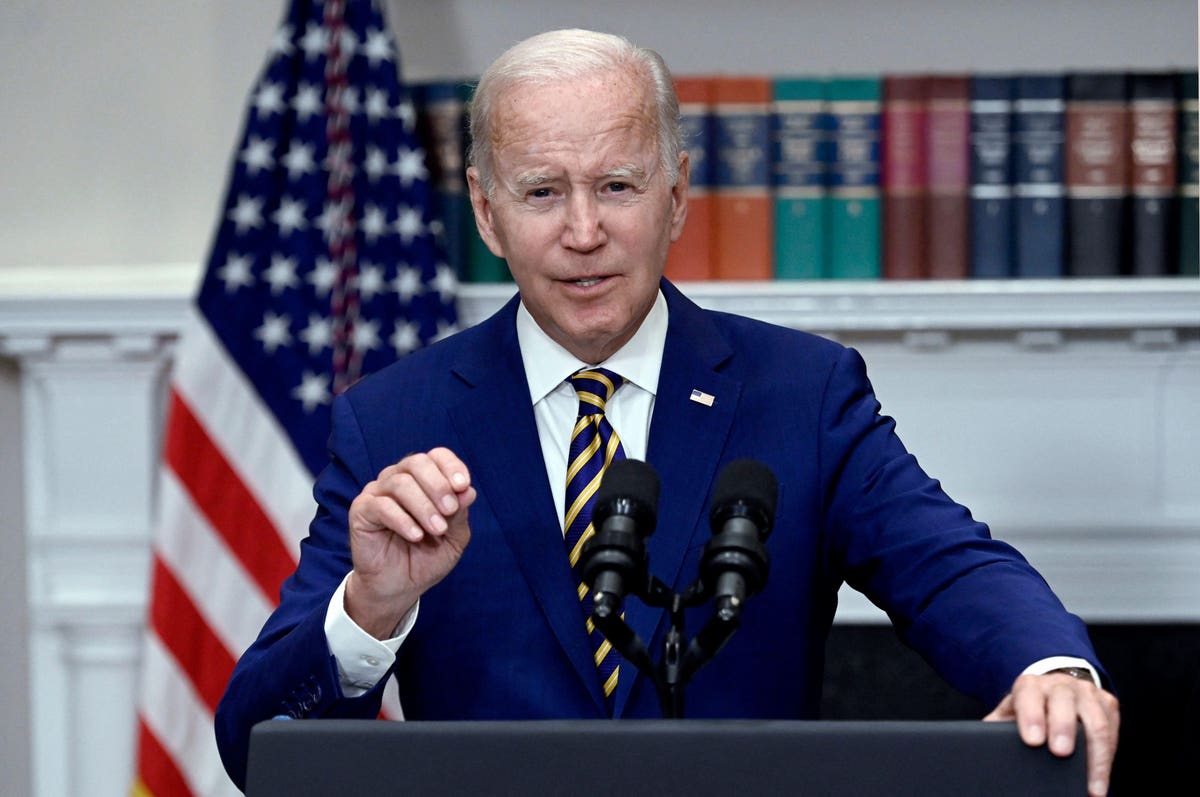
When the Biden administration announced a new plan to forgive $400 billion in federal student loan debt in August of 2022, the news seemed very promising. Those who qualified would have up to $10,000 (or up to $20,000 for Pell Grant recipients) in outstanding federal student loan debt completely wiped away, which was theoretically enough to fully cancel loan debt for roughly 20 million borrowers nationwide.
But, we all know that legal troubles caused the 8th U.S. Circuit Court of Appeals to issue a temporary pause on the plan in October, ultimately leading to the Supreme Court of the United States hearing arguments on the plan’s legality in February of 2023. We’ve waited several more months since then, and we now know the final verdict. On June 30, 2023, SCOTUS ruled the Biden administration does not have the legal footing to authorize this forgiveness.
This brings us to a very important question. What happens next? By and large, borrowers with federal student loans will soon find themselves almost exactly where they were in March of 2020, when interest rates were first fixed at 0% and payments were paused on most federal student loans. Here’s what that means for the vast majority of borrowers.
Payments On Federal Student Loans Resume
With the Covid-19 emergency behind us and blanket student loan forgiveness plans brought to a screeching halt, it’s time for borrowers to get back on track with their repayment plans. According to the U.S. Department of Education, federal student loans will begin accruing interest again on September 1, 2023, and payments will become due again starting in October.
To prepare for this inevitability, you’ll want to spend some time updating contact information in your profile on your loan servicer’s website and in your StudentAid.gov profile. This is the best way to make sure you receive all new communications coming your way going forward, especially since your address or phone number could have easily changed over the last three years. You may also want to review your auto-debit enrollment or sign up for the first time, which you can do on either platform.
According to financial advisor Lawrence Sprung of Mitlin Financial, borrowers with federal student loans will want to act quickly to make sure they can afford the payments on their loans come October of this year. If you haven’t already, for example, you may want to go through the budgeting process to see how much income you have coming in and how that amount compares to your monthly expenses (including the addition of student loan payments).
If there’s a deficit, or if you are worried about keeping up with payments as they stand now, Sprung says it can make sense to look for spending areas to cut. For example, you may want to stop dining out or quit spending on entertainment for a while — at least as you figure out what you need to do to get your finances back on track.
You Still Have Options
Also remember you don’t have to stick with the federal student loan repayment plan you’re on now, and that options could be better today than they were three years ago based on your financial situation.
For example, the U.S. Department of Education recommends that all borrowers look into available income-driven repayment plans that set payments based on “discretionary income” and lead to forgiveness of remaining debt amounts after 20 to 25 years. If your income is low enough, your monthly payment on an income-driven repayment plan could even be $0.
You can also consider refinancing your federal loans with a private lender to get a new monthly payment, although doing so can be risky since you’ll miss out on all the protections afforded for federal student loans. For example, you wouldn’t be able to switch to an income-driven repayment plan any longer, and you wouldn’t be able to request federal deferment or forbearance. And if any other forgiveness plan for federal student loans actually makes it through Congress in the coming years, your private student loans wouldn’t qualify.
Student loan expert Fred Amrein of PayforEd also points out that, once you refinance your current loans to a private lender, those loans cannot be reclassified as federal loans. In other words, refinancing federal student loans with a private lender is a one-way street.
“The federal loan options have the most payment flexibility and forgiveness options,” he said.
Don’t Forget About Other Forgiveness Alternatives
Finally, remember there are other ways to get some help paying off your remaining student loan debt — or to get financial help in other ways for payments you make. For starters, the SECURE 2.0 will let employers make matching contributions to an employee’s defined contribution plan based on how much they pay in student loan repayments, beginning in 2024.
Thanks to the Consolidated Appropriations Act, employers can also offer up to $5,250 in student loan repayment benefits tax-free until Jan. 1, 2026. According to the Society for Human Resources Management (SHRM), this benefit can be applied without increasing the recipient’s gross taxable income, and there are tax benefits on the employer end of the equation, too.
Of course, your employer would have to be on board with either of these benefits for them to apply.
There are also alternative student loan forgiveness plans available for federal student loans, all of which have their own share of features and rules. Examples include Public Service Loan Forgiveness (PSLF) and Teacher Loan Forgiveness, to name a few.
On top of that, I’ve already written about the many state-based student loan forgiveness plans that are out there today. For example, the state of Kansas offers the Rural Opportunity Zones Student Loan Repayment Program, and Maine has the Maine Opportunity Tax Credit.
The Bottom Line
Now that we know the fate of Biden’s student loan forgiveness plan, it’s time to get back on track with student loan payments for the long haul. Whether the outcome was wrong or right, monthly payments will resume on federal student loan payments in October, and interest begins accruing on September 1st.
Like it or not, but this means it’s time to break out your monthly budget, figure out what you can afford, and prepare to make payments in the coming months.
Read the full article here

