


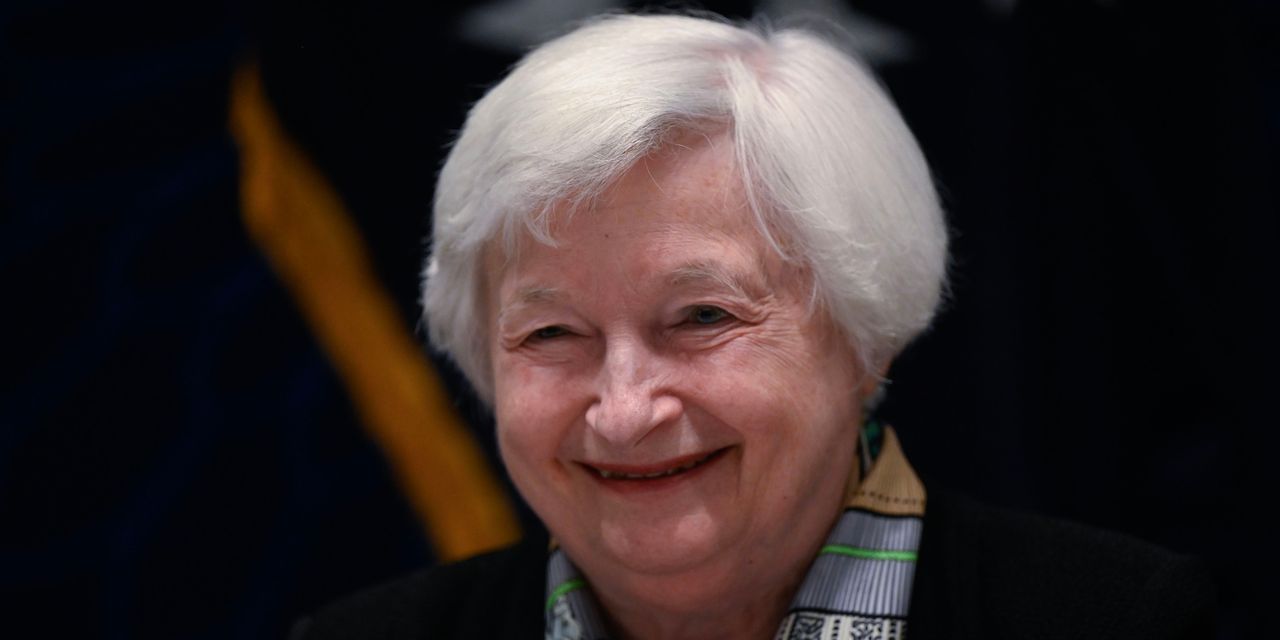
Treasury Secretary Janet Yellen is on a diplomatic trip in Beijing this weekend, as the United States and China aim to deepen communication and repair economic ties amid an array of disputes over technology, climate change, and national security. While no breakthrough announcements are expected from the talks, the trip is expected to keep lines open for candid conversations between the world’s biggest economies.
Despite heightened tensions on many issues, U.S.-China trade reached a record high last year, suggesting there was “ample room” to engage in trade and investment and focus on areas of common interest, Yellen said during her meeting with Chinese Premier He Lifeng on Saturday. The U.S. is not pursuing a “winner-take-all” fight with China, she said, urging both sides to take on healthy competition with “a fair set of rules.”
Still, it’s unclear how much compromise the two countries are willing to make on a range of issues of differences. Here’s a look at some areas of contention.
Technology
The Biden administration intends to curb Chinese access to technologies, including advanced semiconductors for artificial intelligence and cloud-computing services—which could affect U.S. chipmakers such as
Nvidia
(ticker: NVDA) and
Advanced Micro Devices
(AMD), as well as major tech firms such as
Microsoft
(MSFT) and
Amazon.com
(AMZN).
China, for its own part, said it plans to put restrictions on the exports of metals critical to the semiconductor industry, such as gallium and germanium. China dominates the production of those minerals. Beijing has also banned Chinese companies from using products made by U.S. memory chips maker Micron
Technology
(MU) in computers that handle sensitive information.
Climate Finance
The U.S. and China are the world’s two largest greenhouse gas emitters and largest investors in renewable energy. Although China has expressed support to help poorer countries address the challenges of climate change and achieve economic transition in a warmer world, it has long resisted contributing to the same climate funds as Western nations, claiming that it’s still a developing country.
On Saturday, Yellen urged China to support existing multilateral climate institutions such as the Green Climate Fund and the Climate Investment Funds, saying that collaboration between the two countries on climate finance is critical.
National Security
Beijing has been upping its game in national security intelligence, putting more pressure on Washington. In February, The U.S. military shot down a suspected Chinese surveillance balloon after it was seen drifting above the U.S. territory.
Earlier this year, China adopted a new anti-espionage law that broadened the definition of spying and banned the transfer of information related to national security. The U.S. has warned that the new legislation would subject foreign companies to elevated surveillance from Chinese authorities for regular business activities.
“These laws provide the PRC (People’s Republic of China) government with expanded legal grounds for accessing and controlling data held by U.S. firms in China,” the U.S. National Counterintelligence and Security Center said in a bulletin last month.
Beijing has already started cracking down on U.S. consulting and due-diligence firms that help foreign companies do business in China.
Taiwan
China has long claimed the self-governed democracy of Taiwan as part of its territory. The tension appeared to have escalated in recent years, with Chinese President Xi Jinping vowing in 2021 to reunify China and Taiwan—and said he would not avoid using force if necessary to do so. The vocal commitment has led many to believe that the possibility of a military conflict has significantly increased.
While perceived as an ally to Taiwan, the U.S. has long adopted an ambiguous policy over the island. Washington has historically declined to explicitly state how it would respond to a Beijing invasion.
That position appeared to have shifted somewhat: President Biden said in 2022 on the CBS “60 Minutes” program that the U.S. would send troops to help defend Taiwan if China initiates “an unprecedented attack.” The White House, however, denied any change in U.S. policy.
Write to Evie Liu at [email protected]
Read the full article here

