


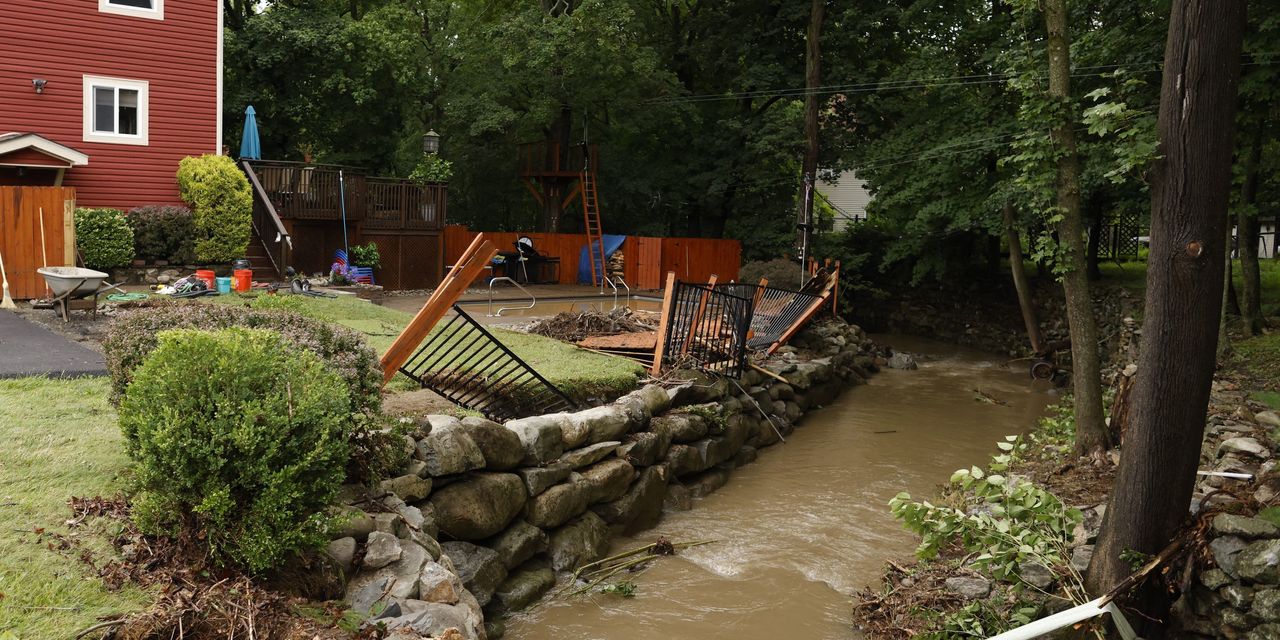
Dangerous flash floods sparked evacuations and are responsible for at least one death in parts of New York early this week, roughly one year after flash floods surprised the desert entertainment mecca of Las Vegas.
Flash foods, which are different and often more dangerous than generalized flooding, have crept into the nation’s weather and disaster parlance as their frequency picks up and they hit more unsuspecting places in recent years, including submerging parts of the Vegas Strip last summer.
According to the National Weather Service, a flash flood is a flood caused by heavy or excessive rainfall in a short period, generally less than six hours. Flash floods are usually characterized by raging torrents after heavy rains that rip through river beds, urban streets or mountain canyons, sweeping along everything in their path. They can occur within minutes or a few hours of excessive rainfall.
Already, inland U.S. flooding risk increasingly factors into interactive warning maps and real estate and insurance decisions, as homeowners, business operators and politicians grapple with all the ways climate change should change how we talk about and prepare for weather extremes, including the frequency of events and extended seasons. Because flood insurance is handled through the federal government’s Federal Emergency Management Agency, and not individual private policies, there’s often more to understand about paying for damages when you are impacted.
Read: Homeowners can check a property’s flood, heat and wildfire risk for free with this high-powered app
Plus, this summer, the early arrival of an expected El Niño ocean weather phenomenon is adding to heat and other weather extremes, which can mean more water in places.
Read: Here comes El Niño: It’s early, likely to be sloppy and add even more heat to a warming world
In New York, Gov. Kathy Hochul declared a state of emergency Sunday for Orange County, about 60 miles north of New York City, where about 8 inches of rain poured down in a short time. She later extended the state of emergency to Ontario County in western New York, southeast of Rochester.
“The amount of water is extraordinary and it’s still a very dangerous situation,” Hochul said, according to the Associated Press.
How does a flash flood differ?
One of the biggest differences between flash floods and generalized flooding is that flash floods can be more dangerous than people think. Even a few inches of water can have a current that knocks people down and just a few feet of water can send a car floating. Flash flooding at night is particularly dangerous, because unknown depths are disguised, looking simply like wet surfaces.
Flash floods can also occur even if no rain has fallen, such as after a levee or dam has failed, or after a sudden release of water by a debris or ice jam. What’s more, the inability of some municipal storm sewers to keep up with the water removal can aggravate the situation, and that’s been especially true as the nation’s infrastructure has aged.
Flash flooding isn’t unheard of in the Southwest U.S. during monsoon season, when a seasonal change in winds draws moisture into the area and can lead to more showers and thunderstorms. But exceptionally dry years mean that the bare ground can also be as hard as concrete in some places, allowing for restricted absorption.
Related: Flash floods, like in Las Vegas, are deadlier than hurricanes, tornadoes or lightning
Sometimes both flash flooding and ongoing rising waters from rivers and creeks can devastate an area at the same time. In 2017, after the very dangerous and expensive Hurricane Harvey swamped coastal areas, it stalled around southern Texas for days as a weakening hurricane that brought catastrophic flash and river flooding, the NWS archives say.
And during 2021’s Hurricane Ida, the NWS office in New York declared its first-ever set of flash flood emergencies in the region, an alert level that is reserved for “exceedingly rare situations when a severe threat to human life and catastrophic damage from a flash flood is happening or will happen soon,” officials said at the time.
Flash flooding is expected to increase
Most worrying, perhaps, is that flash flooding is expected to increase as there are more extreme precipitation events brought on by climate change and man-made atmospheric warming, meteorologists and climate scientists say. This is because warmer temperatures increase evaporation, which puts more moisture into the atmosphere that then gets released as rain or snowfall.
Planning and engineering trade groups say cities must dedicate more of their infrastructure budget to fortifying storm sewers. And cities might think of leaning on nature to fight nature.
The Natural Resources Defense Council argues that populated areas, especially, must think of permeable pavement and rainwater harvesting (instead of simply allowing for too-slow runoff), green roofs, rain gardens and additional tree planting.
Here’s more from the NRDC.
For now, the Red Cross has some tips for flood and flash flood safety, such as getting out of your vehicle sooner versus later, and moving to higher ground, if you get caught on a flooded road.
Read: ‘I started just connecting the dots’: Iowa TV meteorologist hounded off the air over climate-change reporting
See additional coverage on the MarketWatch Living With Climate Change page.
Read the full article here

