


by Franklin Amoo and Rahul Kumbhani
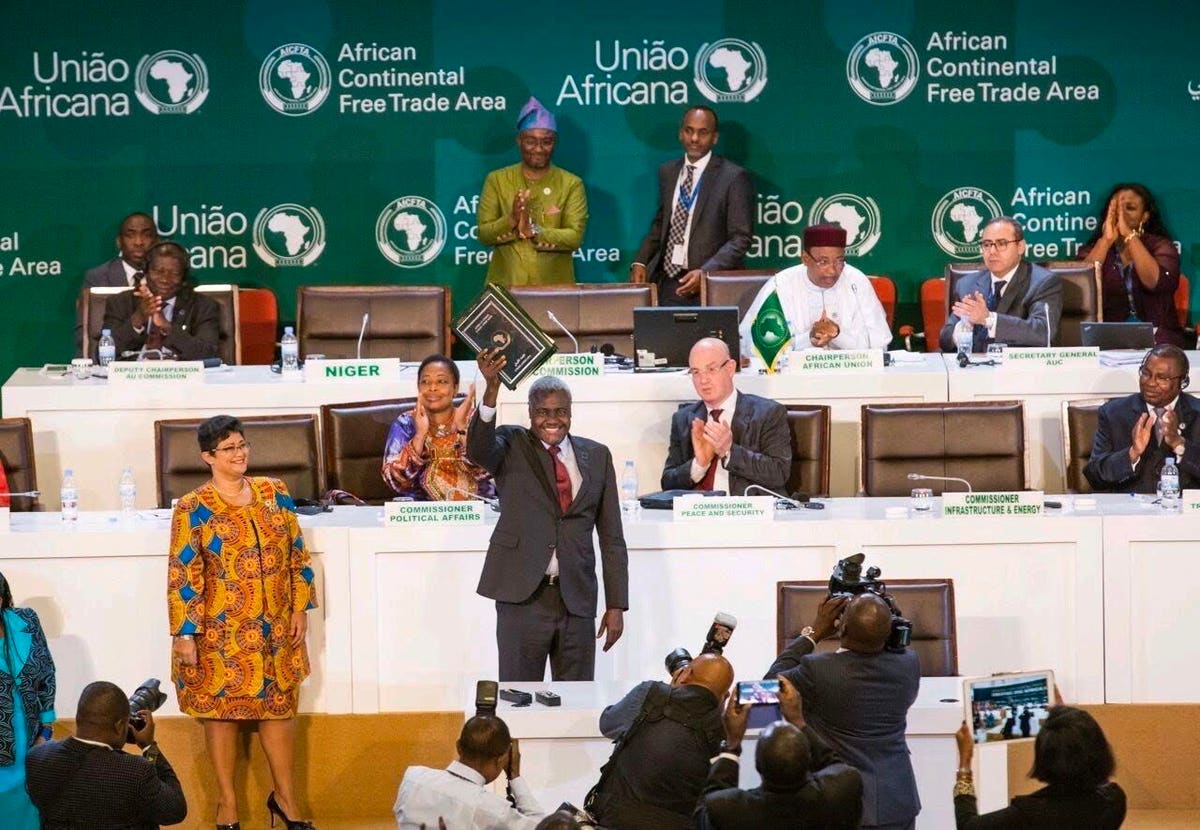
Dignitaries from across the African continent, including public officials, diplomats, business titans, and trade policy experts, recently convened for a historic two-day summit in Ghana for the inaugural Africa Prosperity Dialogues. The goal: to chart a path towards realizing the transformative potential of the African Continental Free Trade Area (AfCFTA
FTA
A development that promises to revolutionize the architecture of trade and is intended to catalyze economic growth in Africa, AfCFTA was announced by the African Union in 2018 after years of planning and negotiation. Inspired by the European Union’s success in job creation and business expansion, the AfCFTA hopes to become the world’s largest trading bloc, linking 55 countries and 1.3 billion people, with a combined GDP of US$3.4 trillion. The World Bank projects that it could lift at least 30 million Africans out of poverty while increasing aggregate incomes by up to US$450 billion by 2035. The agreement officially commenced on January 1, 2021, and so far remains frustratingly distant from its goal of a unified regional trade area, despite 44 countries having already deposited their ratification documents.
Africa has long been a continent with incredible potential. It is home to an abundance of natural resources, including 30% of the world’s mineral reserves, 12% of the world’s crude oil, and 8% of the world’s natural gas reserves. Despite this wealth of resources, Africa’s contribution to global trade, international value chains and manufacturing output has been disappointingly low. This has led to Africa being relegated to the status of a mere raw materials supplier, with little added value or economic benefit for the continent. Africa’s development has long been hindered by this reliance on exporting raw materials including crude oil, gold, and cocoa beans. While these resources are plentiful, their commoditized sale into cartelized buyers in lopsided trade arrangements often results in minimal economic benefits for the countries that produce them. For decades, African nations have been grappling with how to break this cycle of economic stagnation, and a solution may lie in the promotion of industrialization, self-reliant intra-African trade and value-added manufacturing
Among its numerous objectives, the most important one is AfCFTA’s determination to promote Africa’s industrialization and value-added manufacturing on the continent. AfCFTA’s approach to realizing this is through the creation of a unified continental market for goods and services, which should provide sufficient demand through the resulting aggregated market to support investments in scale production. In turn, African manufacturing bolstered and sustained by a large internal market should boost intra-African trade. By prioritizing industrialization and value-added manufacturing to finally take appropriate advantage of the African resource endowment, the AfCFTA could yet unleash Africa’s untapped potential and foster a thriving economic landscape that not only benefits the continent, but also would create a richer customer market for multi-nationals and reduce negative externalities for the entire international community such as political instability, violent extremism and extra-Africa migration.
Africa’s intra-regional trade remains significantly low when compared to other trade blocs like Europe and North America. Intra-African trade accounts for only around 13% of the continent’s total trade, which is much lower than the 60% and 40% of intra-regional trade achieved by Europe and North America, respectively. In Asia, where the IMF has credited intra-regional trade as key to Asia’s export boom, the number stands at 58.5%. This low level of intra-African trade has resulted in a lack of diversification of African economies, leading to over-reliance on commodity exports, volatile local currencies, persistent inflation and vulnerability to external shocks. The AfCFTA presents a significant opening for African nations to increase their trade with each other. However, for this potential to be realized, it is essential to prioritize value-added manufacturing; a a unified African market will only benefit Africa if African producers manufacture things to trade within it. By processing raw materials locally, African countries can create regional value chains that encourage intra-African trade while simultaneously increasing export revenues. Developing local manufacturing capacity is a crucial step in this process, as it reduces dependence on imported goods and enables the production of high-value goods for export. The AfCFTA provides a platform for African countries to leverage these advantages and build a thriving regional economy, driven by increased value-added manufacturing and intra-African trade. The Economic Commission for Africa (ECA) forecasts that the AfCFTA could boost intra-Africa trade by 52% as a result of tariff liberalization and trade facilitation. Which could lead to more competitive African manufacturers, economies of scale, and greater diversification of African economies.
Value-added manufacturing has been the core driver of prosperity for every one of the currently industrialized nations and is unsurprisingly one of the core areas of focus for the AfCFTA. As African countries look to unlock the potential of their natural resources, develop regional value chains, and promote sustainable economic growth they have finally resolved to work collectively to achieve this critical development objective. The AfCFTA’s approach prioritizes the transformation of raw materials by incorporating more value into the production process, such as turning cocoa beans into chocolate and refining crude oil into petrochemicals and plastics. With the right policies and investments, Africa can emerge as a key player in global value chains and contribute significantly to the world’s manufacturing output.
By promoting value-added manufacturing, African countries can create sustainable, dignified job opportunities and generate higher incomes. Industrialization can scale up the skills and productivity of the labor force, leading to greater economic stability and preparedness for a dynamic economic future. Furthermore, processing raw materials locally can create regional value chains that promote intra-African trade, increased cooperation amongst African governments and increase export revenues. The AfCFTA should catalyze domestic and regional resource mobilization, enabling the movement of people and finance while reducing barriers to trade. Creating this single continental market for goods and services, increasing intra-Africa trade and providing a platform for African countries to industrialize should raise the overall level of economic potential for African nations and their citizens.
The AfCFTA offers investors in African manufacturing an unprecedented opportunity to realize differentiated financial returns with a captive market that should support scale production. Furthermore, the newly amalgamated market offers African countries the chance to unite and foster sustainable economic growth by focusing on value-added manufacturing and the development of integrated regional value chains. By prioritizing industrialization, Africa graduate from its reliance on commodity exports and forward integrate into global value chains. However, for the AfCFTA to succeed, African nations must address challenges such as improving trade related infrastructure, reducing non-tariff barriers, harmonizing regulations, and reducing policy instability. Additionally, resistance from some countries to opening up their markets to competition could impede or slow down the agreement’s success. Therefore, while the potential for a prosperous and sustainable future is within reach, a resolute focus on maximizing manufacturing capacity in Africa through the implementation of the AfCFTA to ensure that its benefits are fully realized.
Read the full article here

