


Receive free General Motors Co updates
We’ll send you a myFT Daily Digest email rounding up the latest General Motors Co news every morning.
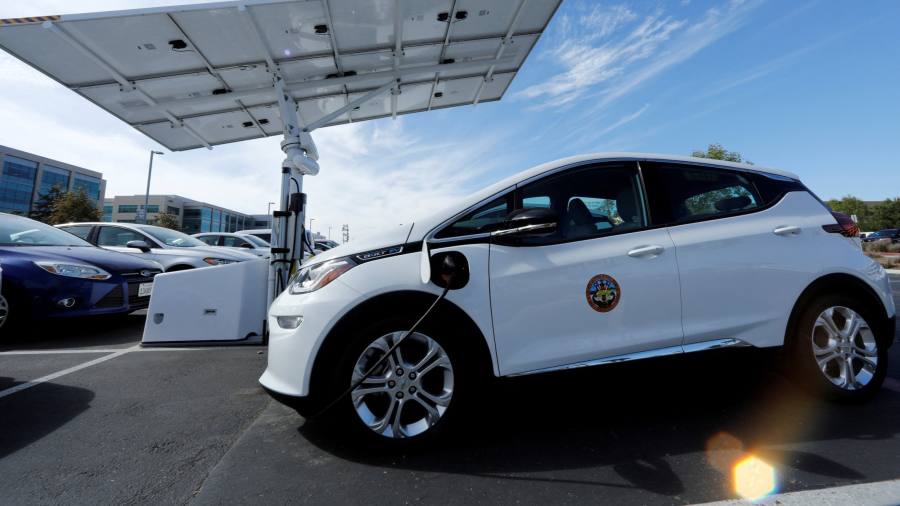
General Motors has cancelled plans to eliminate the Chevrolet Bolt, one of the cheapest battery-powered cars in the US market, as it pursues ambitions to rapidly electrify its fleet.
The largest US carmaker by revenue said on Tuesday that while it still intended to retire the current version of the car at the end of the year, it would keep the nameplate while switching the propulsion system to newer battery technology.
“Our customers love the Bolt,” said chief executive Mary Barra. “We can’t build enough.”
GM is spending billions to reach a goal of selling 1mn EVs annually by 2025. The company has pledged to end sales of cars and trucks powered by petrol or diesel by 2035, and proposed rules from the Biden administration could force it and other carmakers to make two-thirds of their US fleets electric by 2032.
In April, GM said it would end production of the Bolt, flipping the Michigan plant where it is made to produce electrified versions of two trucks, the GMC Sierra and Chevrolet Silverado. The car, which comes as a hatchback and slightly larger crossover, uses an older battery platform than Ultium, GM’s new battery system.
Even though the older platform costs 40 per cent more than Ultium, the Bolt remains one of the most affordable electric vehicles in the US, starting at $27,000.
The reversal came as the company has sold nearly 34,000 Bolts in the first half of this year, more than quadruple the volumes from the same period of 2022. Bolts comprised more than 90 per cent of GM’s EV sales.
The Bolt was subject to a recall in 2020 after batteries caught fire in some cars. GM on Tuesday reported a nearly $800mn charge in the second quarter for the recall. The total cost of the recall was $1.9bn, most of which will be borne by battery partner LG Energy Solutions.
The company did not give details on when the new version of the Bolt will be available or where it will be built. But Barra said the company would be able to engineer and build the new Bolt faster and at lower expense compared to an all-new car or truck.
GM hit its target to build 50,000 EVs in the first half of the year, Barra said. It plans to build 100,000 in the second half, and 400,000 next year.
Yet production of cars and trucks powered by Ultium batteries have been hampered by delays at a supplier that have limited GM’s capacity to build battery modules. Barra said GM had deployed engineers to the supplier’s site, and the situation had improved in the past six weeks.
GM’s Cadillac Lyriq and the GMC Hummer EV use the newer Ultium platform. So far this year customers had bought 2,300 Lyriqs and 49 Hummers, GM said.
The company said that it earned an adjusted $3.2bn before interest and tax in the second quarter, a 38 per cent increase from a year earlier. Revenue rose 25 per cent to $45bn.
GM raised its guidance for the second time this year, citing strong customer demand. It predicted adjusted earnings before interest and tax of between $12bn and $14bn this year, after originally saying it would bring in $12.5bn at most.
Read the full article here

