


About the author: Greg Friedman is CEO of Peachtree Group, a real estate investment firm.
The global financial crisis that began in 2007 reshaped the real estate market. Today, commercial real estate is facing a similar “Great Reset.” Property valuations are resetting, capital availability is restricted, and investment activity is curtailed.
Thanks to stress on properties’ balance sheets, the situation is set to get worse.
More than $1.5 trillion of commercial real estate loans will mature over the next three years. Traditional lenders and the securitization market are unlikely to provide a clear path to replacing these loans. Without one, property valuations will reset further and reprice at levels that reflect current economic conditions. Basically, investors need to prepare for further losses.
We can trace this Great Reset, in part, to the lingering factors from the government’s response to Covid-19. This period of monetary policy easing and massive amounts of stimulus led to historically low interest rates and, in turn, saw property valuations in 2021 soar to dizzying and unsustainable heights.
The Federal Reserve may have been slow to react to the corresponding and historic increase in inflation, but through 11 rate increases in just over a year, it raised the effective federal fund rate by nearly five percentage points, its highest level in over 20 years. In response, U.S. commercial property prices have dropped 16%.
However, due to muted investment activity coming off the highs of 2021, the market hasn’t fully appreciated the decline in property values.
The failure of major banks such as Silicon Valley Bank, Signature Bank, and First Republic have caused other lenders to reassess their commercial real estate portfolios. As a result, credit availability has dropped precipitately and credit standards have tightened across the board. Lenders now require higher debt coverage ratios, more equity in deals and higher borrowing costs.
The interest rate environment has become incredibly complex, making it difficult for industry stakeholders to predict pricing accurately. The Federal Reserve’s commitment to a “higher for longer” interest rate strategy is forcing investors to compete with higher-yield investment options as the 10-year treasury is above 4.5% as of mid-October. For context, at the beginning of 2022, the 10-year treasury was 1.6%.
The rapid increase in interest rates has had a profound impact on commercial real estate property valuations. As interest rates surge, capitalization rates tend to rise in response, reflecting the higher yield expectations of investors. This directly reduces property values as the anticipated return on investment increases, making certain commercial real estate assets less attractive to potential buyers.
Additionally, rising interest rates elevate the cost of borrowing for property acquisitions and refinancing, translating into increased debt service payments and reduced cash flows, further depressing property values.
The industrial, self-storage or multifamily sectors all experienced compression of cap rates to historic lows, roughly 3.5% cap rate during the peak pricing. Those owners may still expect to command a similar return in today’s market. Buyers, however, base their offers on significantly higher expected returns, around 6%, a 1½-percentage-point spread over the 10-year treasury. That disconnect further reduces transaction volume.
One critical aspect of this reset is the recalibration of values across property types. It’s essential to recognize that not all asset types are affected equally. Assets trading at lower capitalization rates and higher multiples of cash flows—again, multifamily—are more susceptible to the impact of rising interest rates.
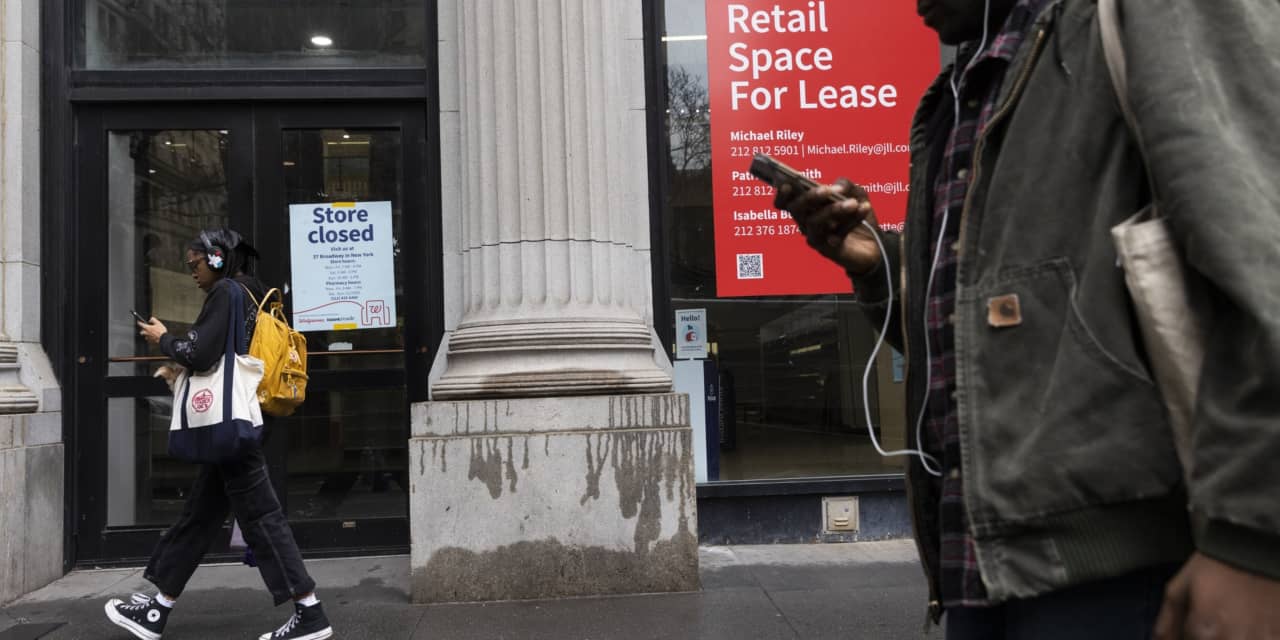
Office is resetting too, driven also by work-from-home and other similar trends playing out across the U.S. and the globe.
The Great Reset may bring challenges but also presents opportunities for investors who adapt and innovate. Investors who understand the evolving dynamics can navigate this transformative period successfully.
In the near term, private credit providers stand to gain as they can provide much-needed capital precisely when the industry needs it most.
In addition, the hospitality industry, which trades at a cap rate between 7% to 9%, offers attractive prospects. Hotels generally have attractive risk premium spreads, three to four percentage points, and can adjust rates in response to higher interest rates, providing consistent returns. Hotels with these characteristics are well-positioned to thrive. There is also a supply and demand imbalance, with CBRE projecting supply growth over the next three years to average around 1%, much less than the 2.5% pace of demand growth.
Also, development projects, regardless of sector, that create value by addressing supply shortages in specific submarkets can be lucrative. Identifying areas with demand that exceeds supply and strategically investing in development can lead to substantial returns.
Other opportunities for patient investors with robust capital structures will come as the industry stakeholders ride the surge of recovery and expansion until the inevitable transformation occurs again.
Guest commentaries like this one are written by authors outside the Barron’s and MarketWatch newsroom. They reflect the perspective and opinions of the authors. Submit commentary proposals and other feedback to [email protected].
Read the full article here

