


That was my first thought when I started seeing the path that Hurricane Idalia was taking. The “cone” is the tracking tool that the National Hurricane Center shares to provide some sense of where a storm may land, putting those within the areas that could be affected on notice. As someone who called South Florida home for more than a decade and lived through three hurricanes — Frances and Jeanne in 2004, Wilma in 2005 — I learned to follow the “cone” updates religiously. And to hate them when it seemed the inevitable was about to happen.
We often speak of hurricanes in terms of the physical damage they cause. And some storms indeed wreak havoc on a catastrophic and costly level, as in $100 billion-plus.
But there’s another toll that comes with the arrival of each hurricane — or even the looming threat of one. Namely, the stress that it causes.
Certainly, the dread of dealing with storms is a reason cited by many former Floridians I know as one of the key reasons they left the Sunshine State. “It’s not the stress of it hitting you. It’s the stress of the anticipation,” said a former colleague of mine who spent most of his life and career in the state — we worked together at The Palm Beach Post in West Palm Beach, Fl. — before retiring to North Carolina a few years ago.
“‘They say the sound of a tornado is like that of a freight train coming right at you. I say the sound of a hurricane is like that of a tornado that stubbornly refuses to pass through the darkest of nights.’”
It’s a bit hard to explain what this anxiety is all about, but let me try. Before I experienced my first true hurricane in 2004, I was actually semi-eager to see how a storm plays out. And I admit there is something breathtaking and bewildering about hearing those winds rattle your house — and if you’re stupid enough to go outside like I did for a brief moment or two, to feel their blunt force as well.
But here’s the thing: Those winds aren’t a sudden gust that comes and goes. They are with you for what seems like an eternity, like a horror show of nature. To this day, I’ll never forget that sound they create — loud, violent and unrelenting. They say the sound of a tornado is like that of a freight train coming right at you. I say the sound of a hurricane is like that of a tornado that stubbornly refuses to pass through the darkest of nights.
Then, finally, it’s over. But that’s where the real struggle begins, even if you’re lucky enough to have little to no damage to your house. (The worst I ever dealt with was some minor roof issues, though I had neighbors who saw their roofs and parts of their house destroyed.) The main problem: You’ve probably lost power — and in Florida, power means air-conditioning. Hurricanes arrive when you’re in what’s called the “mean season,” that roughly six-month period of days of 90-degree temperatures that are accompanied by 90% humidity. You basically live indoors for much of that time, even if it means racking up $300-plus monthly electric bills.
After a hurricane, however, the great indoors becomes the great enemy. Your house is hot — I mean Hades hot — and you can practically feel the mold and mildew starting to envelop your sanctuary. But it’s almost as hot outside, so forget about seeking relief there. Meanwhile, all the food in your fridge is going bad, so you’re living off the peanut-butter from your hurricane supply stash, and you’ve got a massive headache owing to the fact you can’t make coffee because your coffee-maker naturally needs power, too.
This goes on for days. Even weeks in some instances. It takes time to restore all of that electricity to all those homes, especially because every street is a mess of toppled trees and downed power lines. But again, you count your blessings that you’re still alive and have a home. The outcomes have been far worse for so many people with some storms, such as Hurricane Andrew in 1992 and Katrina in 2005.
Still, imagine going through all this and now it’s later in the hurricane season — or it’s a whole new one — and a storm is approaching. You’re living in the cone. You know what can happen. Think of the stress you’ll feel.
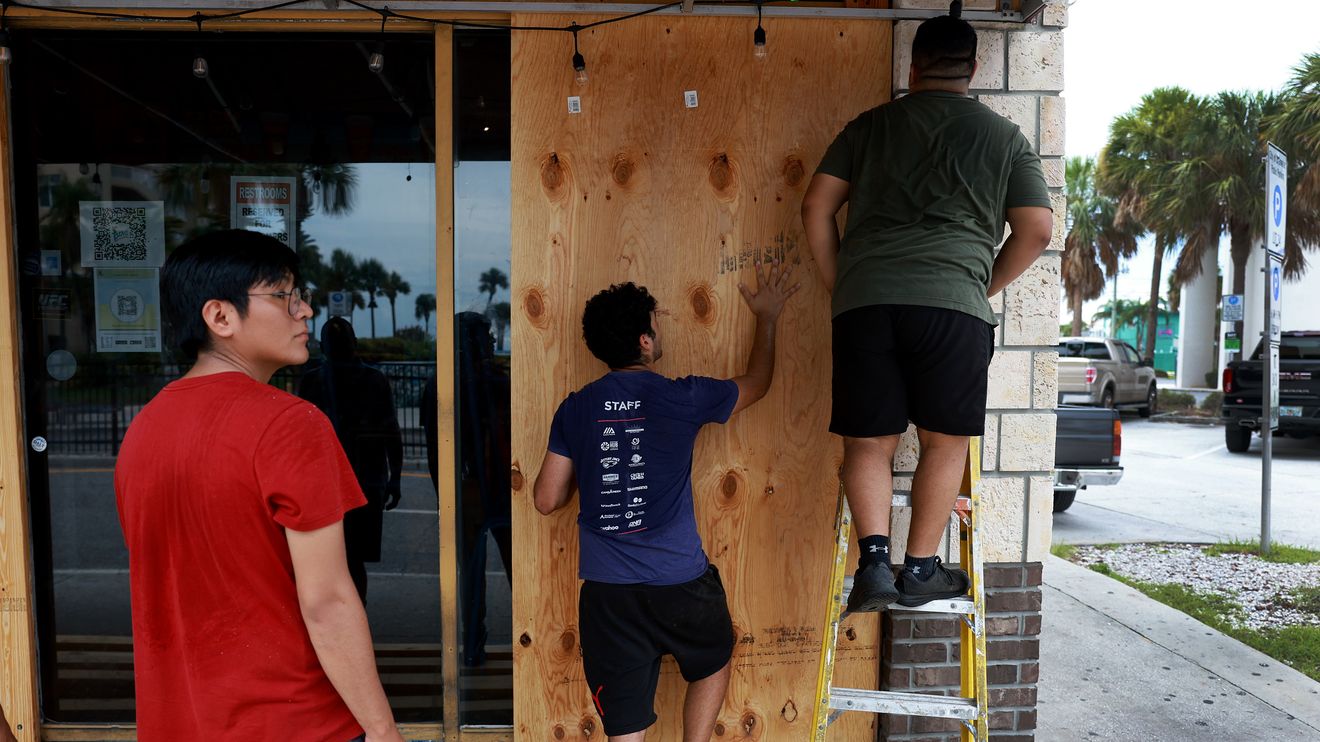
Making matters worse: Every time you turn on the TV, there’s a local weather forecaster basically saying it’s the end of days. And you’re trying to stay sane while putting plywood over your windows and getting all of your stuff together, so it won’t blow to the heavens if your roof comes off: As my former colleague told me, “You don’t realize how much junk you have around the house until a hurricane is coming.”
Or, even worse, you are forced to evacuate along with a gazillion other Floridians. You think Florida traffic is bad on a normal day? Try driving in the period leading up to the arrival of a hurricane.
“‘You’re living in the cone [of uncertainty]. You know what can happen. Think of the stress you’ll feel.’”
It all adds up … and can haunt you for the rest of your life, especially if you choose to remain in the state. Wayne Brackin, a former chief operating officer of Baptist Health South Florida who now heads KIDZ Medical Services, a network that serves hospitals in the state, dealt with Hurricane Andrew. He once told me, “For many years after, I would feel a sense of fatigue when another storm threatened. Many, many of my fellow storm survivors have told me they have similar feelings.” The bottom line for Brackin: “Paradise has some hidden costs.”
Florida is indeed a paradise in many respects, a state without an income tax that offers year-round recreational opportunities and a Jimmy Buffett-style leave-your-cares-behind vibe. It’s no wonder that the state’s population has surged — it’s now third in the nation behind California and Texas.
But one wonders if Florida will be able to maintain that growth: The big issue is the population aging out, experts say. Still, I can’t help but think that hurricanes will be a factor in many people deciding to leave the state, like some of my former colleagues, or deciding not to move there in the first place, especially since we’re anticipating more intense storms due to climate change.
As for me, I left Florida for other reasons, particularly the chance to reunite with friends and family in New York City, the home to which I returned. But the specter of those Florida hurricanes has stayed with me, and I got a brief reminder of nature’s fury when superstorm Sandy hit the metro area in 2012. To this day, I shudder a little when I feel a gust of wind as I walk the city streets. And I breathe a sigh of relief when it passes.
Read the full article here

