


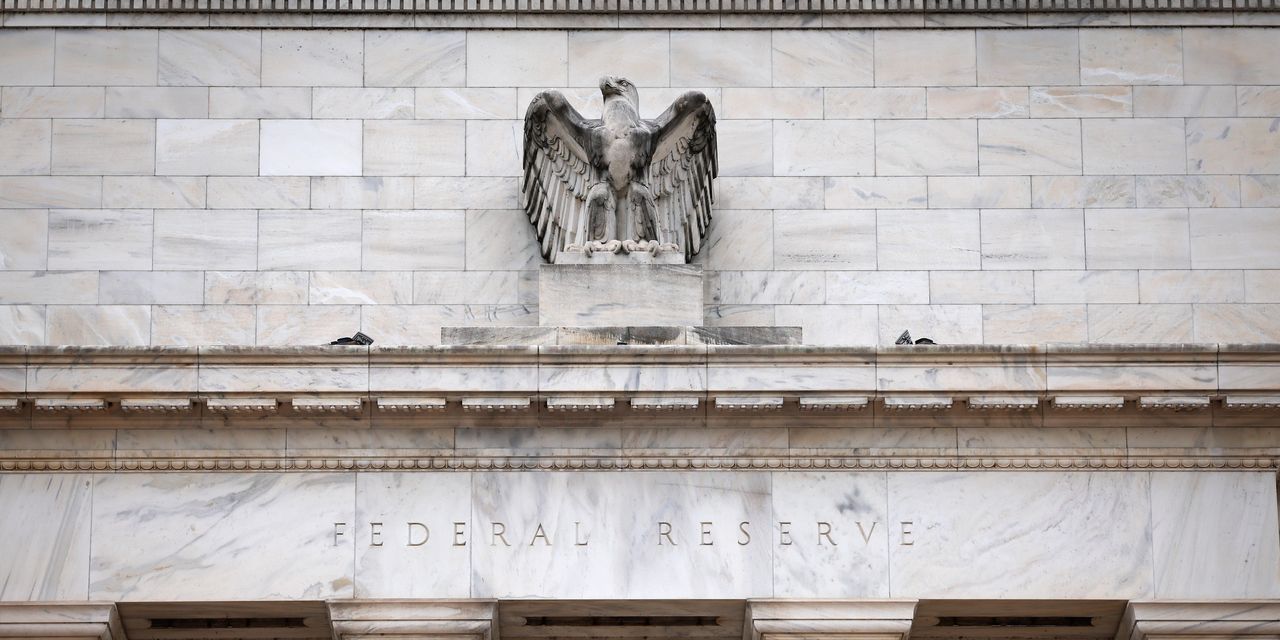
Despite turmoil earlier this year, the U.S. banking system remains strong, according to results of the Federal Reserve’s annual stress test.
All 23 banks that participated in this year’s test were able to stay above their minimum capital requirements despite facing a theoretical loss of $541 billion in the hypothetical recession in this year’s test.
“Today’s results confirm that the banking system remains strong and resilient,” Vice Chair for Supervision Michael S. Barr said Wednesday. “At the same time, this stress test is only one way to measure that strength. We should remain humble about how risks can arise and continue our work to ensure that banks are resilient to a range of economic scenarios, market shocks, and other stresses.”
Barr’s remark about humility hinted at the unexpected challenges that emerged in banking in the first half of the year. Over the past few months, three U.S. banks—Silicon Valley Bank,
Signature Bank,
and First Republic—all collapsed as their well-heeled client bases pulled deposits at once, responding to fear that the Fed’s increases in interest rates had reduced the lenders’ ability to raise cash to pay customers.
Holding onto deposits has been a challenge for many banks as the Fed’s rapid interest-rate hikes have pushed savers to ways to earn more interest on their nest eggs. That said, the banks that are most susceptible to flighty deposits tend to be smaller, regional banks, which aren’t subject to the Fed’s annual test. The large banks that are subject to the tests, such as
JPMorgan
Chase (ticker: JPM) and
Bank of America
(BAC) actually saw their deposit bases grow during the turmoil this spring.
Each year, the Fed dreams up a dire economic scenario and requires that banks show they would be able to weather the hypothetical tough times while continuing to lend. In this year’s test, banks were asked to prove their ability to hold up in a “severe global recession” bringing an unemployment rate of 10% and respective declines of 40% and 38% in the value of commercial and residential real estate. Under such a scenario, banks collectively would face losses of $541 billion, including a $100 billion loss in commercial and residential mortgages and $120 billion losses on credit cards.
This year’s test also included a test on banks’ trading books in light of higher interest rates and inflationary pressures. The Fed found that the largest banks were “resilient” in the face of those shocks.
Wall Street should take some comfort in the results of this year’s test even if it doesn’t include the more vulnerable smaller banks. Passing the test paves the way for banks to update their plans for buybacks and dividends. Banks are permitted to disclose their intentions on Friday but many expect that lenders will show restraint in light of recent headwinds, according to reports from analysts ahead of Wednesday’s release.
While payout ratios—comprising dividends and buybacks—at the largest banks are expected to increase by 13 percentage points to 72% year-over-year, according to analysts at Keefe, Bruyette & Woods, the increase is a function of lower expected earnings rather than a sharp increase in dividends and buybacks. Similarly, analysts at J.P. Morgan Securities expect that dividends will increase by an average of 4% for banks in its coverage universe, while some banks may forego buybacks altogether as they await more clarity on economic and regulatory conditions.
Among the banks J.P. Morgan looked at,
Wells Fargo
(WFC) could see the highest dividend increase—by 23% quarter over quarter—as the bank builds back its dividend after slashing it during the pandemic. This would give Wells Fargo a dividend yield of 3.6%, up from 3%.
Truist
(TFC) and
Citigroup
(C) are expected to keep their dividends flat. Truist’s payout ratio has risen this year and Citigroup has a lower valuation, which would make share repurchases more enticing than dividends.
Overall, the outlook for large payouts is much more muted this year than it has been in prior years, reflecting a challenging economic environment as well as calls for tough regulatory and capital constraints on banks with assets of $100 billion or more, in light of the bank failures earlier this year.
“We expect June 30 to be less of a deal than prior years. While we expect most banks in our coverage to increase their dividends at some point in the 4Q23 through 3Q24 time frame, share repurchase will likely be relatively subdued for many in the near term,” Jason Goldberg, an analyst at Barclay’s, wrote in a recent note.
Expect bank investors to feel subdued, too.
Write to Carleton English at [email protected]
Read the full article here

