


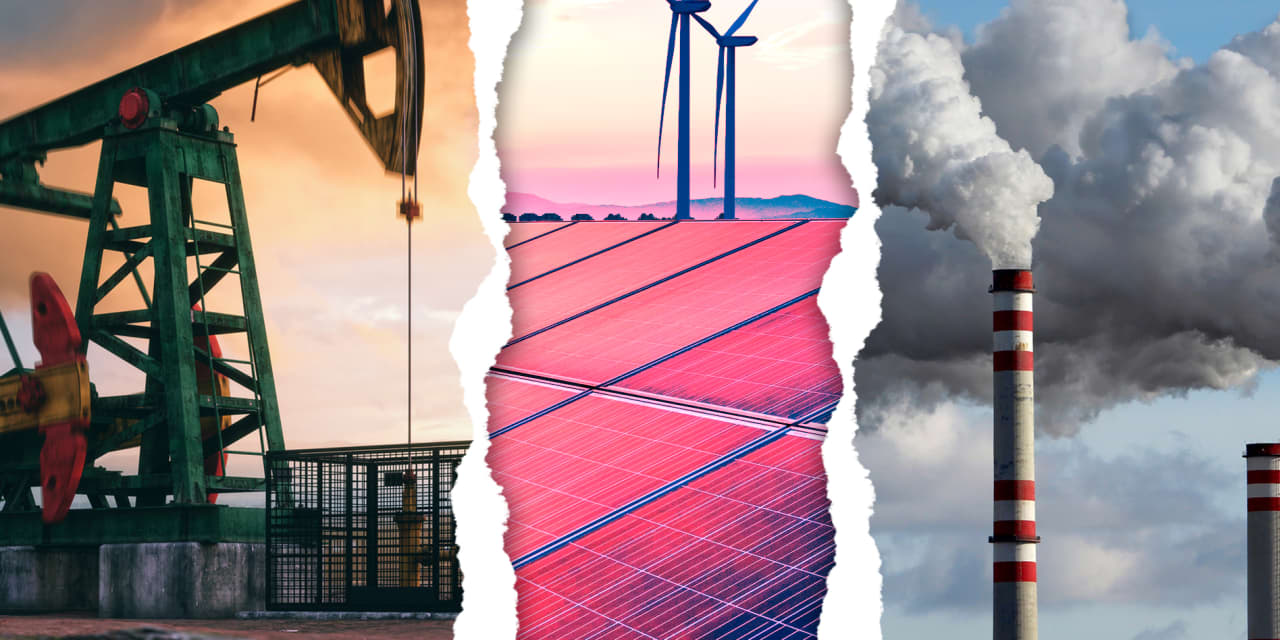
Nearly 200 parties reached an agreement Wednesday at the U.N. Climate Change Conference, also known as COP28, to phase out fossil fuels, but the oil market isn’t exactly shaking in its boots — and for good reason.
The agreement is “really soft on details and is more aspirational,” Phil Flynn, senior market analyst at the Price Futures Group, told MarketWatch. “While many countries vow to spend a lot of money and move toward green energy, the details are sketchy.”
At the conference, held in Dubai, negotiators from nearly 200 parties reached an agreement to take actions aimed at achieving a global “tripling of renewable energy capacity and doubling energy efficiency improvements by 2030,” according to United Nations Climate Change news.
That includes speeding up efforts toward the “phase-down of unabated coal power, phasing out inefficient fossil fuel subsidies, and other measures that drive the transition away from fossil fuels in energy systems, in a just, orderly and equitable manner, with developed countries continuing to take the lead,” it said.
“It’s something of an achievement to finally get wording on phaseout from an oil-producing country hosting COP,” said Matt Breidert, senior portfolio manager and managing director at Ecofin, an alternative-energy asset-management firm.
Subsequent meetings of the Conference of the Parties, which is the main decision-making body of the U.N. Framework Convention on Climate Change, may see some movement toward defined targets of a phaseout of fossil fuels, he said. That may require more “specificity of the particular fossil fuels we are discussing.”
The COP28 statement did not specifically mention oil, but it did say the agreement signals the “beginning of the end” of the fossil-fuel era.
To understand what the agreement means for oil
CL.1,
BRN00,
Breidert said, it’s important to look at where the market has “reasonable alternatives” to fossil fuels — and where there are no reasonable alternatives.
Offshore wind can replace coal, and onshore wind and solar can displace some natural gas
NG00,
but situations where there are no reasonable alternatives to fossil fuels yet, he said, include petrochemical products, which “proliferate everywhere in our modern economy and society.”
Petrochemicals, refined from petroleum, are used in many products, including cars, clothing and medical equipment.
“Clearly, the only way to phase out fossil fuels is to introduce substitutes in all applications of such hydrocarbons,” Jarand Rystad, chief executive officer of Rystad Energy, said in a newsletter to clients Wednesday.
These substitutes will “grow through market forces alone if they are competitive in costs and features,” and if they’re aren’t, “regulations and subsidies could compensate for a lack of competitiveness,” he said.
Finding “viable and sustainable replacements for oil, gas and coal is of the utmost urgency,” said Rystad. It would be “unwise and inefficient,” however, to stop the supply of fossil fuels before substitutes are in place.
Stopping fossil-fuel supply would only lead to “meteoric price surges that would trigger much more new supply than demand destruction,” he said, noting that the academic literature shows that new supply would outweigh demand destruction by a factor of 10 if prices increase.
So the more efficient way to reduce emissions is to “implement measures that reduce demand for fossil fuels rather than reducing supply,” Rystad said.
Renewable energy has recently garnered headlines, with Deloitte noting in a report that the solar market strengthened this year and is expected to continue to lead the pack among renewable-energy sources in 2024.
On Wednesday, the Energy Information Administration said in its monthly report that it expects renewable energy to take on a greater role in the new year, with solar and wind combined expected to generate more power than coal for the first time ever in the U.S.
But some alternative-energy sources “aren’t ready for prime time,” Flynn said.
Disposal of old wind turbines and solar panels is just one of the issues facing the sector, he said.
Solar panels contain toxic chemicals, and it’s reportedly difficult to recycle wind-turbine blades, which are usually made of fiberglass or carbon fiber. Hydroelectric power, meanwhile, can pose environmental challenges.
“We have to remember that we are replacing a reliable energy source with one that is not as reliable,” said Flynn.
Still, the acceptance of the commitment to transition away from fossil fuels at COP28 marks “a turning point for emission and climate policy,” analysts at UBS said in a research note dated Wednesday.
“The long-term decarbonization trend is clear,” they said.
The UBS analysts said that with the COP28 deal, they anticipate a “recovery in investor confidence around many climate-and emission-related investment themes.”
They see “valuation support and favorable dynamics for clean air and carbon reduction investments,” and they also pointed out that creating an economy free of carbon emissions and transitioning to clean fuels is a complex undertaking that requires investments across “power generation, energy infrastructure, transport, industry, buildings, and heating and cooling systems.”
Beyond the public markets, investors can tap into “energy disruption opportunities” in private markets, including “renewable infrastructure development, energy networks, storage, carbon capture, energy efficiency, and circular economy solutions,” the UBS analysts said.
Ecofin’s Breidert pointed out that renewable infrastructure “gets to capture both the migration of the world to electricity and the migration of electricity-supply systems to clean power.”
Given that, renewable infrastructure is a “double-barreled growth opportunity,” he said.
Read the full article here

