


Economists, federal officials and markets may be feeling like the U.S. is in the final inning of the fight against runaway prices, but most Americans aren’t feeling much relief to their wallets.
Wednesday’s Consumer Price Index report revealed that annual headline inflation cooled to 3%, a sign the Federal Reserve’s aggressive rate hikes to moderate price growth are starting to pay off. But that number tracks year-over-year price growth—and 2022 wasn’t a normal year. Last June, inflation peaked at 9.1%, and consumers still are reeling from it.
The moderation of headline inflation also masks significant—and in some cases, ongoing—price jumps in various categories. Housing prices surged another 7.8% year over year. Even basic groceries like bread, frozen vegetables and sugar all saw double-digit growth in June.
All this underscores that inflation is still growing, albeit at a slower pace. Month-over-month prices rose 0.2% in June. And prices are likely to rise some more in July.
A full 85% of Americans remained concerned about inflation and the overall economy, according to a national survey conducted by The Harris Poll, sampling 2,042 U.S. adults. Less than a third of Americans surveyed believe the worst effects of inflation are behind us.
One of the clearest examples of the disconnect between the moderating data and the reality consumers face today is gasoline prices. The biggest reason overall inflation has cooled is that prices at the pump have fallen from their high of nearly $5 per gallon last June following Russia’s invasion of Ukraine.
While the average national price for unleaded hit $3.57 last month, that’s still up 31% from the $2.72 per gallon Americans were paying in June 2019, according to data from AAA. The result is that drivers still think they are paying too much for fuel.
Many of the biggest consumer expenses—rent, groceries, and transportation costs—tell a similar story. At every turn, consumers are facing prices that are much higher today than they were four years ago, before the Covid-19 pandemic sent both the U.S. and global economies into chaos. Overall, price growth rose about 19% from June 2019 through the second quarter of 2023.
Housing costs, most Americans’ largest monthly expense, have been on a tear since the pandemic. Average asking rents nationwide have soared by 30%, or about $480 a month, since 2019, according to data from the
Zillow
Observed Rent Index.
Bad news for renters: Prices aren’t likely to fall. “Pressure is easing in the rental market, but there’s no sign rents will fall any more than they tend to do in a normal winter, which is a slower time of year,” Jeff Tucker, Zillow’s senior economist said. “Rents tend to be sticky against downward movement.”
Just the same, rents may grow at a steadier, more sustainable rate so that incomes eventually can catch up, Tucker said. “That is more or less what we’ve seen so far this year,” he added.
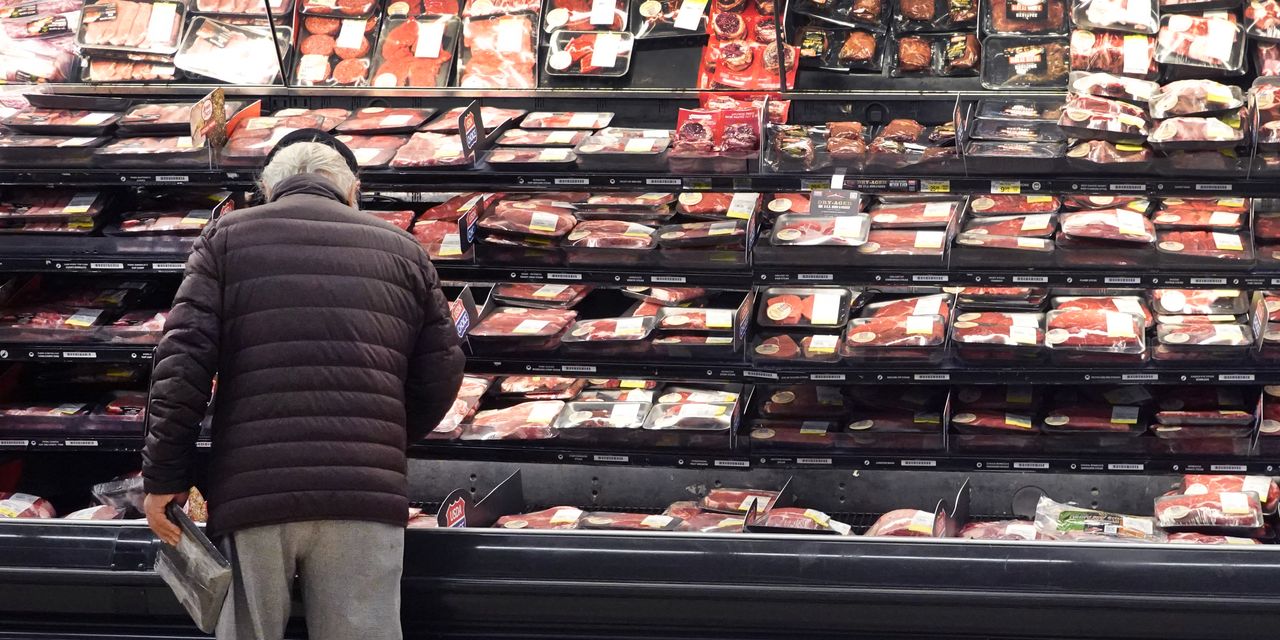
Americans have also seen their grocery bills grow exponentially over the past four years. According to CPI data, food at home costs have jumped about 25% since June 2019. But again, that average hides some even bigger spikes. A loaf of white sandwich bread, for example, typically sold for $2.34 in June 2019. That same loaf sold for $3.16 last month—a 35% gain, according to average list price data collected for Barron’s by Datasembly at some of the largest U.S. retailers.
Egg costs, which experienced major price spikes in late 2022 and earlier this year, increased 28% since 2019. Meanwhile, a 12-pack of
Coca-Cola
or Mountain Dew has more than doubled in price. It adds up to a hefty bill for average consumers.
The national food insecurity rate rose to 17% in June—matching the highest recorded rate on record in March 2022, according to the Consumer Food Insights report published by Purdue University. Over 40% of households earning less than $50,000 annually report they are food insecure.
Car owners—which includes about 92% of Americans—have also been hit hard by inflation. Vehicle prices soared during the pandemic because of supply-chain issues and still continue to outpace overall inflation. The average sale price of a new car jumped 29% from June 2019 to last month
The average transaction price for a new vehicle in the U.S. is now $48,808, according to Kelley Blue Book. There are only three cars on the market right now with a manufacturer’s suggested retail price still under $20,000 for 2023 models: the Kia Rio, the Mitsubishi Mirage G4 and the Nissan Versa.
Car insurance costs have soared as well, 16.9% year-over-year as of June 2023 and 24% since June 2019. And unlike many other categories that showed some cooling, car insurance has remained on the upswing, jumping 1.7% from May to June.
Other budget items are on the rise, but at a slower rate. The average utility bill is up by about 11% since June 2019, according to data from doxoINSIGHTS. Four years ago, Americans were spending an average of $385.17 on electricity, gas, water, as well as garbage and recycling pickup. Last month they similarly $428.24 for the same services.
Healthcare also has seen more modest growth in spending, though it’s picking up this year. Health costs are expected to jump 5.6% in 2023, according to the latest Milliman Medical Index. The average cost of healthcare for a typical family of four is an estimated $31,065 this year, or $7,221 per individual. That’s up 14% from the estimated spend of $27,233 in 2019.
By looking closely under the hood, it’s easier to understand why Federal Reserve officials still remain concerned about the effects of inflation—even if the trends are starting to head in the right direction. That’s why the majority of economists and analysts are expecting another interest-rate hike in two weeks.
To ease the inflationary pressure on Americans’ budgets, the Fed still has more work to do. The game is far from over.
Write to Megan Leonhardt at [email protected]
Read the full article here

