


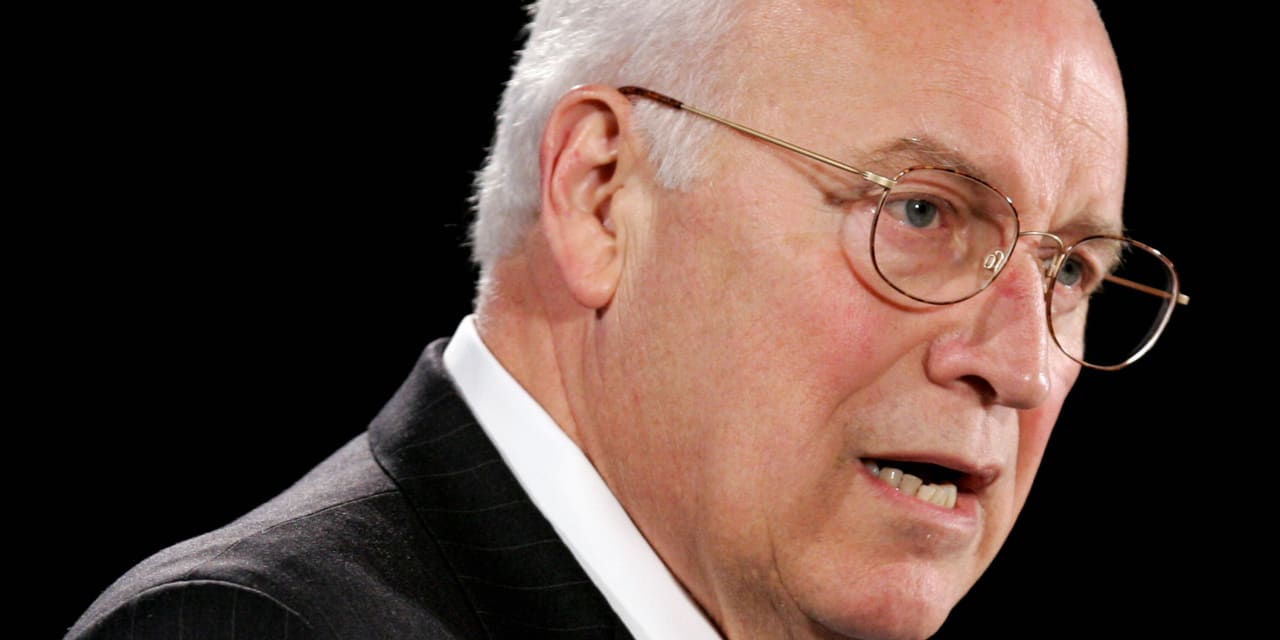
“Reagan proved deficits don’t matter,” Dick Cheney famously growled back in 2002. And George W. Bush’s vice president was mostly right, based on the previous two decades’ record, and would prove mostly prescient during the next two decades.
That was when the U.S. government debt was smaller than the U.S. economy. Now, that’s no longer the case, and the cost is reflected mainly in the bond market.
The media is fixated on yet another narrowly averted shutdown of the federal government, owing to the dysfunction of Congress, as if that’s news. The more nuanced and relevant story is in the bond market, which is sending messages of the increasingly clear and present danger posed by financial mismanagement in Washington by sending yields sharply higher and bond prices concomitantly lower.
Moody’s intoned this past week that the fight shows “the weakness of U.S. institutional and governance strength relative to other Aaa-rated sovereigns,” echoing sentiments of the other major rating firms, Standard & Poor’s and Fitch, which already have stripped the U.S. of its previous top AAA grade.
Shutdowns and the budget deficit are opposite sides of the same problem. The former lends itself to coverage, with videos of politicos chattering in Capitol Hill hallways. This Kabuki theater happens with increasing frequency, in part because the economic consequences are relatively small, observes Steve Pavlick, Renaissance Macro’s Washington watcher, in a client note.
Goldman Sachs economists estimate that a shutdown could’ve shaved 0.2 percentage points from fourth-quarter gross-domestic-product growth each week it lasts, which would add to any drag from the resumption of student-loan repayments and the effects of the United Auto Workers strike, for a temporary slowing in growth. As for the stock market, the record shows that shutdowns generally mean no harm, no foul. That was most apparent in the longest shutdown almost five years ago.
Pavlick points to a 9.3% gain in the
S&P 500
from Dec. 21, 2018, to Jan. 25, 2019. It should be noted that it also coincided with signs that the Federal Reserve would be about to end its tightening policy, which produced a marked drop in Treasury yields and an equity recovery.
Now, however, the bond market is getting beaten and battered, which should be evident to investors when they get their third-quarter statements. Those who own the
iShares 20+ Year Treasury Bond
exchange-traded fund (ticker: TLT), a popular way for individual investors to hold long-term government securities, suffered a negative total return of 13.57% in the three months ended on Sept. 27, according to Morningstar data.
To be sure, the Fed has been raising its policy interest rates dramatically over the past 1½ years, by 5.25 percentage points. But in the third quarter, it nudged its federal-funds rate target only once, by 25 basis points, to 5.25% to 5.5%. (A basis point is a hundredth of a percentage point.) The blame for the bond debacle lies elsewhere, on the fiscal side and the relentless ramp-up in Treasury borrowing.
The problem, according to the editorial board of AlpineMacro, is that the federal deficit has never expanded so rapidly when the economy has been so robust at any time in the past half-century. And that hasn’t been because of spending initiatives such as the Chips Act, the Infrastructure Investment and Jobs Act, and the so-called Inflation Reduction Act.
The huge rise in federal spending, they write, has been on those ever-present areas—Social Security, healthcare, military, education, and now, increasingly, interest on the debt.
Given the sharp rise in the federal debt relative to GDP, we are entering a new “fiscal regime,” writes Bank of America global economist Claudio Irigoyen in an unusually astringent analysis. Governments now face trade-offs that didn’t exist when money was free.
And with the approaching U.S. presidential election and a divided Congress, any improvement in the fiscal situation is unlikely. If anything, deficits are likely to deteriorate, notably because of the increase in Uncle Sam’s interest expenses.
Putting numbers to the problem, the AlpineMacro analysts calculate that the U.S. deficit ballooned by over $900 billion, or 3.4% of GDP, in the past 12 months, when the economy was at full employment.
Federal spending surged by $934 billion, a rate of growth unequaled except during recessions or the Vietnam War. State and local government spending rose 4.2%. From both sources, government spending jumped by nearly $700 billion, accounting for nearly half of the $1.55 trillion increase in nominal GDP over the past year. Is there any mystery to why recession calls have been as premature as notices of Mark Twain’s passing?
On the other side of the ledger, federal revenue dropped by 8%, or $409 billion, largely because of lower capital-gains tax collections. That hardly boosts the economy, given that it reflects the lousy 2022 stock market, which probably caused investors to tighten their belts.
BofA’s Irigoyen sees the U.S. fiscal deterioration as symptomatic of the congressional paralysis most evident in the federal shutdown. Adjusted for the effect of student loans, the deficit is projected to double roughly to 7.5% of GDP. About 2.5 percentage points correspond to interest expense, which will take up 15% of total federal revenues, he calculates.
The U.S. deficit is simply too large for an economy at full employment and would call for fiscal tightening, he continues. And, of course, after this shutdown fight, come elections and a divided Congress. Along with soaring Treasury interest costs, two-thirds of spending is mandatory and will keep growing due to demographic trends.
“In a world of extremely low interest rates, governments faced no trade-offs, so they could get away with increasing debt-financed spending in bad times without the need to implement consolidation in good times,” Irigoyen writes.
In other words, Dick Cheney’s declaration no longer holds. Deficits do matter now that the level of debt has risen past the size of the U.S. economy and Uncle Sam no longer can borrow for next to nothing, much more than the sound and fury from shutdowns.
Write to Randall W. Forsyth at [email protected]
Read the full article here

