


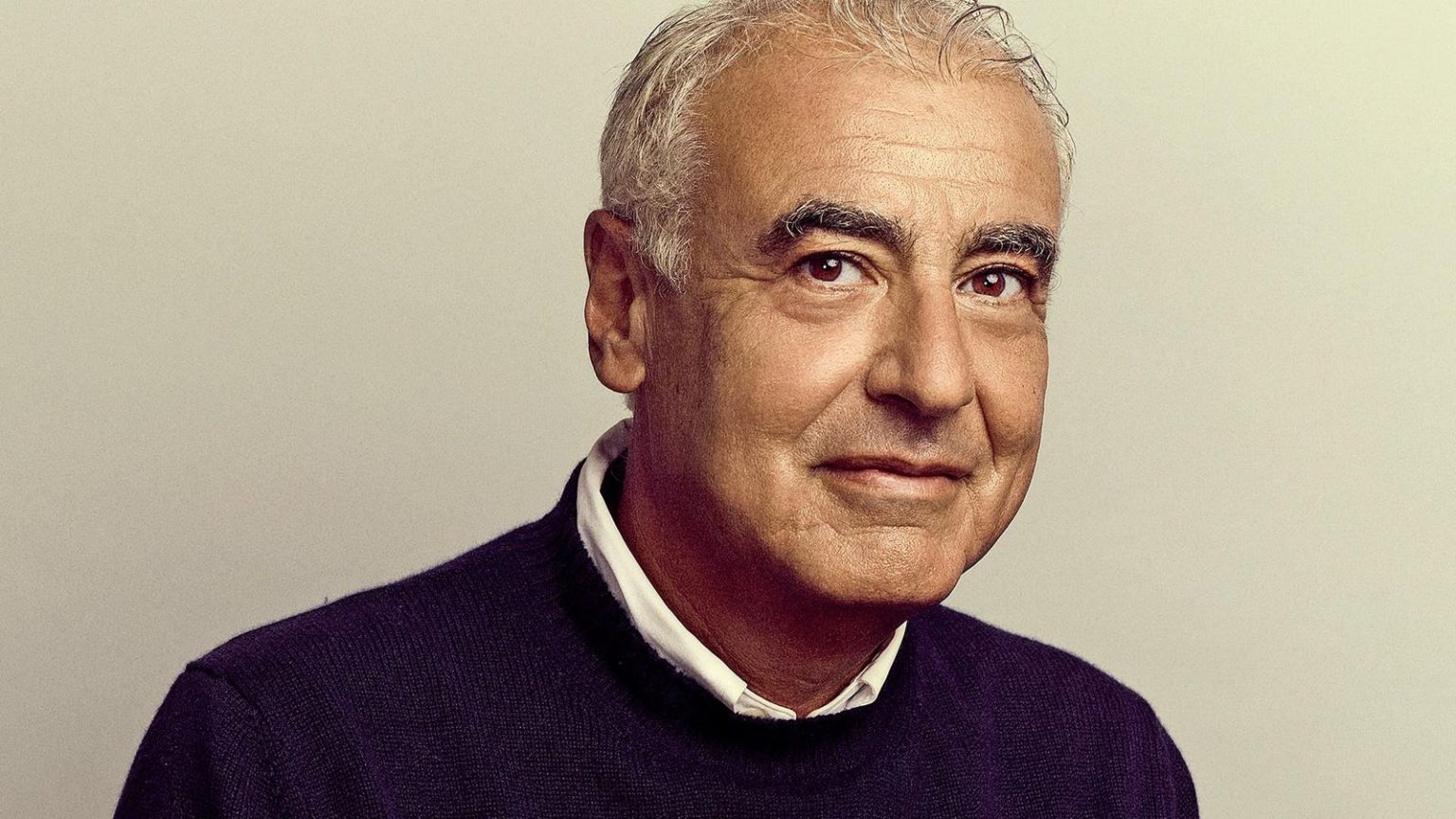
Morocco-born vulture investor Marc Lasry and his sister Sonia Gardner have made billions buying debt and other troubled interest-bearing obligations, such as tax liens. Now they’ve set their sights on sports, looking for value in unexpected places like Major League Pickleball and the NBA’s Africa league.
By Maneet Ahuja, Forbes Staff and Hank Tucker, Forbes Staff
Twenty Formula 1 engines rev in synchrony as they ready for a practice run through the streets of downtown Singapore for September’s annual Grand Prix at Marina Bay Street Circuit. Marc Lasry, billionaire cofounder and CEO of $12.5 billion private equity firm Avenue Capital Group, is taking a break from a party upstairs at the Paddock Club to visit the garage of the Mercedes-AMG Petronas team.
“We’ve been looking at some F1 teams to invest in, [so] I wanted to come out here to meet and talk to a number of people,” Lasry says, straining to be heard above the squeal of pneumatic wheel guns, as F1 star Lewis Hamilton climbs into his car. Lasry won’t say which team he’s eyeing, but given his deep-discount approach to investing, it’s not likely to be a podium favorite like Mercedes.
In April, Lasry sold his 25% interest in the NBA’s Milwaukee Bucks at a $3.5 billion valuation—a sixfold profit after nine seasons, including the Bucks’ first NBA championship in 50 years in 2021. The transaction boosted Lasry’s net worth to $2.1 billion, an impressive 17% jump from a year ago, but still $800 million short of this year’s cutoff for inclusion on The Forbes 400. When he bought the franchise in 2014 with another private equity billionaire, Wes Edens (net worth $3.9 billion), the Bucks were wrapping up a season as the NBA’s worst team.
Lasry, 63, and his 61-year-old sister Sonia Gardner are distressed-asset investors, and for most of the last 35 years, bonds and other forms of debt have been their specialty. After the 2008 crisis, for example, Avenue made a $400 million windfall investing in the bank debt of Ford Motor Company, which had fallen below 40 cents on the dollar over concerns that it would collapse. Ford ultimately paid in full: 100 cents on the dollar.
Says Lasry from his waterfront Connecticut mansion, “If you stay calm and buy when everybody is panicking, over time, you will end up doing well.”
Since inception, debt-focused Avenue has afforded investors in its various funds returns ranging from 10% to 19%, net of fees. Moreover, Avenue’s pledge is that its managers won’t start pocketing carried interest until its limited partners have achieved an 8% return.
Right now, Lasry is finding opportunities because the Federal Reserve’s rapid rate hikes have put a strain on many small banks, prompting them to pull back from lending. “By not [guaranteeing deposits] you’re hastening the demise of smaller banks. They can’t grow,” Lasry says. “Best case, all they’re doing is telling everybody, ‘Don’t worry, we’re fine’—and the minute you’re explaining why everything’s okay, it’s not.”
HOW TO PLAY IT
By Martin Fridson
Investors can get a piece of the distressed-debt action by buying Pioneer High Income Trust, a closed-end fund that focuses on lower-rated corporate bonds, loans and convertibles. PHT is aggressive within the high-yield space, holding a lot of single-B and triple-C issues including Viking Cruises and Tenet Healthcare. PHT’s investment strategy and use of leverage has positioned it especially well to profit from the rebound in distressed debt coming out of recessions. In 2009, after the Great Recession, the fund posted a 104% total return; after the March 2020 recession PHT delivered a 62% 12-month total return. The fund currently yields 9.47% and is trading 10% below its net asset value.
Martin Fridson is editor of Forbes/Fridson Income Securities Investor and CIO of Lehmann, Livian, Fridson Advisors LLC.
Avenue is happily filling the void, lending privately at rates as high as 15% currently. Property tax liens have been another fertile area for Lasry; he has been buying them in bulk. When homeowners are late to pay their property taxes, municipalities often sell tax lien portfolios to investors like Avenue. The town passes off the headache of debt collection, and Avenue gets to collect the interest payments, which can be anywhere between 9% and 18%. Tax liens are senior to home mortgage debt. Thus, if the house ends up in foreclosure, Avenue gets paid before the mortgage holder.
“There’s zero risk of loss,” Lasry says. “A house that’s worth a million dollars would have to be worth less than $15,000, because the tax lien is 1.5%, which is impossible.”
Born in Morocco, Lasry immigrated to the United States with his parents in 1966, when he was 7. His mother, who taught French at the school he and his two younger sisters attended, made Lasry learn English by reading the Funk & Wagnalls encyclopedia. His father was a computer programmer for the state of Connecticut.
Marc and Sonia both attended Clark University in Worcester, Massachusetts, from which Marc graduated in 1981 with a B.A. in history. Before attending New York Law School, he worked as a UPS truck driver and briefly considered ditching his academic plans due to the high wages and good benefits.
After clerking for New York bankruptcy judge Edward Ryan, Lasry landed at bond brokerage Cowen & Company in 1987, managing $50 million in partners’ capital. Not wanting to hire a future competitor, Lasry recruited his sister to join the firm. Says Gardner, now president of Avenue, “As a brother and sister, we have 100% trust in each other.”
In 1989, Lasry and Gardner, then 30 and 27, respectively, left Cowen to manage money for one of its biggest clients: Robert M. Bass, the legendary Texas billionaire (current net worth $5.3 billion). Under the tutelage of David Bonderman, the siblings invested mostly in bank debt, senior bonds and trade claims through a fund called Amroc, a play on Maroc, the French word for Morocco.
“Marc is willing to be aggressive when he thinks something is right, and he doesn’t let a small fact get away,” says Bonderman, who went on to cofound private equity giant Texas Pacific Group and is now worth $5.8 billion. “If somebody needs to say no, it’s Sonia. Marc doesn’t like to say no to people.”
In 1995, attracted by bigger deals in the burgeoning private equity business, Gardner and Lasry started Avenue with $7 million in capital.
“Marc has always been focused on investments and the investors. I focus on managing the business day to day,” Gardner says. The formula has worked well. By 2008 Avenue’s assets swelled to $20 billion.
During the financial crisis, Avenue was down 30%, but thanks to smart investments in Ford and the fire-sale bonds of AIG, its assets rebounded 80% in 2009 and 30% in 2010. Then Lasry decided to return $9 billion to his investors, cutting Avenue’s assets to roughly $12 billion.
“You had no more distress, so we thought—totally wrongly—we’ll return capital and the next [down] cycle will be in two or three years and it’ll be great,” Lasry says. “The next cycle was like 12 years later.”
Since the start of the pandemic, Lasry and Gardner have been finding a smorgasbord of discounted assets. Avenue spent $110 million buying 100% of the debt of an Indian toll road operator that is building a highway through the western coastal state of Gujarat. During Covid, there were fewer drivers on the road and the operator struggled, so Avenue restructured and took control of it. It’s now generating a 10% to 15% return, and if people drive more, Lasry says that figure will rise to 20%.
More than half of Avenue’s assets today are in its non-U.S. funds—its sixth Asia fund has generated a 11.5% annual return since April 2020, net of fees, and it’s currently raising a seventh. It also has $4 billion in its Europe funds.
Sports could be another big winner for Avenue investors. True to form, Lasry’s new $2 billion Avenue Sports Fund is taking a value investor’s approach rather than only buying expensive chunks of teams in the NBA or MLB. It has already recruited an “Athletes Council” that includes NFL Hall of Famer and Good Morning America cohost Michael Strahan; skier Lindsey Vonn and soccer star Lauren Holiday (both Olympic gold medalists); and former WNBA star Candace Parker. In return for a small slice of the fund, the athletes will help make connections and offer advice. Lasry hopes to capitalize on women’s sports and budding global leagues, including the Basketball Africa League, which completed its first season in 2021 and which he thinks is ripe for exponential growth. He notes that teams can still be acquired for less than $25 million on a continent with 1.5 billion people.
“Marc has a unique connection to the continent,” says NBA commissioner Adam Silver. “He’s analogized what’s happening in Africa to where the NBA was several decades ago, and I think that’s right. He’s clear-eyed about what it will take to build a successful league there, but he wants to be on the ground floor.”
With its new fund, Avenue will compete in a crowded field of private equity sports investors. Arctos Partners, which has nearly $7 billion in its funds, has several MLB, NBA and NHL teams in its portfolio, and Michael Rees’ Dyal HomeCourt Partners has pieces of at least three NBA teams. Private credit specialist Ares Management raised a $3.7 billion sports fund last September.
Lasry isn’t worried about competition, believing his track record will give him an edge with potential partners. He notes that two years after launching Major League Pickleball’s Milwaukee Mashers with former tennis star James Blake for a $100,000 investment, the team is worth millions today.
“On the investment side, it’s about what’s the price,” he says. “In sports, it’s much more ‘Do I want to be partners?’ If we bid within 10% or 20% of wherever anybody else is bidding, we’ll win.”
MORE FROM FORBES
Read the full article here

