


Powerful forces want to change the way the internet works, and it could have profound implications for big tech. This is what investors need to know.
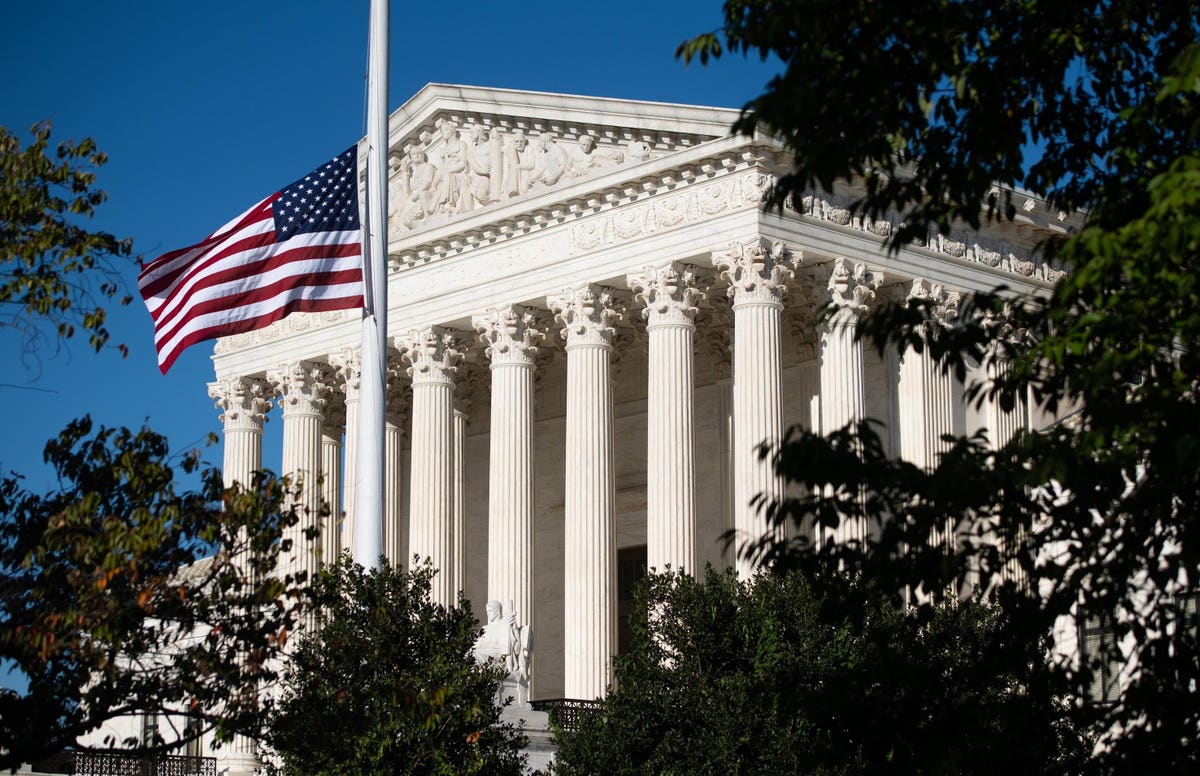
The Supreme Court on Tuesday began hearing opening arguments to end legislation that shields internet companies from liability over third party posts. Investors are too pessimistic.
Buy Alphabet (GOOGL) and Meta Platforms (META).
Section 230 of the Communications Decency Act is in the spotlight. The legislation passed in 1996, and it gives internet companies broad immunity to post user-generated content without the fear of litigation. Proponents argue companies like YouTube, Facebook and Twitter are akin to town halls where third-party users post information under their right to free speech.
Opponents see the social contract differently. Because big tech companies monetize, and often promote those posts algorithmically, tech companies are more like news organization. They should bear responsibility for information posted on their platform.
This would mean Alphabet is legally liable for every user generated post on YouTube. It’s not hard to see how this might break big tech business models. The firms would be constantly in litigation.
Gonzalez v. Google, the case now before the Supreme Court, is the first big test of this proposed new paradigm.
Nohemi Gonzalez was a U.S. citizen who was killed in 2015 when ISIS terrorists attacked Paris. Her family alleges that Google caused her death by promoting pro-ISIS videos though its YouTube recommendation algorithm. This violated the Anti-Terrorism Act by aiding and abetting ISIS, according to the Gonzalez attorneys.
Democrats and Republicans alike want to repeal Section 230.
Voices on the political left say big tech companies are not doing enough to keep their platforms free of third-party content that leads to violence and misinformation. Conservatives assert big tech firms repeatedly go too far censuring viewpoints from the political right.
There is a solution, and it is a win for big tech: regulation.
Regulation is often misunderstood, however. It essentially means tighter control over what is posted online. It creates a barrier to entry, helping existing big tech platforms. These barriers harden defenses from disruption. They slow innovation.
This is extremely important, especially now. Investors are worried that search, social, and messaging may be disrupted for the first time in two decades. Generative artificial intelligence chatbots such as ChatGPT have gained tremendous momentum and mindshare. Repealing Section 230 will mean new regulation for upstarts, too.
The Supreme Court might also help big tech, by doing nothing.
Several news outlets reported Tuesday that many Supreme Court Justices seemed confused by the premise of Gonzalez v. Google.
Justice Ketanji Brown Jackson, a liberal member, and Justice Samuel Alito, a conservative, questioned the line the plaintiffs sought to draw between what constituted YouTube’s speech, versus that of the third party according to a report at The Hill. CNBC noted that Justice Brett Kavanaugh, a conservative, expressed concern that such broad interpretation of speech would hamper any attempt to organize information on the internet. And Justice Elena Kagan, a liberal, later told a lawyer for Google that this decision may be better suited for Congress.
Recaps of the hearing from The Washington Post, Bloomberg, The Wall Street Journal, Fortune and Politico all point to a good day for the defense. Justices seemed skeptical that Google should be held accountable for the death of Nohemi Gonzalez.
Shares of big internet firms have been under pressure for more than a year. Much of the weakness is due to worry over what future legislation stemming from cases like Gonzalez. Investors understand defeat might cripple business models that depend on third party content.
Longer-term investors should embrace the negative sentiment. The opportunity for Alphabet and Meta is being dramatically undervalued. At worse, their platforms will be regulated, locking out smaller, disruptive competitors. At best, nothing will happen as the Supreme Court punts the case to Congress, where it will be lost in years of political in-fighting.
Buy Alphabet and Meta Platforms into further weakness.
Are you ready to take control of your financial future? Our Strategic Advantage newsletter provides the insights and guidance you need to succeed. Try it now for just $1!
Read the full article here

