


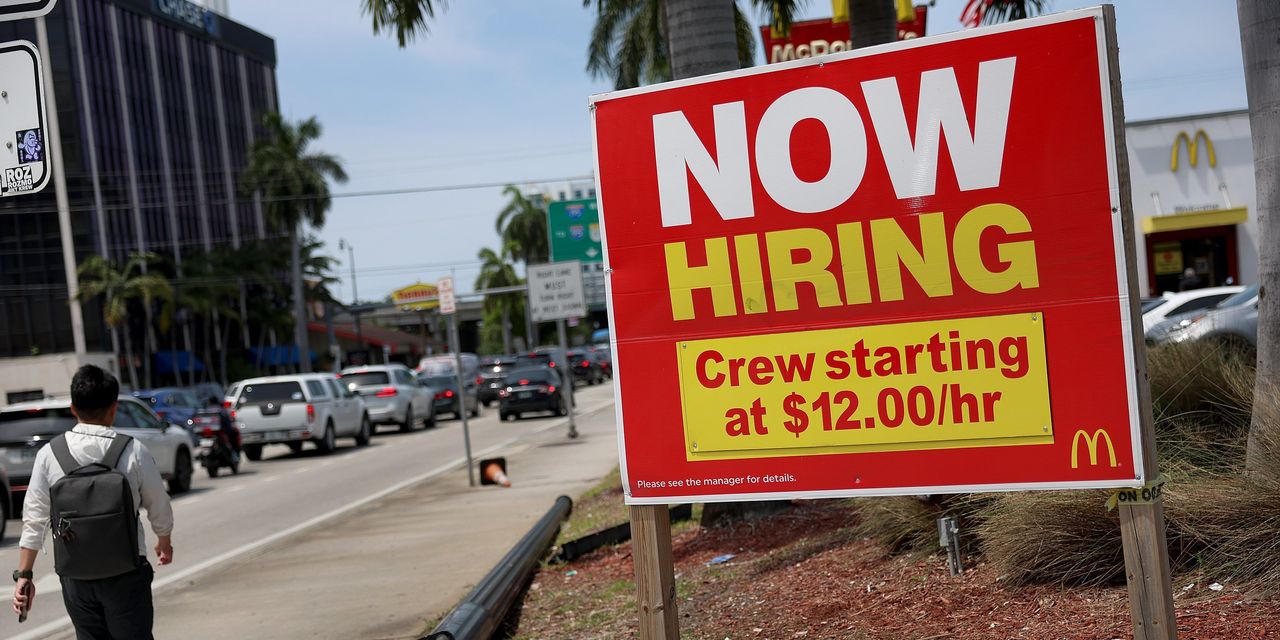
The U.S. Department of Labor’s monthly labor-market updates have been driving outsize swings in stocks since the start of 2023, a sign that one of the most closely watched economic-data reports has regained some of the relevance it had ceded to inflation data last year.
Since the start of 2023, the S&P 500 index
SPX,
has moved on average 1.7% in either direction in response to the employment data, which has long been seen as the marquee economic data series in the U.S., according to several economists and market analysts.
However, the jobs data faded in importance last year as inflation shot higher, to levels unseen since the early 1980s.
Inflation reports spurred large selloffs and surges last year, including the biggest moves of the year, although down days proved to be more common as the S&P 500 ultimately fell 19.4% in 2022, according to FactSet data. The selloff marked the biggest calendar-year drop for the index since 2008.
For example, on Sept. 13 last year, hotter-than-expected August inflation data sent the S&P 500 down 4.3%. On Nov. 10, a lower-than-expected October reading helped send the S&P 500 rallying 5.5%.
For better or worse, inflation’s impact on stocks has faded since the start of the new year. The S&P 500 has moved on average 0.6% in either direction in response to the release of the Department of Labor’s monthly consumer-price index data, according to Dow Jones Market Data. That’s less than the daily average daily swing of 0.8% for all sessions this year, according to FactSet data.
One reason jobs data may matter more to markets this year is that investors have been bracing for a recession, but it’s widely understood that unless the labor market breaks, U.S. economic growth should remain robust, or at least passable, market analysts said.
The jobs data shows that the U.S. labor market has continued to chug along, despite other signs that growth might be slipping. For example, the Institute for Supply Management’s manufacturing gauge fell to 46.9% in May from 47.1% the month before, according to data released Thursday. Any reading below 50% indicates a slowdown, and the data have been reporting dismal results for months.
What’s more, the Treasury yield curve, considered a surefire recession prognosticator, has been consistently inverted for the better part of a year. Despite all this, jobs growth has continued to surpass economists’ expectations.
Data on job creation beat Wall Street’s expectations during 10 of the past 12 months, according to data supplied by Callie Cox, U.S. equity strategist at eToro. That could be one reason stocks have been more reactive, since typically data surprises lead to bigger moves.
But in a broader sense, labor-market data has taken on renewed importance since the labor market is seen as the last bulwark against recession, and stocks have recently pulled back in the face of other data showing that one might soon arrive.
The logic is pretty simple, Cox said.
“Employment growth is a critical prerequisite for economic growth,” she told MarketWatch.
Put another way: consumer spending is the most important driver of economic growth in the U.S. And consumers need to be making money if they’re going to be spending money. Without jobs, consumers can’t spend. It’s that simple.
Data released by the Commerce Department showed consumer spending on goods and services was responsible for $17.36 trillion out of total U.S. GDP of $25.46 trillion in 2022. That’s roughly on par with the long-term average of 70%, data show.
At times this year, monthly jobs data has blown away expectations.
To wit, the S&P 500 fell by more than 1% after the January jobs data was released on Feb. 3. The data showed 517,000 new jobs were created in January, compared with a median estimate of187,000 from a survey of economists conducted by the Wall Street Journal.
Why did stocks sell off in response? According to Michael Lebowitz, a portfolio manager at RIA Advisors, blockbuster jobs numbers make traders nervous that the Federal Reserve might need to jack up interest rates even higher.
“The thing to keep in mind is the Fed has linked employment to inflation,” Lebowitz said during a phone interview with MarketWatch. “That’s why the market cares so much.”
Fed Chairman Jerome Powell has repeatedly said that unemployment will need to climb to bring inflation to heel. He has promised to keep interest rates high until inflation returns to the central bank’s 2% target.
As for Friday, Lebowitz said he expects the data to be pretty robust.
“There’s nothing out there telling you the labor market is weakening,” Lebowitz said.
U.S. stocks climbed on Thursday, with the Dow Jones Industrial Average
DJIA,
gaining 153.30 points, or 0.5%, while the Nasdaq Composite
COMP,
climbed 1.3% and the S&P 500 rose by 1%.
Read the full article here

