


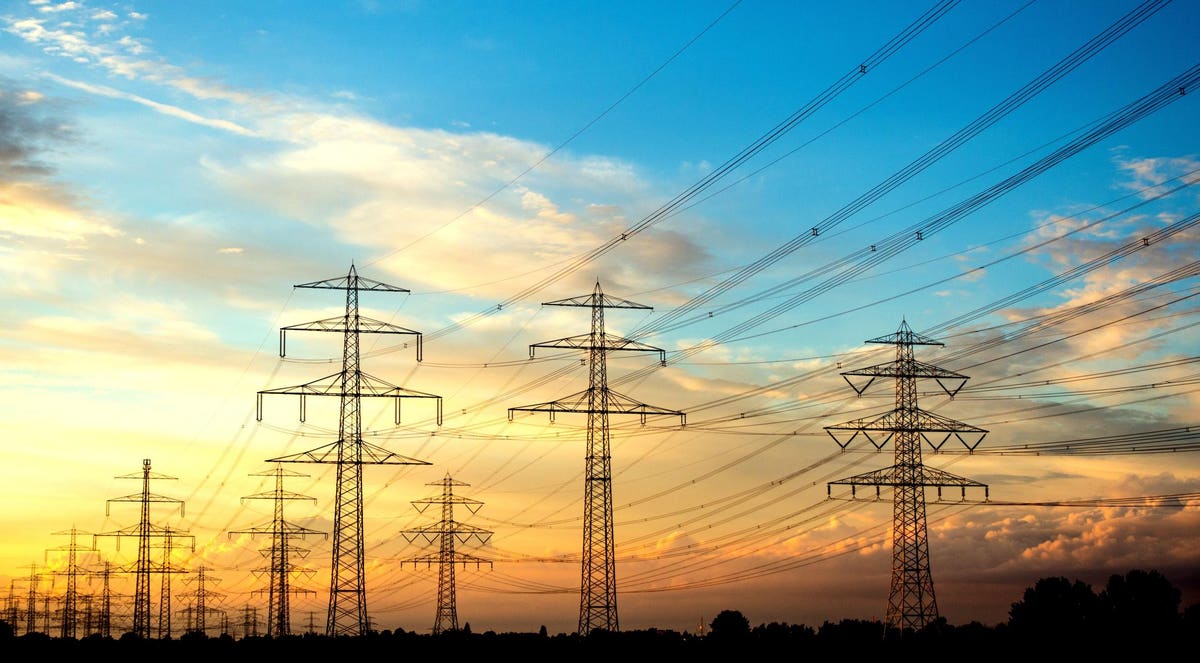
Senator Chuck Schumer made a plea last week to the Federal Energy Regulatory Commission (FERC), urging commissioners to hasten rulemakings meant to streamline the construction of new transmission lines. As it appears more and more unlikely Congress will return to permitting reform this session, Democrats are turning to the regulatory process instead. However, the current 2-2 partisan split on the FERC is slowing down their progress. Moreover, the significant changes Democrats seek will inevitably have to go beyond mere regulations, necessitating the passage of new laws by Congress.
Democrats are slowing coming to terms with the reality that without new transmission lines, they cannot plug new renewable projects into the grid. At current rates, the execution of the “clean energy transition” they seek so desperately could take years. An excellent example of this is the New England Clean Power Link, a proposed transmission line designed to bring hydropower from Canada to New England. First proposed in 2014, it has yet to be completed due to bureaucratic hang ups and opposition from various interest groups. Across the country, renewable projects are being left stranded due to a lack of connecting infrastructure.
The dilemma comes at a time when many states and localities maintain significant authority over transmission lines passing through their jurisdictions, and it just so happens that many areas where Democrats wish to construct are in Republican districts. Consequently, some Democrats are contemplating cutting a deal with Republicans on permitting reform, an issue that was the focus of a Congressional hearing on Wednesday.
While there are certainly good reasons to expedite the approval of energy projects, Republicans should not feel rushed to broker a deal with Democrats. There are two principal reasons for this.
First, some reforms just passed in this summer’s debt ceiling deal. These were modeled after the BUILDER Act, which was inspired by permitting reforms put forth by the Trump administration. These conservative reforms constitute steps in the right direction. While not groundbreaking, they favor Republicans, who can fall back on them as leverage before agreeing to any new Democratic reforms, such as those related to transmission lines.
Second, and most crucially, time is not on the Democrats’ side. The Inflation Reduction Act (IRA) of 2022, a federal law designed to subsidize renewable energy projects, was rammed through Congress along partisan lines through budget reconciliation. The majority of its subsidies come in the form of various tax credits, deductions and rebates, which are set to expire after ten years due to the nature of the reconciliation process. Moreover, the partisan manner in which the subsidies were passed makes it less likely they will be renewed.
The implication of this is significant. It takes five years on average for energy projects to become operational after entering the “interconnection queue” to connect to the grid. Each renewable project delayed beyond the ten-year window likely means less federal tax expenditures from IRA subsidies, thus saving taxpayers money. It’s obviously problematic when viable projects are delayed by needless permitting or transmission holdups, but many renewable projects are a wash. In essence, the energy already being produced is simply being replaced with a less reliable source of energy.
Today, the U.S. has twice as many power outages from severe weather as it had just two decades ago, and no doubt unreliable energy sources are a key reason for this. This ties into one of the primary objectives of the Democrats. They are pushing for transmission line “reform” in part because they want to enable less reliable parts of the grid to be able to connect to—and therefore be backstopped by—the energy produced from the more reliable sections when problems arise. Democrats also want FERC to be able override local decisions in red states and counties, such as in Ohio and Texas, where many new wind and solar installations are being built.
Republicans should not be duped by these developments. They hold a strong negotiating position. While there are valid reasons to eliminate unnecessary permitting obstacles, Republicans should hold out for an optimal deal. A new paper from my CEI colleague Daren Bakst outlines exactly the kinds of reforms Republicans should be looking to make as part of any deal.
First, and most obviously, permitting reform should be industry neutral, meaning it shouldn’t favor some sectors over others. The great irony here is that many Democrats supported creating roadblocks to energy development to hold up projects they don’t like. They’d love to fast-track renewables while continuing to stymie oil and gas, but reforms should be neutral with respect to energy source.
Second, permitting reform shouldn’t be limited to the National Environmental Policy Act (NEPA). Other statutes like the Clean Water Act and the Endangered Species Act also include permitting requirements, some of which interact with NEPA in complicated ways. Congress should take a deep look at all these statutes and revise them together in a comprehensive manner.
Finally, any standard about the “national interest,” set for the purpose of speeding up certain projects, should be defined by Congress and not federal agencies (or the president), who can’t be trusted with making this decision in an apolitical manner. Again, any definition should be broadly neutral with respect to technology.
Finally, one of the best things Republicans could do is to premise an earlier phase-out of IRA subsidies as a precondition for permitting reform. This may sound like a nonstarter, but one thing is clear: Time is on the side of Republicans. If they play their cards right, they can get a meaningful deal that boosts America’s energy production. But even if that doesn’t happen, they can simply sit back and do nothing, saving their constituents and taxpayers a considerable amount of hassle and money as IRA subsidies continue along their march toward expiration.
Read the full article here

