


© Reuters. FILE PHOTO: Flags of U.S. and China are seen in this illustration picture taken August 2, 2022. REUTERS/Florence Lo/Illustration
By David Kirton
SHENZHEN, China (Reuters) – For the ambitious Chinese tech entrepreneur, expanding into the U.S. just keeps getting harder.
Before 2019, there were few major impediments to having a Chinese company that did business in the U.S. from China. But amid escalating U.S.-Sino trade tensions, particularly after Washington slapped sanctions on telecom giant Huawei, some Chinese firms began setting up headquarters overseas – moves that could help them draw less U.S. government attention.
Now, some mainland China tech business owners say they need to go further and gain permanent residency or citizenship abroad to avoid the curbs on and the biases against Chinese companies in the United States.
Shenzhen-based Ryan, who declined to give his family name due to fear of reprisals in China, says his three-year-old software startup has reached the point where it would be natural to expand in the U.S. – the world’s biggest economy. His firm already has a million users in East Asia and a strong base in North America.
But he’s dismayed by the U.S.-China trade spats and the restrictions on a growing number of Chinese companies that have been imposed, or are being proposed, by U.S. lawmakers.
“It’s very unfair,” he said, lamenting that competitors from other countries did not face similar issues when trying to expand into the United States.
“We feel a lot like the filling sandwiched in the middle of a biscuit.”
His solution? He’s trying to gain permanent residency in another Asian country.
Reuters spoke to seven tech entrepreneurs from mainland China, most of them educated overseas, who would like to expand their businesses in the United States. All are trying to gain permanent residency or citizenship elsewhere, with most exploring a range of options including Hong Kong, Canada, Japan, the United States and Singapore.
Of the seven entrepreneurs, three agreed to be identified by their English first names only while the others requested complete anonymity, all citing concerns about repercussions within China. They also asked that their businesses not be described in detail.
COLDER SHOULDERS
While U.S.-China tensions may have been given new impetus under the Trump administration which levied tariffs broadly and imposed sanctions on Huawei, the friction has continued unabated under President Joe Biden as both countries vie for global tech pre-eminence.
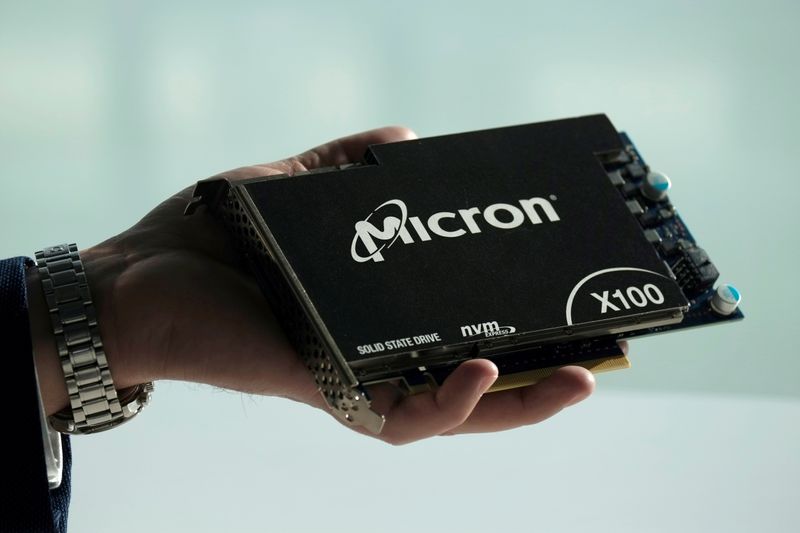
Major flashpoints include U.S. export curbs on chips and data security concerns that have seen ByteDance-owned TikTok banned on U.S. government devices and altogether by the state of Montana. For its part, China recently blocked key industries from using Micron Technology (NASDAQ:) products and has sought to rein in foreign consultancies and due diligence firms.
Geopolitical tensions have meant a far less friendly atmosphere for mainland Chinese companies wanting to operate or gain funding in the United States, the entrepreneurs and consultants say.
“The political narrative in Washington DC and in many state capitals is based on the misconception that all Chinese companies are intertwined with and taking direction from the Chinese government and the Chinese Communist Party,” says James McGregor, chairman for Greater China at U.S. communications consultancy APCO Worldwide.
The U.S. Commerce Department did not respond to a request for comment on attitudes towards Chinese companies within the United States.
China’s foreign ministry said in a statement that some Western countries want to “politicize technology, putting up obstacles to regular technology and trade cooperation, which benefits neither side, and adversely affects global technological advancement and economic growth.”
BECOMING LESS CHINESE
But even if expanding into the United States has become that much harder, it is still the end goal for most of the entrepreneurs Reuters spoke to. Focusing on the domestic market is hardly an attractive option despite its size, they added.
A two-year regulatory crackdown on China’s once-freewheeling technology sector from late 2020 – which overlapped with draconian zero-COVID curbs during the pandemic – has led to their disillusionment with China under Xi Jinping.
“Everything changed during the pandemic,” said entrepreneur Wilson, who began looking for ways to move his software startup abroad after Xi won an unprecedented third term last year.
He said that while it was not impossible to do business from China, distrust between Washington and Beijing had become such that “it’s easier for my employees, for my shareholders, if I’m out.”
China’s State Council of Information Office (SCIO) and foreign ministry did not respond to requests for comment on efforts by some entrepreneurs to move abroad or their expressions of disillusionment with China.
Firms looking to rebase offshore and even “de-China” in terms of company identity have become a trend, said Shenzhen-based Chris Pereira, who runs business consulting firm North American Ecosystem Institute.
Companies that have visibly de-emphasised their Chinese identity include online fast-fashion retailer Shein which has made a Singapore firm its de facto holding company. In early May, e-commerce firm PDD Holdings moved its headquarters from Shanghai to Dublin.
Shein declined to comment and PDD did not respond to a request for comment.
So far this year, Pereira’s firm has had around 100 inquiries from mainland companies seeking help to expand abroad. Pereira said he advises many on how to effectively localise overseas and become part of a community as opposed to just masking their Chinese identity.
The entrepreneurs said they were unconvinced by Beijing’s expressions of support for private business owners and were worried about the loss of civic freedoms. Being ambitious in China also often entails cultivating ties with the Chinese Communist Party – a step they are reluctant to take, some of them also said.
Tommy, another entrepreneur, has moved abroad from China, dispirited after government censorship requests concerning his product became too frequent and intrusive, leading him to shut down the business.
The SCIO did not respond to a request for comment on how censorship affects businesses in China.
Tommy is now setting up a new startup and eventually would like to move to the United States – that’s despite having been questioned at length by U.S. customs officials as to why he had a U.S. bank account when on a recent business trip there.
The U.S. Customs and Border Protection agency did not respond to a request for comment.
Read the full article here

