


As of this month, many stock analysts might find themselves outlaws.
For five years, American regulators shielded Wall Street’s research from a European rule that bans money managers from paying for research through trading commissions—a long-established payment arrangement known as “soft dollars.” On July 3, the U.S. Securities and Exchange Commission let that protection lapse.
Brokers say the resulting conflict between U.S. and European laws leaves them with the choice of halting research or risking sanctions. An irony of now subjecting Wall Street to Europe’s soft-dollar ban is that regulators in the European Union and the U.K. are planning to roll back the ban, after concluding that it hurt investment research. Stock market research in both the U.S. and Europe has diminished for decades, as its funding has dwindled.
“There is no reason to harm U.S. market participants, investors, and companies with a European requirement that both the European Commission and U.K. are planning to significantly roll back,” said Ken Bentsen, chief executive of the Securities Industry and Financial Markets Association, or Sifma.
The EU’s ban on paying for research through trading commissions took effect in 2018, as part of a package of financial regulations called the Markets in Financial Instruments Directive, or MiFID II. The intent of unbundling research payments as “hard dollars” was to give investors transparency on the costs of trading and research. Most American brokers had to heed the new rule, because they did business in Europe or traded here for European clients.
But Wall Street firms worried that the MiFID II rules conflicted with U.S. rules and industry practice. So they persuaded the SEC in 2017 to agree not to act against them, in announcements that the regulator calls “no action” letters. That protection that lapsed July 3.
As a consequence, brokers who take payment for their research will be required to register as investment advisors. But investment advisors can’t trade with their clients as principals—which is a service brokers often provide to their institutional customers. Investment advisors are also held to a fiduciary standard—which requires lengthier consultations with clients that some brokers fear will trip up their trading operations.
Smaller brokers face another obstacle to registering as an advisor, Bentsen told Barron’s. Those brokers don’t manage the $100 million in assets needed for registration. Some don’t manage any money at all. One such broker had their application rejected by the SEC’s Division of Investment Management, said Bentsen.
Wall Street research is already heavily regulated, said Joe Corcoran, the managing director of Sifma’s Capital Markets Group.
“Broker-dealers have been providing research to their money manager clients forever. It’s really an inducement to get the money managers to trade with them,” he said.
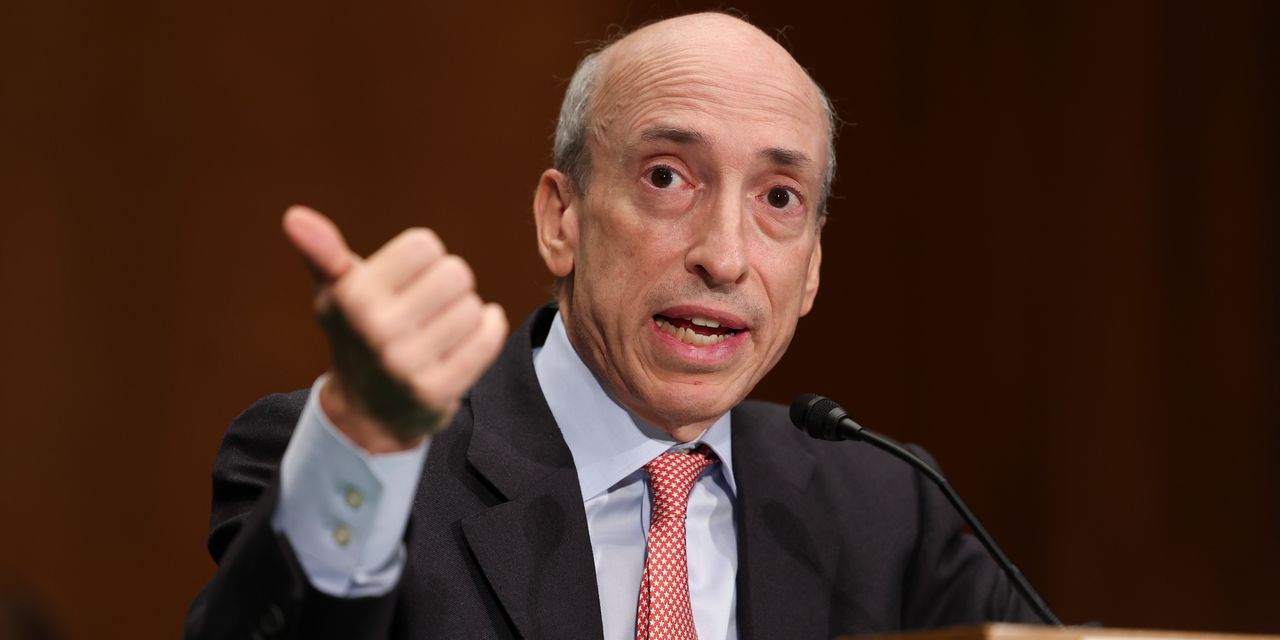
Asked Wednesday about the SEC’s refusal to extend its no-action protection against the MiFID II research rules, Chair Gary Gensler pointed out that the agency had indicated its intention last year, at a securities law conference.
“If you’re receiving hard dollars for research, you need to be registered as an investment advisor,” said Gensler.
The Democratic Gensler’s view on soft dollars wasn’t shared by his Republican colleagues, however. After the July 3 expiration, Commissioner Mark Uyeda warned that a soft dollar ban will diminish sell-side research and could leave investors at the mercy of internet rumors.
But just as the SEC is subjecting Wall Street to the EU’s soft-dollar ban, Europe is planning to back off from its rule. In a December 2022 directive on improving Europe’s capital markets, the European Parliament said MiFID II’s unbundling rule had reduced the availability of research—especially on smaller public companies. As Barron’s warned in a 2017 article, the EU found that independent investment research had dried up under the regime.
So European regulators are discussing an unbundling rollback. The U.K. has gone even further, and announced July 10 that it will reverse the soft-dollar ban that remains on its books from before the Brexit break from the EU. An independent study commissioned by Britain’s Chancellor of the Exchequer, concluded last week that bundled payments had enabled U.S. brokers to invest more in research and maintain broader coverage.
“There are some people who don’t like soft dollar payments, even though they are heavily-regulated,” said Sifma’s Bentsen. “They should go to Congress to change it. They shouldn’t rely on European law to do their work for them.”
As it happens, the brokers seem to have gotten to Congress first. On July 11, the House passed a bill which—if adopted by the Senate and signed by the White House—would direct the SEC to extend the no-action protection another six months, while it finds a solution to the research payment snafu.
Write to Bill Alpert at [email protected]
Read the full article here

