


A sovereign debt crisis in an African country might seem inconsequential to the average investor. But successfully restructuring the debt of Zambia, the country in question, demanded the improbable cooperation of China, Western institutions, and Wall Street—and that should grab the attention of investors worldwide.
As relations between the U.S. and China sour over spy balloons and artificial intelligence, debt restructurings in other countries have emerged as a rare forum for accord. That Beijing, Zambia’s biggest creditor, came to the table and played ball bodes well for bond investors who took a dominant role in funding developing nations over the past decade. With other sovereign restructurings under way, and the list of countries at risk of default growing, the resolution of Zambia’s debt ordeal suggests that these investors could see gains.
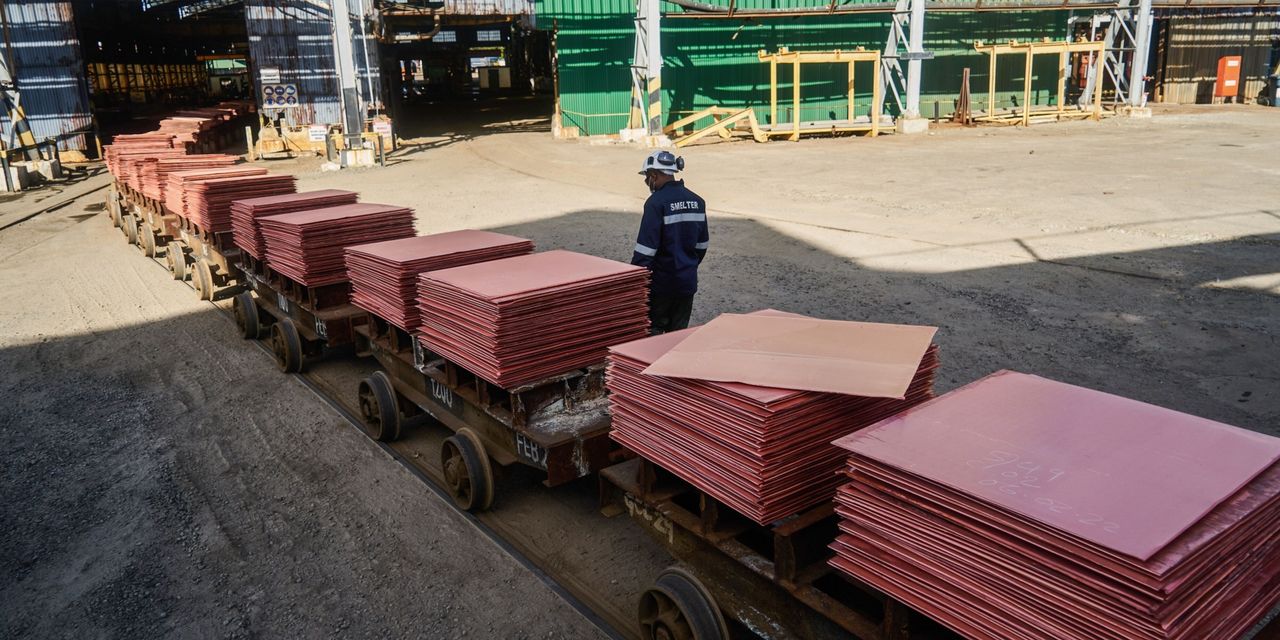
A landlocked country in southern Africa, Zambia is bigger than Texas in size, with a population near that of New York state. It is one of the world’s largest copper producers, which helped it attract foreign lenders and contributed to its insolvency.
As commodity prices plunged in 2020 with the spread of the Covid pandemic, Zambia’s currency lost value and the country defaulted on some of its $3 billion in dollar-denominated Eurobonds. China had lent large sums to Zambia through institutions and state-owned banks, while private investors, including hedge funds and asset managers such as
BlackRock
(ticker: BLK) and Fidelity, held the majority of its debt. Paris Club countries, including the U.S., the United Kingdom, and France, held a smaller portion, which totaled $13 billion.
The makeup of Zambia’s creditors reflected a decade-plus shift in the world of sovereign debt—and complicated matters. The Paris Club and multilateral institutions historically handled most lending and followed a familiar process to deal with defaults. Loans were made under a mandate of development, and debt relief and generous terms weren’t uncommon.
China and private investors, however, operate differently, and are less forgiving. “The question of how China’s credit is handled relative to private creditors suddenly became much more salient around the world,” says Brad Setser, a senior fellow at the Council on Foreign Relations.
After the 2008-09 financial crisis, the outlook for frontier and emerging markets strengthened relative to developed economies. With interest rates low elsewhere, private capital began to flow to developing countries’ bonds. The Institute of International Finance estimates that the amount of external debt held by bondholders that had been issued by 73 countries the World Bank classifies as poor enough to warrant special debt-relief processes rose by more than 2,800% from 2010 to 2021.
| In 2010 | In 2021 | % Change | |
|---|---|---|---|
| Long-term debt of 73 Common Framework-eligible countries (in billions; estimates) | $215 | $627 | 192% |
| Held by: | |||
| Bond investors | $3 | $88 | 2833% |
| China | $14 | $104 | 643 |
| Commercial banks | $13 | $72 | 454 |
| Multilateral lenders (IMF, World Bank, others) | $118 | $259 | 119 |
| Western-dominated Paris Club countries | $48 | $67 | 40 |
Sources: Institute of International Finance; World Bank
China began to lend aggressively overseas in 2013, as its foreign policy favored building infrastructure to facilitate trade. The world’s second-largest economy became a rival lender to Western countries and institutions, spending about $1 trillion in the past decade to expand its influence via its Belt and Road Initiative.
“China went from having almost no lending to most frontier markets in Africa and Asia-Pacific to being one of the primary lenders,” says David Rogovic, a senior credit officer focused on sovereign debt at the rating firm Moody’s.
This inevitably meant that when things went south, China dealt with debt restructurings. Bailouts ballooned, with China providing about $240 billion in overseas rescue lending in the past decade, according to the World Bank. China handled these situations with debtor countries individually in a process that has attracted scrutiny for its lack of transparency.
“Lack of clarity over terms and whether or not Chinese creditors will roll over or extend additional loans to reduce liquidity risk—that’s the key challenge,” says Rogovic. “Not knowing what will be restructured…reduces investment.”
After a more limited restructuring in Chad last year, Zambia became the second case tackled under the Group of 20’s Common Framework for Debt Treatment, created by the world’s major economies in 2020 to address debt sustainability in poor countries. Zambia was a test case for cooperation between China and a diverse group of official and private creditors. Things didn’t go well. Protracted negotiations held up new financing, including a $1.3 billion International Monetary Fund bailout.
“[China is] used to negotiating on their terms,” says Kevin Daly, an investment director for emerging market debt at the asset manager Abrdn, who sits on Zambia’s bondholder committee.
Nevertheless, official creditors reached an agreement in June, giving Zambia a three-year grace period before it has to begin repayment of $6.3 billion in loans over the next 20 years. The agreement triggered approval of a $189 million bailout installment from the IMF. The deal with official creditors is contingent on Zambia’s private creditors reaching a similar agreement; that group holds slightly more debt, with a deal looking possible in August.
Yet the road to restructuring was fraught with tensions between the U.S.—a major driver behind the Common Framework—and China. Both U.S. Vice President Kamala Harris and Treasury Secretary Janet Yellen made trips to Zambia this year and pushed for a resolution to the restructuring impasse. Harris said that all bilateral creditors should make meaningful debt reductions, an indirect reference to China as a holdout, while Yellen called on China to forgive some debt.
“China came through but after a really long, torturous process,” says Setser. “But it is certainly a good sign that eventually a deal was found, and that deal does involve real concessions.”
Not only did China make concessions in terms of debt relief, but the way it negotiated also heralded a different approach. Chinese representatives in the restructuring were cooperative and willing to exchange ideas, ultimately acting as a positive force in the process, according to a person familiar with the negotiations. It suggests that while U.S.-China ties remain frosty over a range of issues, more practical relations might be improving.
“I don’t think there’s much prospect for any significant breakthrough in the many issues that we have between the U.S. and China,” says David Dollar, a senior fellow at the Brookings Institution and a former U.S. Treasury emissary in China. “Interestingly, if there is any significant progress, it may be in debt relief for countries that have unsustainable debt.”
China’s cooperation in the Zambia workout boosts the prospects for frontier and emerging market debt. “The impression of a lot of investors was that China wasn’t really willing to grant very substantial debt relief,” says Lucas Martin, emerging markets fixed-income strategist at Bank of America. “This does suggest that they’re perhaps more open to that. Breaking that impasse in the first country probably does make it easier for the next set of countries to renegotiate their debts.”
Each case is unique—and China’s role varies widely, as does the application of the G20 Common Framework—but the outcome in Zambia might bear on debt situations in Ghana, Ethiopia, and Sri Lanka.
China has been unwilling to cooperate directly with the Paris Club, a group of more than 20 predominantly Western creditor countries, but acceded to the Common Framework proposed by the more diverse G20, which includes Chinese allies Russia and Saudi Arabia. Engaging in the Common Framework allows China to tackle debt sustainability that threatens Belt and Road progress, while also maintaining some control in setting a precedent for debt relief for the scores of countries to which it has lent money.
“They’re definitely not doing this as any kind of favor to the U.S.,” says Dollar. “They’re doing it because it’s in their self interest.”
Even so, cooperation with the West was a welcome side effect.
In Zambia’s case, there is a contingency in the official creditor deal allowing for the interest rate paid on its debt to rise from a maximum of 2.5% to 4% if the country’s economy outperforms by 2026, based on an IMF and World Bank debt-sustainability analysis.
A restructuring deal reached in May between Suriname, a South American country, and private investors included a promise to pay bondholders a share of any future oil revenue. In an era when China and private creditors have become dominant lenders, more tools like these—ensuring upside for investors—could be built into debt agreements.
Says Martin: “I would be constructive on the distressed debt [of frontier and emerging markets] in the short term…many of these distressed bonds are probably trading below some reasonable estimates of what the recovery would be after a restructuring is completed.”
Over a longer time horizon, however, rising debt in developing countries and falling access to new funding paint a grim picture. More than half of low-income countries are in or at high risk of debt distress, according to the IMF. Kenya and Pakistan look vulnerable.
Meanwhile, China has clamped down on lending since 2019 amid economic woes at home. The bond market, too, remains largely shut for distressed sovereigns, with global interest rates at a generational high, the dollar falling from multidecade peaks, and shocks still being felt from Russia’s invasion of Ukraine. Sovereigns will need to tap new financing, but neither China nor the bond market are likely near-term lifelines.
“Two important sources of funding for the past decade have both dried up…but you do have repayments,” says Rogovic, who described an approaching “maturity wall.”
“Is it really feasible to imagine that these countries are going to be able to finance those bonds in the market?” adds Martin.
The answer probably is no, meaning that further cooperation will be needed between China, the West, and investors. More than the fate of frontier and emerging market debt could be at stake.
Write to Jack Denton at [email protected]
Read the full article here

