


Unlock the Editor’s Digest for free
Roula Khalaf, Editor of the FT, selects her favourite stories in this weekly newsletter.
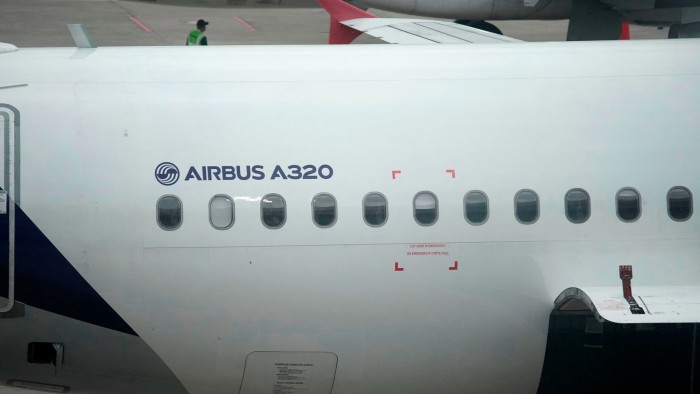
Airbus has warned that quality issues are affecting a limited number of fuselage panels on its best-selling A320 aircraft, adding to wider challenges faced by the European aerospace group as it races to meet an ambitious end-of-year jet delivery target.
The company on Monday confirmed it was inspecting all aircraft potentially affected by the issue, which it said stemmed from “a supplier quality issue affecting a limited number of A320 metal panels”.
Airbus said it was taking “a conservative approach” and that it believed only some of the planes would require further action.
“The source of the issue has been identified, contained and all newly produced panels conform to all requirements,” it added. A spokesperson declined to comment on whether the quality flaw had reached aircraft in service.
Shares in the company fell more than 9 per cent earlier on Monday to their lowest level since April after Reuters first reported the production issue. The shares later recovered some of their losses and were trading down 6 per cent by midday.
Investors on Monday were already digesting the fallout from a software update required on about 6,000 A320 jets over the weekend. Although most airlines were able to contain major disruptions to their services by implementing the update relatively quickly, the directive — the largest in Airbus’s history — took investors and the industry by surprise. The A320 is the world’s best-selling commercial aircraft of all time.
The issue adds to challenges facing the European aerospace and defence group as it seeks to deliver on an ambitious target to hand over about 820 jets to airline customers by the end of the year. Airbus has managed to cement its lead over Boeing in recent years as its US rival has struggled with the consequences of two fatal crashes of its 737 Max aircraft as well as production challenges.
Planemakers’ delivery targets are closely watched by investors as a key metric for cash flow and revenues, as airlines pay the bulk of the cost of the planes on delivery.
Airbus was already believed to be struggling to hit its jet delivery target amid persistent supply chain disruptions, including a lack of engines. The company has also had to absorb engine issues on its newer A320 jets powered by Pratt & Whitney, which had forced hundreds of jets to be taken out of service for maintenance.
Read the full article here

