


Unlock the Editor’s Digest for free
Roula Khalaf, Editor of the FT, selects her favourite stories in this weekly newsletter.
For years, rumours swirled about the mansion hidden behind the tall grey gates. Perched on a high hilltop in Madagascar’s capital of Antananarivo, it was one of several homes belonging to President Andry Rajoelina.
“I wouldn’t hang around there,” a wary passer-by warned earlier this week. “There are seven snipers and 14 guard dogs patrolling inside.” True or not, Rajoelina’s mansion was spared the fate that has befallen the homes of at least three of his close associates, which demonstrators on the Indian Ocean island attacked during a weeks-long, violent political crisis.
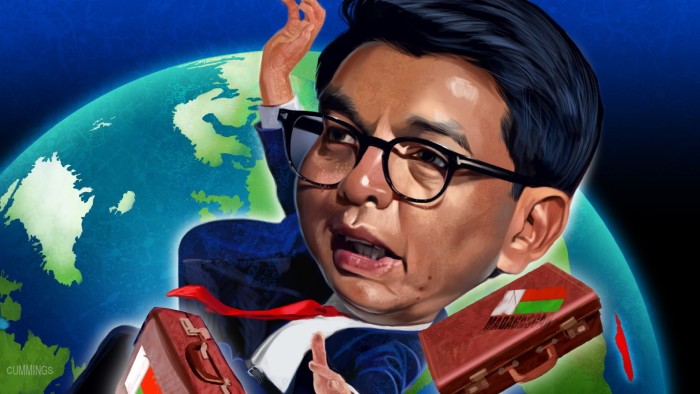
Rajoelina himself hasn’t been so lucky. A groundswell of protests pushed him out of power on Monday, capping the stunning rise and fall of the charismatic 51-year-old media mogul and DJ-turned-president who has led this African country on and off since 2009.
Even by Madagascar’s tumultuous political standards, the speed of his downfall has been dizzying. In late September, students began demonstrations over chronic water and electricity shortages. The protests, inspired by similar Gen Z demonstrations in Nepal, Kenya and Morocco, quickly morphed into widespread calls for an end to endemic corruption and poverty and his removal.
At the start of the week, Rajoelina posted a video on social media stating that he was in a “secure location” but insisting that he remained in control. Diplomats said he and his family were in hiding in Dubai. The following day, parliament voted to impeach him. Soldiers then announced they were dissolving the Senate, the constitutional court and the national electoral commission, leaving only the National Assembly in place.
Colonel Michael Randrianirina, head of the elite CAPSAT military unit that first ushered Rajoelina into power in 2009, was sworn in as head of state on Friday. The military has promised to hold an election within two years. The uprising marks the fourth coup since the south African nation gained its independence from France in 1960. At the centre of it all, Rajoelina’s exit offers a cautionary tale.
“He was arrogant. He didn’t listen to what the people wanted,” says Sara Rajaonarison, one of many students gathered in the main town square on Friday to watch Randrianirina’s swearing in. “We weren’t even asking him to step down in the beginning. We just wanted the basics — the people deserve to have a functioning country.”
Eighteen years ago it was Rajoelina himself, then mayor of the capital, who was rallying youngsters frustrated at the levels of poverty and corruption.
His high-speed personality and celebrity status earned him the nickname “TGV” after the French ultrafast train. Although he was then too young to stand as president, the protests he led eventually drew the backing of the military. The same elite unit that joined the most recent Gen Z demonstrations installed him in a 2009 coup when, aged 34, he became the world’s youngest head of state.
Born in 1974 in Antsirabe, a city in the central highlands of Madagascar, Rajoelina was the son of an army colonel. He started as a teenage DJ then launched an events business and bought a radio station. But his penchant for dramatic business stunts didn’t always translate well to politics.
Seizing on the popularity of the Hollywood film franchise Madagascar, he once offered international investors tax exemptions to import giraffes, zebras and elephants from sub-Saharan Africa to boost tourism. No one took him up on the offer. As the country reeled from Covid-19, he also promoted a herbal remedy called Covid-Organics, based on a local plant, which he claimed would cure the illness in days.
Under his rule, entrenched poverty and corruption have continued. Despite being a top global exporter of vanilla and rich in gems and minerals, Madagascar’s GDP per capita is about $500 and has barely budged in the past decade. Some three-quarters of citizens live below the World Bank poverty line.
“In this country, the only way you can live well is if you have money. Us ordinary people are forced to live by different rules to politicians like Rajoelina,” says Herinaina Anathihazo, a market trader. “We need to leave something better for the future generations. Rajoelina might have been a good DJ but he wasn’t a good president.”
As the demonstrations continued, Rajoelina belatedly tried to quell them by dissolving the government and announcing that he was open to talks with protesters. A spokesperson for the former president said these attempts were fruitless. “Unfortunately, despite our efforts, no clear or structured leadership has emerged to engage in constructive talks.”
Marc Ravalomanana, the former president whom Rajoelina pushed out in 2009, says he had made multiple attempts to reach out to his rival. “As an elder statesman, I would have been happy to help,” he says. Ravalomanana told the Financial Times that he wasn’t planning to run again in any upcoming elections — though he still has popular support.
As the dust begins to settle, Madagascar is now wondering whether its new military leaders can do the job any better. “We’re seeing the result of the idealistic approach instead of having feet on the ground,” stated a Madagascar Tribune editorial. “[Offering] Gen Z a better future is a long-term task. It is not obvious that the rescuers who pitched up yesterday . . . have the desire and the ability to do it.”
Read the full article here

