


Stay informed with free updates
Simply sign up to the German economy myFT Digest — delivered directly to your inbox.
The head of Germany’s Bundesbank has called on Berlin to soften its tough spending rules, warning that Europe’s largest economy faced a “complicated” and “weak” outlook.
Germans are set to head to the polls in February, with the post-pandemic stagnation of Europe’s largest economy feeding into widespread voter discontent with Chancellor Olaf Scholz’s ruling coalition.
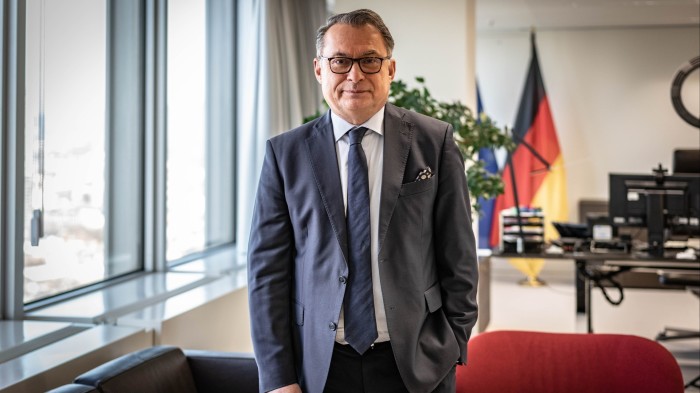
Bundesbank president Joachim Nagel told the Financial Times the next government needed to reform its so-called debt brake, which bans Berlin from borrowing more than 0.35 per cent of GDP in any fiscal year, to address the longer-term economic risks facing Germany.
More fiscal space to address structural threats — such as boosting defence spending and modernising the country’s infrastructure — would mark a “very smart approach”, Nagel said.
The Bundesbank president’s remarks are the most outspoken yet on how he believes a future chancellor should deal with Germany’s limited fiscal leeway.
The current outlook was, Nagel said, even “more complicated” than at the start of the 21st century. While unemployment was much worse then, “there was no geopolitical fragmentation and world trade was growing strongly”.
Germany’s economy has effectively seen no real growth since the second half of 2021, with its dominant manufacturing sector under pressure from high energy costs and waning competitiveness.
The return of Donald Trump to the White House could exacerbate those challenges, with the president-elect threatening a blanket tariff of up to 20 per cent on all US imports.
The Bundesbank will not officially update its growth forecast until later this month, but Nagel said 2025 was likely to be “another year of weak growth” for the German economy, with the central bank’s estimate likely to be about 0.4 per cent.
Growth was likely to be even weaker, should Trump implement blanket tariffs on the scale he had pledged, the central banker said.
“If you put major increases in tariffs on top of current forecasts, the economy might broadly stagnate for even longer,” he said, adding that “even the labour market might show more noticeable weakness”.
Germany’s seasonally adjusted unemployment rate, as defined by the Federal Employment Agency, remains relatively low at 6.1 per cent. However, this level partly reflects the creation of an abundance of low-paid positions in the services sector, at the expense of well-paid manufacturing work.
Nagel said he was still confident that the country could overcome any crisis, saying: “Past experience shows that when Germany is feeling the pain, Germany will change.”
He singled out discussions over reform of the constitutional debt brake as an example of how Germany could cope.
“We can think about making a distinction between consumption expenditures and investments to get more leeway on the structural investment side,” he said, pointing out that German debt to GDP has fallen significantly and is approaching the level of 60 per cent set by the EU’s stability and growth pact rules.

The inability to balance spending needs with the limited financial leeway created by the debt brake was a main reason for the collapse of Scholz’s ill-fated three-way coalition between the Social Democrats, the Greens and the Free Democrats last month.
In the run-up to the snap election, which is likely to take place in February, an overhaul of the strict borrowing cap has become a central topic. The leader of the opposition and most likely candidate to secure the chancellorship, Christian Democratic Union party boss Friedrich Merz, has signalled he might be open for limited reforms of the debt brake.
The Bundesbank first floated ideas to reform the debt brake in 2022.
Nagel said in March that Germany “in certain periods of time” could run “slightly” higher deficits without putting stability on the line.
Nagel acknowledged that the debt brake, agreed in 2009, had been “a very helpful tool” after public debt shot up dramatically in the aftermath of the global financial crisis. During the euro crisis, having the break in place also delivered the message “that governments have to get their debt and deficit situation under control”.
The Bundesbank boss, who has a vote on the European Central Bank’s governing council, declined to give any indication of his views about the next rate decision, scheduled for December 12.
However, he said the ECB’s 2 per cent inflation target was “in sight” and should be reached “by the middle of next year at the latest”.
Eurozone inflation was 2.3 per cent in November. The ECB’s latest forecasts imply rate-setters will hit their goal over the course of 2025.
He stressed that he would not “over-emphasise” the risk of the ECB undershooting its 2 per cent target as core inflation — a measure seen as a better indicator of the persistence of price pressures — was “still very sticky”.
Data visualisation by Steven Bernard in London
Read the full article here

