


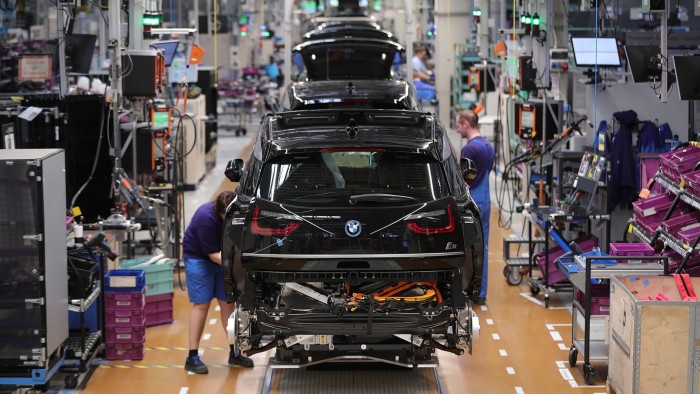
Last month, my car went into the shop for its third software-related recall in six months. Once again the friendly guys at the dealership were unable to install the necessary update on their own. Instead our now-undriveable SUV sat on their lot, awaiting its turn with experts at BMW headquarters. The queue took four days.
That delay was both painful and pointless. Automakers learned long ago to have the necessary parts and labour on hand before calling in a vehicle for a physical recall. Surely a company that claims to have 9mn fully upgradeable cars on the road already can set up an equivalent process for software.
Managing such updates is only going to grow more important with the spread of electric vehicles and increasingly sophisticated digital information and safety systems in petrol-driven cars. Software fixes made up 15 per cent of US recalls last year, up from 6 per cent five years ago, according to National Highway Traffic Safety Administration data.
BMW’s three US software recalls last year put it ahead of many rivals, NHTSA records show. Ford had the most overall with 19, followed closely by Chrysler. Tesla had the highest share with 50 per cent of its 16 recalls requiring a software fix. That is not surprising given that electric vehicles rely far more on software and have fewer parts than internal combustion engines.
But the recall data only scratches the surface of the larger software issue. Carmakers, like mobile phone providers, routinely use updates to improve existing functions and sell new services to existing customers. Tesla was a pioneer in offering regular “over the air” upgrades and paid subscriptions to its “Autopilot” self-driving system.
Most manufacturers regularly send out updates covering everything from internal lighting modes and improved battery use to vital safety changes. “It used to be, you could build a car, shrink wrap it and sell it,” says Kevin Mixer, senior analyst at the consultancy Gartner. “Now the car is a living platform . . . Companies are learning on the fly.”
That is proving harder for the legacy carmakers than for their upstart competitors. When Gartner ranked carmakers on their digital performance last year, the top seven were all Chinese and US EV makers, including Rivian, Tesla and Nio, and the traditional manufacturers posted a woeful average score of 33 out of 100.
Software woes have delayed recent launches at Volvo and General Motors, among others. Volkswagen executives grew so frustrated with their internal software development that they signed a $5bn tie up with Rivian last summer.
Traditional carmakers struggle with updates for the same reason big banks have spent billions modernising back office technology: sprawling legacy systems. While Tesla started with a clean slate, incumbent carmakers have to wrangle old electrical systems and production lines, cross firewalls and integrate software code written by suppliers.
That means some updates float in effortlessly from the ether. Others turn the car into a brick. Or, as with my latest woes, mislead the associated BMW app into thinking that my car is sitting 1,300 miles east of its real-world location with half as much battery life as it actually has.
The rewards for getting this right are considerable. As more cars offer snazzy screens and infotainment systems, and EV battery technology improves, carmakers will need to find new ways to differentiate themselves from their rivals.
Luxury goods makers have already shown that making customers feel they are getting something special is crucial to convincing them to pay extra. Done properly, software updates can strengthen the ties between carmaker and customer, maintaining the regular contact that oil changes and maintenance checks used to provide.
“The user experience and the styling of the vehicles are becoming once more the front and centre of what can differentiate cars,” says Juergen Reers, global automotive lead at consultancy Accenture. “Customer care in the best possible sense.”
Software updates are also revenue opportunities in their own right. Accenture estimates that digital services could generate as much as $3.5tn annually for carmakers by the 2040s, or 40 per cent of all revenue, up from 3 per cent today. The possibilities range from upgrades to heated seats, self-parking to enabling drivers to purchase food, fuel or premium entertainment directly from the car.
But that lucrative future will have to wait until auto groups master the art of seamless software updates. As my BMW’s visit to automotive purgatory shows, so far, that has eluded them.
Follow Brooke Masters with myFT
Read the full article here

