


Receive free UK immigration updates
We’ll send you a myFT Daily Digest email rounding up the latest UK immigration news every morning.
Rishi Sunak has said the situation with migrants crossing the Channel in small vessels to the UK is likely to get worse before it gets better as he appeared to water down his ambition to “stop the boats”.
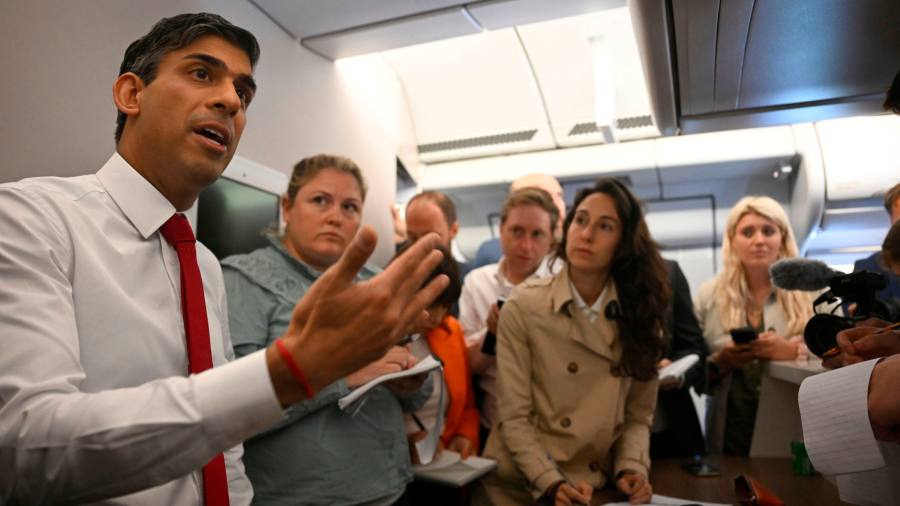
The prime minister said on Tuesday that “crossings will increase over the summer”, when migrants tend to take advantage of more moderate weather to make the dangerous journey. But he insisted to journalists, while en route to the Nato summit in Vilnius, that the plan was “starting to work”.
In January, Sunak pledged to “stop the boats” crossing the Channel, making it one of his five key pledges ahead of the general election that is expected next year. However, he simultaneously cautioned that the challenge was not something that could be “fixed overnight”.
Asked whether he would consider his policy a failure if the number of crossings did not fall by the end of the year, Sunak said it was important to measure success against the “trajectory of increases taking place year over year”.
He added that the fact that the numbers making the journey were down for the first five months of the year was a “much better result than anyone was expecting”.
He was speaking after nearly 1,700 people made the journey on 31 boats between Friday and Monday, including almost 700 on Friday, the highest daily record this year, according to the Home Office.
In the first six months of this year, the number of people arriving in small boats decreased by 10 per cent, to 11,433, compared with the same period last year, although immigration specialists cautioned at the time that poor weather may have skewed the data.
A surge in the number of people arriving over the past few days is threatening to undermine the narrative that the government’s policies have acted as a deterrent. Last year, nearly half of all people who made irregular Channel crossings arrived in July, August and September.
Despite figures showing a marked increase in people making the sometimes perilous journey across the Channel over the past few days, Sunak pointed to other areas in which his government’s policy was working, including by reducing the backlog for dealing with asylum applications by a fifth and in finding accommodation for those that do arrive in Britain.
“There are a range of things we need to do to fix this problem — we need to get people out of hotels, we need to save taxpayers billions of pounds, we need the backlog down and processed,” he said.
The prime minister’s comments came as the government’s illegal migration bill has returned to the House of Commons after it suffered severe opposition in the House of Lords last week, where peers proposed 20 changes to the legislation.
The new version of the bill, which has been amended by ministers to remove some parts that are particularly at risk of being challenged again, will be voted on by MPs this week.
Proposed concessions include not retroactively applying the legislation to people who have arrived since March of this year and limiting the detention of unaccompanied children to eight days.
Sunak said the government was “making progress” on passing the bill, which he said represented “the toughest piece of legislation any government ever put forward to tackle this problem”.
The bill also ran into problems last month when the Court of Appeal ruled that Sunak’s plan to deport people to Rwanda was unlawful.
Read the full article here

