


Receive free Donald Triplett updates
We’ll send you a myFT Daily Digest email rounding up the latest Donald Triplett news every morning.
When child psychiatrist Leo Kanner met Donald Triplett in 1938, the five-year-old’s movements were unspontaneous and repetitive. “He shook his head from side to side, whispering or humming the same three-note tune,” the Austrian-American doctor later recalled.
“Irrelevant utterances” were his normal mode of speech, with random words and phrases — chrysanthemum, “the right one is on, the left one is off” — constantly repeated. He seemed emotionally indifferent to his parents and other children.
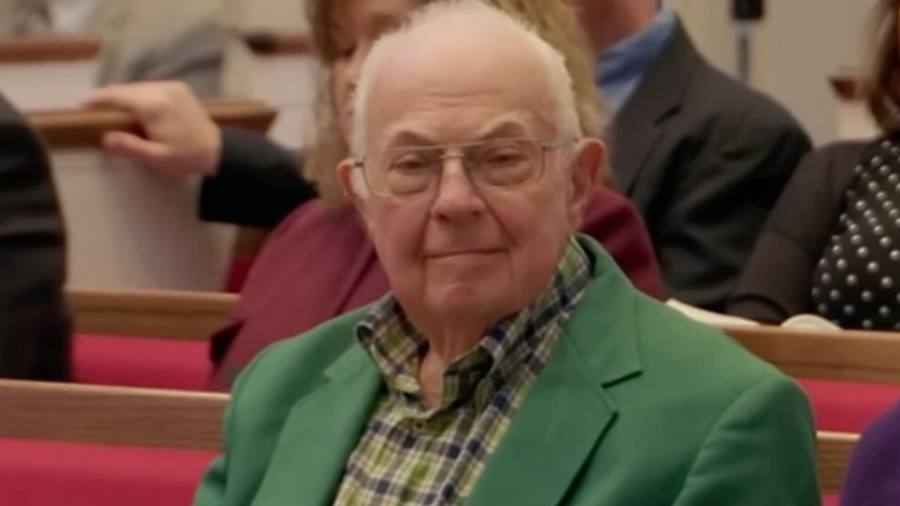
But Triplett, who has died aged 89, went on to live a life of independence and apparent fulfilment — and secured a place in the annals after becoming “Case 1”, the first person in the world to be diagnosed with autism. Even though he spent his years largely out of the spotlight, his example has reverberated around the world, advancing knowledge and understanding of the condition.
Triplett was born in Forest, Mississippi in 1933. His father, Beamon, was a Yale-educated lawyer whose own father had been the town’s mayor and his wife, born Mary McCravey, was a scion of the family that ran its bank. In Kanner’s description, “the father whom Donald resembles physically is a successful, meticulous, hardworking lawyer who has had two ‘breakdowns’ under strain of work . . . The mother, a college graduate, is a calm, capable woman to whom her husband feels vastly superior.”
Born into this small town elite, the child must have seemed destined to live a life of comfort and conventional success. However, he quickly began exhibiting strange behaviour. Notes written by his father before that first consultation with Kanner highlight the parents’ pained bafflement; even a festive Santa Claus in full regalia failed to provoke a reaction from the little boy. Yet in some ways he was precocious, able by the age of two to recite the entire 23rd psalm and 25 questions and answers of the Presbyterian catechism.
“Autism spectrum disorder” is now clearly understood as a developmental disability caused by differences in the brain. It affects an estimated one in 100 children. But 80 years ago, there was no frame through which to view and understand Triplett’s symptoms. When he was almost four, his parents sent him to live in an institution — in a town aptly named Sanatorium — but after a year, his mother had a change of heart and decided he should return to the family.
It was this fateful decision to raise the boy at home that led to him falling under the care and observation of Kanner, whose seminal 1943 article, “Autistic Disturbances of Affective Contact”, gives a rare insight into Triplett’s early life and the distinctive set of symptoms that were to become the hallmark of an autism diagnosis.
After Kanner suggested that a spell in rural surroundings might help the boy, he was sent to live for four years with a childless couple on a farm not far from his home, where he appeared to flourish. Returning to Forest, he was allowed to enter the local high school and proceeded to study French at Millsaps College in Jackson, where he joined a fraternity and sang in the a cappella choir.
Just as his earlier years were described in Kanner’s writings, his later life was memorialised by two journalists, John Donvan and Caren Zucker, who profiled Triplett for The Atlantic in 2010. A Pulitzer-shortlisted book and a PBS documentary, both called In a Different Key, followed.
Triplett learned to drive, worked as a teller in his family’s bank and loved golf. He also travelled extensively both in the US and overseas. In an era when neurodiversity was not widely understood, his foibles inspired protectiveness rather than derision in the tight-knit community into which he was born. Indeed, townspeople were unaware of his autism diagnosis until Donvan and Zucker mentioned it in 2007.
Keith Wargo, president of the US non-profit Autism Speaks, said that Triplett had “left an indelible mark on our understanding of autism” as a complex condition that was “something to be included, not ‘othered’ . . . embraced, not stigmatised”.
It is perhaps this evidence that Triplett could find a place in the world, despite quirks and eccentricities that could have marked him out for bullying or exploitation, that is his most heartening legacy.
As Donvan and Zucker wrote in The Atlantic after news of his death emerged: “It demonstrated that being accepting of someone who is different is not, after all, that hard to do.”
Read the full article here

