


Unlock the Editor’s Digest for free
Roula Khalaf, Editor of the FT, selects her favourite stories in this weekly newsletter.
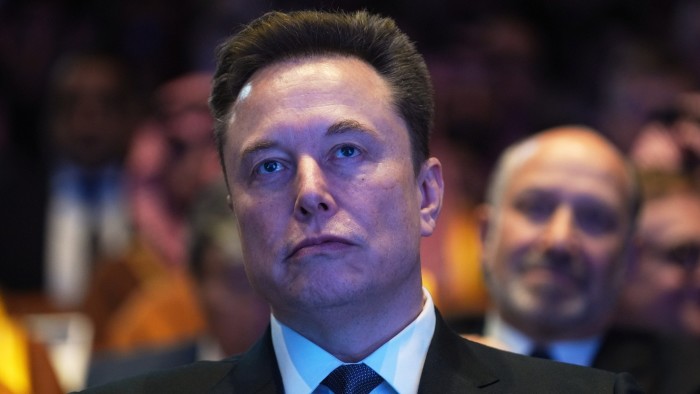
Faced with a $108bn bid backed by Oracle chair Larry Ellison, the directors of Warner Bros Discovery seem to have found themselves thinking of Elon Musk. The Tesla boss signed a merger agreement for social network Twitter in 2022, and then tried to walk away from it. Ellison is not Musk, but he could do a little more to prove it.
WBD on Tuesday shared its reasons for declining a $30-per-share offer from Paramount Skydance, the media conglomerate controlled by Ellison’s family. WBD is instead sticking by its endorsement of a deal with Netflix, which offers $27.75 in the form of cash and Netflix stock, as well as equity in a spin-off cable networks business worth perhaps a few bucks.
Its reasoning rests partly on the structure of the funding. Of the $41bn equity contribution, only $12bn comes from Ellison, and the rest from various Middle Eastern wealth funds. Ellison has offered to “backstop” the whole equity portion, but WBD protests at the entity he is using, a “revocable trust”. It wants Ellison to offer an airtight personal guarantee, as Musk did, not one issued by an “estate-planning vehicle with no transparency”.
Paramount argues that the Ellison trust, which dates back to 1988 and holds his 40 per cent stake in Oracle, is simply the billionaire’s preferred way to handle his affairs. He has, after all, used it countless times over the past three decades to fund deals including his own investment in Musk’s Twitter bid, although that was much smaller than this current deal.
Still, while that bolsters the argument that Ellison won’t walk away from his promises, it does not guarantee that he cannot do so, to WBD’s satisfaction. In theory, he has the power to move assets in and out of the trust. WBD notes that, if a court cannot later force the Paramount buyout to close, the trust is only on the hook for monetary damages of less than $3bn.
Musk, of course, did try to walk away from Twitter, claiming the company had misrepresented its spam problems. But he ultimately closed the deal as it became clearer that he had little legal leg to stand on. WBD pointed out in Tuesday’s filing that Paramount’s legal adviser is Quinn Emanuel, the same firm Musk used to attempt his foiled escape from Twitter.
Faced with the option of $30 in cash, versus Netflix’s more complicated and seemingly less valuable alternative, WBD investors may prove to be more tolerant of the potential wrinkles in Paramount’s financing than the board. The comparison is further muddied by the other risks to closing, which include regulatory reviews in multiple jurisdictions.
Even so, it would be fairly easy for Ellison to increase his odds. As the owner of $206bn of Oracle shares, he can afford to tighten up the Paramount offer with a more direct backstop or even direct contribution, and raise the offer by a couple of dollars per share to make clear it’s financially superior too. Sure, he might not want to; in a more straightforward world he might not have to. But success in Hollywood is all about knowing how to engage an audience.
Read the full article here

