


Introduction
In April, I wrote a bearish article on Ford Motor Company (NYSE:F) due to a potential macroeconomic headwind. At the time, my main reasoning for my argument was that the interest rates were too high, which strained the consumers. Unfortunately, months following my article, Ford’s stock has appreciated by about 18% while the S&P 500 appreciated by about 10%. However, I continue to maintain my bearish thesis on Ford as I believe more data points supporting tougher times for Ford have been announced. Not only does the high-interest rate environment continue to be relevant, but the pricing environment for Ford is also showing signs of weakness in demand. Therefore, I continue to believe Ford is a sell.
Electric Vehicle Troubles
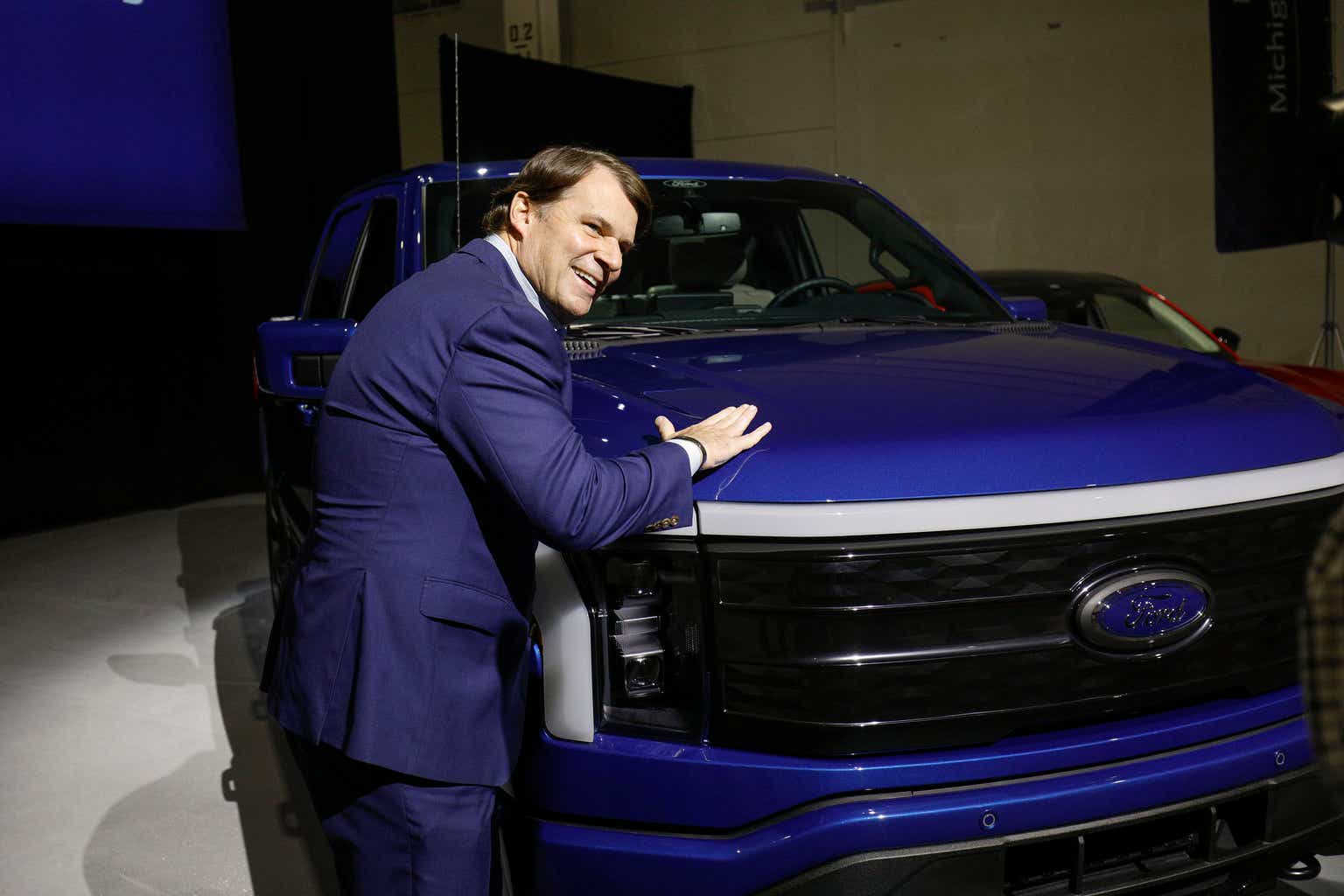
The electric vehicle market pricing environment has been extremely competitive in 2023 prompting Ford to cut prices on its F-150 Lightning.
Starting with Tesla (TSLA), the company has aggressively cut prices for all of its popular models. For Model 3 and Y, Tesla cut about 11% and 20%, respectively, making the prices competitive. These aggressive price cuts complement the Federal Tax Credit of $7500 for EV purchasers in 2023. In mere months into 2023, Tesla vehicles became extremely affordable compared to previous years.
Why? The aggressive actions of the electric vehicle market leader, Tesla, are likely due to waning demand. Although the long-term potential and demand for EVs are expected to be strong, there seemed to be limited demand for EVs relative to ICE vehicles in 2023. Also, a higher interest rate environment could have also created demand pressure for EVs. Overall, an unfavorable demand environment has prompted Tesla to aggressively cut prices.
Then, Ford, on July 17th, cut prices on all of its F150 Lightning models by at least $6,000. The base model received a $10,000 price cut. This action is followed by the company cutting the price of its Mustang Mach-E by $1,000 back in May. Clearly, the demand environment for the EV industry is not favorable affecting all players competing in the industry including Ford.
The pricing and demand environment for Ford’s EV line-ups could get even harder in the coming quarters as the economy slows and interest rates continue to climb. FED officials have hinted at about two more rate hikes in 2023 to catch sticky inflation, which will only make purchasing a car more expensive for the consumer potentially aiding the weakening demand. Further, along with the potential interest rate hikes, the US economic growth is expected to see slower growth with higher unemployment rates for the rest of 2023 and potentially 2024 creating harsher macroeconomic headwinds for Ford.
Therefore, due to an unfavorable pricing and demand environment, Ford’s EV sales could see significant headwinds for the foreseeable future.
ICE Troubles
EVs are not alone in experiencing pricing and demand pressure. ICE, internal combustion engine, vehicles will likely follow the EVs into facing demand and pricing pressures.
So far, the pricing and demand environment for ICE vehicles has been strong. The pent-up demand combined with the easing of the supply chain has allowed automakers to increase their revenues and profits. However, this strong demand environment may be waning.
The CPI data shows that new vehicle prices increased 4.1% year-over-year in June 2023. This number may misdirect investors to believe that the pricing environment continues to be strong, but that is not the case. From March to April, the new car prices showed a sequential decline of -0.2% followed by a decline of -0.1% from April to May and 0.0% from May to June. As such, the new car pricing has changed from growth to a moderate decline in recent months reflecting the weaker demand environment.
I believe it is likely for the demand and pricing environment to see additional pressure going forward. As said earlier, not only is the interest rate expected to rise but the economic growth is expected to slow in the coming quarters. Moreover, supply and demand imbalance could further weaken the environment for Ford. As the pandemic-induced demand eases along with supply chain problems, market analysts are forecasting a potential overproduction in the market. In fact, UBS (UBS) estimates that global car production will exceed sales by 6% in 2023.
Overall, the recent months’ CPI data shows that the price increase has moderated showing easing demand or a more balanced supply and demand environment. But, as the economic conditions worsen with supplies continuing to increase, the demand and pricing environment for ICE vehicles could significantly worsen creating a headwind for Ford.
Valuation
Ford has a forward price-to-earnings ratio of about 7.50. Ford had an average PE ratio of about 6.65 since 2010. Thus, simply looking at the valuation multiple suggests that Ford is trading near its historical valuation multiples at slightly elevated levels. However, when considering the company’s potential upcoming headwinds, I believe the current valuation to be expensive.
On top of the headwinds that I mentioned earlier, Ford has more negative factors. which is the company’s expected growth rate. Analysts are forecasting the company to grow its eps by -0.49% in 2023 followed by -3.96% in 2024. Although analysts are expecting positive eps growth in 2025, the continued earnings compression does not support the company’s premium valuation relative to its historical average. Therefore, I believe Ford is trading at a premium today.
Summary
Ford is facing significant headwinds in both its EV and ICE vehicle markets. EVs have been seeing industry-wide pricing reductions led by Tesla throughout 2023 likely on a weaker demand environment, which was followed by Ford in recent weeks. Further, as supply increases and demand eases, new car prices have stopped increasing and started to moderate or decrease in recent months, which is likely to accelerate in the coming quarters. Not only is the interest rate expected to continue rising, the market may see an overproduction of vehicles in 2023. Therefore, I do not believe that Ford’s current high valuation is justified prompting my sell rating on the company’s stock.
Read the full article here

