


Receive free Share buybacks updates
We’ll send you a myFT Daily Digest email rounding up the latest Share buybacks news every morning.
Few business strategies inspire as much debate as share buybacks.
Activist investors often demand them as a quick way of getting cash back to shareholders that would otherwise be wasted. Corporate executives argue that they are not only a tax-efficient alternative to dividends, but can also signal that the company is underpriced. They all hope that shrinking the total register will boost the value the market ascribes to each share.
Critics worry that both groups are trying to feather their own nests at the expense of workers or long-term investment in growth. If stock prices rise after buyback announcements, that creates an opportunity for short-term investors to turn a profit. And shrinking the share count should make it easier to earn bonuses tied to earnings per share.
The academic literature is equivocal. A US study concluded that 29 per cent of companies that announced buybacks did so at a time when they would have been at risk of missing EPS expectations without them. A more recent UK one found no link between the use of buybacks and EPS targets. That has not stopped the US from imposing a new tax on buybacks and tightening the rules around them.
Whatever your view of buybacks, one principle ought to be uncontroversial. If companies are going to repurchase shares, they should do it in an efficient and well-managed way. That is not easy, as anyone who handles very large stock sales can tell you. Boards must simultaneously maximise the number of shares they get for the company’s money, minimise exposure to market risk and keep the commissions they pay to a reasonable level.
A new study suggests that many companies are failing on all three counts. Rather than buying on the open market and paying a flat commission, at least 10 per cent are entering into complex contracts with brokers at the big investment banks.
On the surface, these accelerated share repurchase agreements look like a good deal: the broker promises up front that the company will receive a specific discount, often 0.5 per cent, on the “volume weighted average price” over a roughly four-month buying period. Its traders then decide exactly when to buy. While the company will still lose out by getting fewer shares if the price moves up sharply during the period, the bank absorbs the risk of daily swings.
The research by two Goldman Sachs alumni, Joerg Osterrieder, now a professor at Bern Business School and University of Twente, and Michael Seigne suggests the truth is much more complicated. It used UK data because those public disclosures are more detailed, but US companies hire the same banks.
While the daily VWAP benchmark is volume-adjusted, the average over the whole period of the contract generally is not. That means the traders can massage it by buying more shares on days when prices are low and only a few when they are higher. If prices start to rise consistently, they can dribble out their purchases over a longer period to boost the benchmark. They can also keep the VWAP high by finishing purchases quickly if prices start to fall.
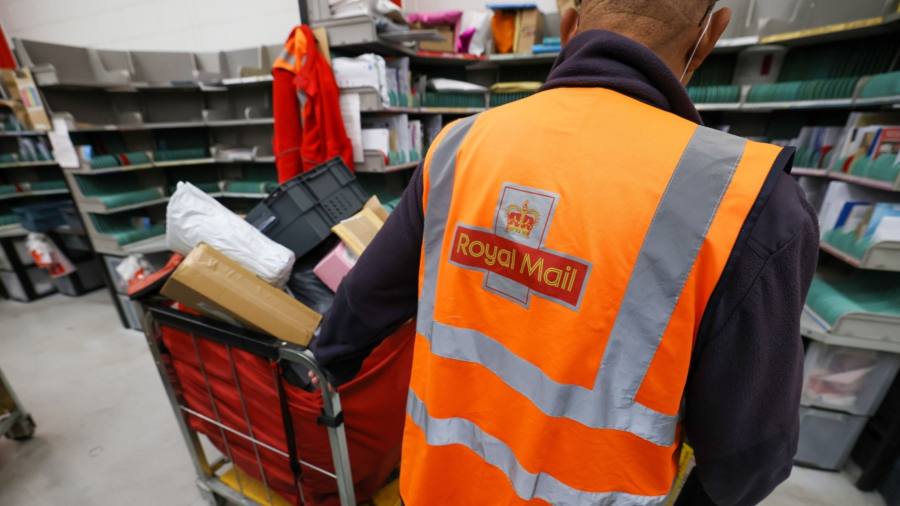
It is possible for brokers to lose money on these deals, and sometimes they do. But at times they make out like bandits. The researchers calculated that Royal Mail spent £200mn on its 2022 buyback and ended up with only £184mn worth of shares. Stamp duty absorbed £1mn, but the rest ended up in the pocket of the investment bank, for a commission in effect of more than 8.5 per cent.
“Companies and their boards do not seem to understand that if the stock price gets volatile, then brokers have an opportunity to make an extraordinary amount of money at shareholders’ expense,” says Seigne, now a consultant.
Royal Mail said the buyback “offered shareholders appropriate value for money and met the expectations of the programme. The broker fee was absorbed into the total cost, which was itself capped”.
Even some experienced bank traders who do share buybacks agree that the product sometimes fails to give clients the biggest bang for their buck. “Because you are messing around with the timing, you are not hoovering up stock when it is cheap,” one told me. “It’s not optimal.”
This is not a purely academic question. Global buybacks hit an all-time record last year of $1.3tn, triple the level a decade ago, according to research by Janus Henderson. Nearly $1tn of that was in the US in a process that had been shrouded in secrecy.
The Securities and Exchange Commission changed this in May with new disclosure rules. If they survive a court challenge from business groups, it will become possible to determine how many US companies are getting short-changed on their shares. Investors should want to know.
Follow Brooke Masters with myFT and on Twitter
Read the full article here

