


War crimes investigators, Syrian civil society and rights groups are scrambling to preserve evidence of the Assad regime’s crimes after key sites were ransacked in the chaotic aftermath of this month’s rebel victory.
The dissolution of regime security forces laid bare dozens of mass graves and scattered bags of unidentified human remains, prompting family members of people who had vanished under deposed president Bashar al-Assad to search the gruesome sites to try to establish their loved ones’ fates.
Millions of documents also lie scattered in buildings linked to the former regime, laying out in detail how it terrorised its people — a legion of bureaucratic records that normalised horrific violence and marked out individual and collective responsibility for some of modern history’s worst crimes.
These include files on thousands of deaths in regime prisons; evidence of the detention of small children; and signed confessions to very minor offences such as downloading a video game. They point to the systematic use of torture and the concealment of detainees’ deaths from their families, while pointing to what survivors said was evidence of widespread sexual abuse.
When Assad was toppled more than two weeks ago, his security apparatus unravelled, leaving nearly 1,000 intelligence branches, detention facilities, hospitals, morgues and mass graves unattended.
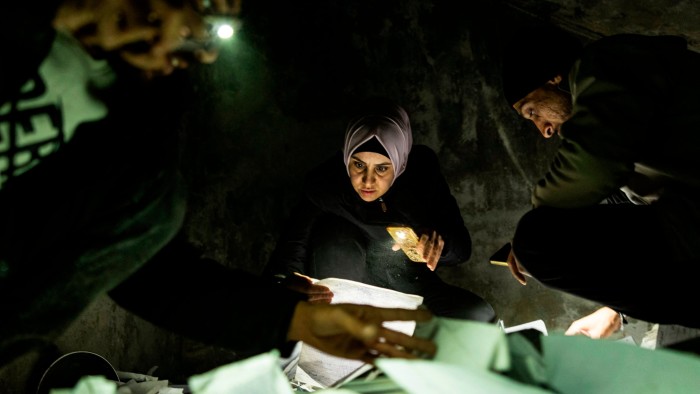
Thousands of people streamed into those facilities that night, hunting for traces of family members by turning inside-out evidence and interrogation rooms, detention cells and security offices, before rebel fighters sought to impose order. They were followed by civil society activists, rights groups, war crimes investigators and journalists, as well as former regime officers apparently trying to conceal evidence.
The truth about what happened to Assad’s victims lies in those documents now at risk.
The Financial Times gained access to more than a dozen facilities around Damascus, including intelligence branches, dungeon-like detention centres, prisons and military hospitals.
Several people walked out with documents and hard drives, including families of the missing, journalists and a patchwork of Syrian activists and lawyers who either handed material to interim authorities or hid it, saying they did not trust the incoming government led by Islamist former rebel group Hayat Tahrir al-Sham.
All rifled through mounds of scattered paperwork. Some tipped over filing cabinets holding detainee case files, medical reports, bureaucratic cables and identity documents of those hastily executed by the regime.
Some facilities had been set alight. A senior HTS military commander said their intelligence showed that there were orders from Assad loyalists to burn facilities. The FT found several military ID cards and branch employee records half-burnt in waste baskets.
Experts said the chaos could jeopardise prosecutions of members of the Assad regime, and make it harder for families to track down the missing. As many as 100,000 Syrians disappeared during the 13-year civil war alone, according to the Syrian Network for Human Rights.
“While it’s perfectly understandable that distressed families rushed in to try and find their loved ones, it’s going to make it that much harder for the overall mission of accountability if we lose key pieces of evidence,” said William Wiley, executive director of the Commission for International Justice and Accountability, a non-governmental organisation which has been gathering evidence from inside Syria since 2011.
Wiley said CIJA investigators had been quietly moving documents to secure sites inside Syria and would soon begin the mammoth task of digitising files.
Many similar bodies with the expertise to handle the evidence trove have yet to deploy into Syria, citing security problems and the legal complications of dealing with HTS, a designated terror group that is subject to international sanctions.
The interim authorities said they lacked the manpower currently to adequately secure the sites as they attend to a flood of other priorities in the war-ravaged country.
In cities where HTS arrived first, the sites were better secured, but in Damascus they arrived second to rebels from the south, and sites were left vulnerable to ransacking in the first 24 hours.
At least half a million people were killed during the war, many within intelligence branches and prisons. Despite the high numbers estimated to have disappeared, only a few thousand prisoners were found alive when rebels liberated them.
The FT examined hundreds of documents, signed by regime officials and pertaining to detainees. They included documents of people who were held in fetid cells in basements of intelligence branches, sometimes detained for months as collateral to extract confessions from others. These included ID cards of children as young as six.
In detention cells and interrogation rooms, the FT saw torture devices, including the so-called “magic carpet”: foldable slabs of wood on to which detainees would be shackled, before guards took turns stretching or pulling detainees’ limbs or folding the board in half.
There was also widespread evidence of young children in women’s detention cells, including toddlers’ shoes and baby formula, as well as contraceptive pills. These, experts said, are vital evidence that sexual assault was as rampant as former inmates have contended.
“All of this is primary evidence that is essential to preserve,” Wiley said.
Intelligence branches were the genesis of the system of enforced disappearances, in which people were summoned to report on each other, face interrogation and torture, and sometimes falsely confess to crimes.
They would then be moved into basement cells, sometimes for months, before being tried in secret courts on spurious charges and jailed.
Some prisoners were executed or died in detention, their bodies transferred to hospitals before being “lost” in a labyrinth of relocations and paperwork, documents seen by the FT showed. Orders were often given to withhold bodies from their families.
The documents showed an increase in these deaths after 2019, with at least 10 bodies sent from prisons to Damascus area hospitals each day.
Syria’s White Helmets first responders said they had found at least 536 unidentified human remains since Assad’s fall, flagged by civilians calling their tip line. While the emergency workers are collecting those remains, they said they lacked the expertise to exhume mass graves.
At one mass grave outside Damascus in mid-December, civilians removed stone slabs covering concrete compartments and lift out bags of human remains, seeking missing relatives.
Mahmoud came to claim a bag he had seen on an Al Jazeera report, on which he read the name of his brother, missing since he was taken by security forces in 2012, and the word “prisoner”. The bag of remains had been found buried with seven others.
He spent days driving around Damascus hospitals, desperately trying to find someone to conduct DNA testing and confirm the remains were his brother’s.
Health workers and the White Helmets told him they could not take custody of evidence in such a haphazard way. Israeli air strikes had knocked out the main DNA testing site in Damascus a week earlier, medical workers said — and the city lacks the capability to test such decomposed remains.
Experts warned it would take months or years to begin DNA testing of bodies from the mass graves.
Meanwhile, families of the dead and missing are painfully waiting for the chaos to subside.
Placing the bag back into his car, Mahmoud said: “I don’t know what to do and there is no one to help me. I just want to know if this is my brother so I can put him to rest.”
Read the full article here

