


“Perhaps it was the ancient nightmare of the middleman-merchant that made them all so aloof and secretive”, wrote Dan Morgan in his 1979 book Merchants of Grain. “The old fear that in moments of scarcity or famine, the people would blame them for all misfortunes, march upon their granaries . . . and confiscate their stocks.”
This time it is not hunger that thrusts the companies that control the world’s grain flows into the spotlight but dealmaking. The combination of US-listed Bunge with Glencore-backed competitor Viterra, in an $8.2bn deal, brings together two of the biggest traders of grains, oilseeds and other agricultural commodities, further tightening the grip of a handful of low-profile companies on the global market.
It is the biggest reshaping of the top tier of agricultural commodities since Cargill, long the biggest of the pack, bought the grain assets of Continental in 1999. The deal will catapult Bunge into second place among the four global traders, who go by the shorthand ABCD, to include Archer-Daniels-Midland and Louis Dreyfus. And while the alphabetic label is outdated and the market has changed dramatically since the 1970s, concerns around a concentrated system of global food production remain.
Despite some emergence in public markets and social media, it remains hard to get good figures on companies that, whether you’re farming or eating, are impossible to avoid. One oft-used stat is that the quartet control 70 to 90 per cent of global trade in cereal grains — a figure that is probably too high.
After the food shortages and price spikes of 2008 to 2012, China pushed hard into agri-trading through state-owned Cofco, which has muscled into the Big Four. Jonathan Kingsman, whose 2019 book updated Morgan’s classic, reckoned the five plus Viterra and Singapore’s Wilmar, handle half the international trade in grain and oilseeds.
Such dominance is worrying. The classic “hourglass” model of market power in food involves a vast number of producers supplying a similarly huge number of consumers, via a tight group of processors and traders. The dealmakers stress their complementary strengths but regulators, rightly, will take a close look. Argentina and Canada have already pledged to review overlaps. Brazil, Australia, the US and China are likely to follow suit, with some asset sales almost inevitable.
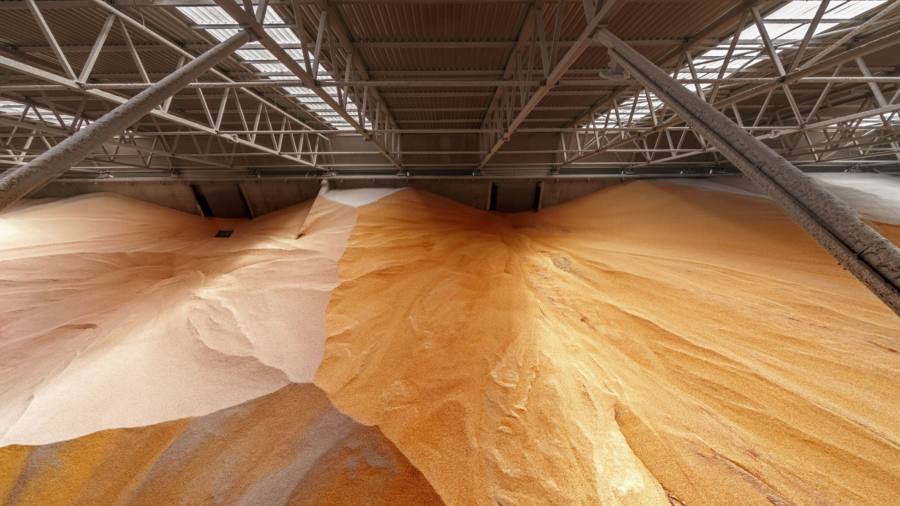
Traders is something of a misnomer: this group doesn’t make money simply shifting goods from A to B. In recent years, they have expanded upstream into agricultural origination, storage, freight and port infrastructure, and downstream into processing, ingredients and final products, while moving into a wider range of foodstuffs.
“The big issue here is that when you have this vertical integration it creates huge intermediary power from farmers to consumers,” says Jennifer Clapp, professor in food security. An asset-heavier business means higher barriers to entry, and can help transfer dominance from one part of the chain to another. Bunge’s strengths in processing and downstream plus Viterra’s in merchandising and handling creates a more integrated global company.
Still, the dealmakers aren’t wrong that this combination looks a good fit. The unease may reflect that regulators and governments should be asking who is monitoring the food system globally, beyond the narrow prism of antitrust. “Nobody” is the blunt assessment of Abdolreza Abbassian, former senior economist at the UN’s Food and Agriculture Organization.
Disruption, thanks to a changing climate, is becoming the rule rather than an exception. Traders keep food moving during crises and periods of price volatility, such as the pandemic and Russia’s invasion of Ukraine. But such events are also good for business, with surging sales and record profits last year.
The market is already in flux. Cofco’s emergence means a top tier of ABCC, replacing a commercially-motivated trader with a geopolitically-focused one. Nations preoccupied with food security are snapping up stakes: Abu Dhabi’s sovereign wealth fund bought into Louis Dreyfus in 2020; Saudi’s commodities investment company took a third stake in Olam Agri last year.
Meanwhile, post-2008 efforts to establish better oversight, led by France at the G20, largely failed. “It wasn’t sufficient,” says Abbassian, of the market information unit established at that time. “And today’s needs are much, much greater. You need transparency at every level, from all commodities to final products and a more influential set-up to look at the market.”
Bunge’s big deal will prompt competition watchdogs to scrutinise the world of agricultural trading again. Everybody else should too.
Read the full article here

