


Note:
I have covered Nikola Corporation (NKLA) previously, so investors should view this as an update to my earlier articles on the company.
In early August, new amendments to Delaware General Corporation Law resulted in ailing zero-emission transportation start-up Nikola Corporation (“Nikola”) finally gaining shareholder approval for doubling the number of authorized shares from 800 million to 1.6 billion.
Not surprisingly, the cash-strapped company wasted no time raising additional capital by aggressively selling new shares into the open market and issuing $125 million in convertible notes (“the August Notes”) to a division of New York-based hedge fund 3i Management LLC (“3i”).
Consequently, outstanding shares increased from 779.5 million on August 1 to 985.2 million as of September 20 with the majority of the surge apparently caused by the near 100% conversion of the August Notes within just four weeks.
On September 22, Nikola issued an additional $40 million in convertible notes (“the September Notes”) to 3i. At that time, only $1 million of the August Notes remained outstanding as disclosed in the second supplemental indenture.
Even when assuming full conversion of the September Notes in the near future, investors will likely have to prepare for more near-term dilution as the company retains the option to sell up to $160 million in additional convertible notes to 3i.
Remember, the terms of the convertible notes effectively provide 3i the opportunity to pocket safe gains by shorting the company’s common shares and subsequently converting the notes at a discount to prevailing trading prices (emphasis added by author):
At any time (…) all or any portion of the principal amount of each Note, plus accrued and unpaid interest, any make-whole amount and any late charges thereon (the “Conversion Amount”), is convertible at any time, in whole or in part, at the noteholder’s option, into shares of Common Stock at a conversion price per share (the “Conversion Price”) equal to the lowest of (i) a “reference price” of $2.94, subject to certain adjustments (the “Reference Price”), (ii) the greater of (x) a “floor price” of $0.38 (the “Floor Price”) and (y) the volume weighted average price (“VWAP”) of the Common Stock as of the conversion date, and (iii) the greater of (x) the Floor Price, and as elected by the converting noteholder, (y) either (x) depending on the delivery time of the applicable conversion notice, (1) the VWAP as of the applicable conversion date or (2) the VWAP immediately prior to the applicable conversion date and (y) 95% of the average VWAP for the three trading days commencing on, and including, the applicable conversion date, subject to adjustment in accordance with the terms of the Notes.
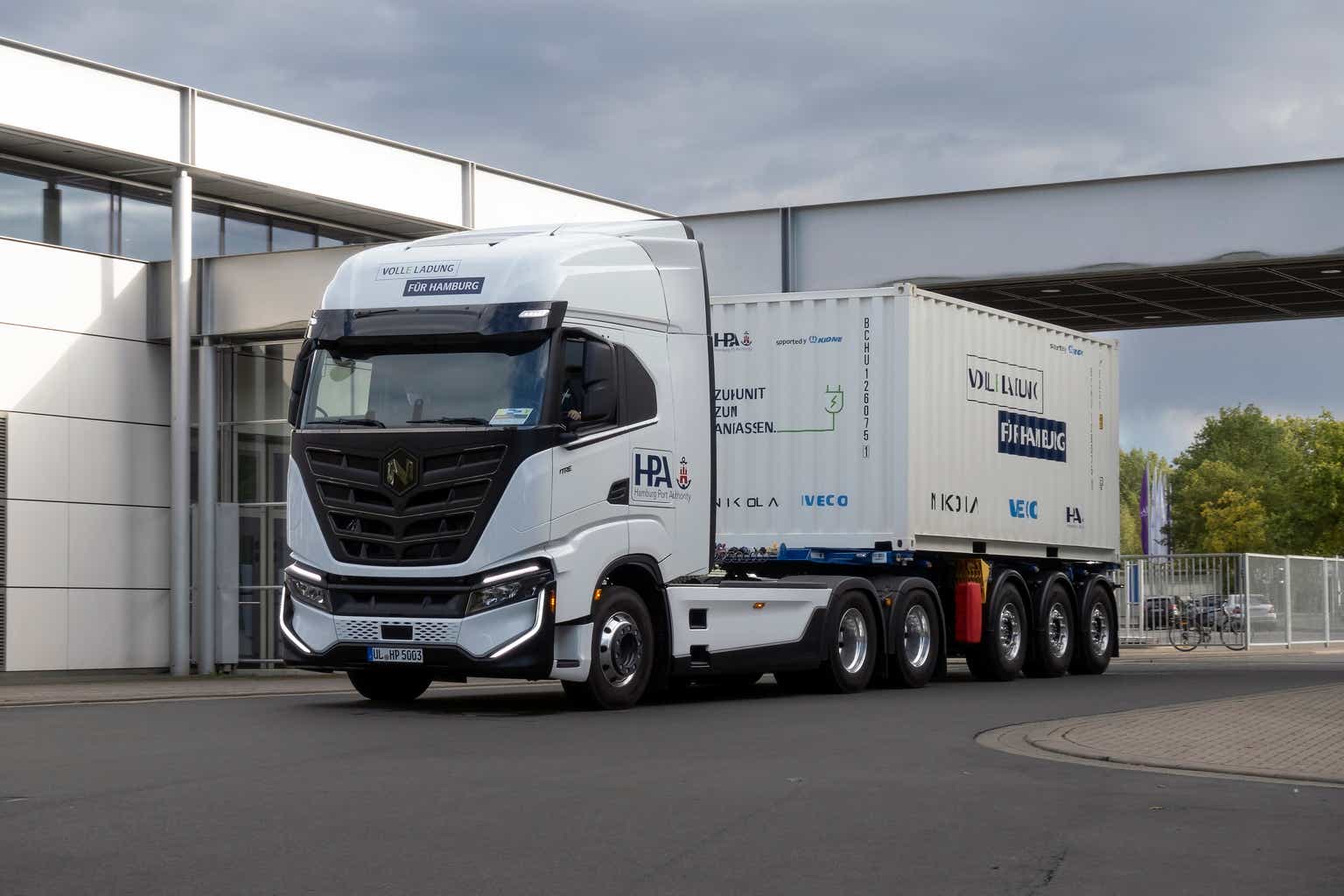
As the Nikola Tre BEV truck disaster continues to unfold, the company has determined that all 200+ affected trucks need to be returned to its Coolidge manufacturing facility “to make the necessary repairs and monitor the vehicles to ensure safety” as stated by management during last month’s Fireside chat.
As you’re all aware, we’ve had several thermal incidents with our battery electric trucks that are running on battery packs received from Romeo Power. (…)
One issue that was identified is a coolant leak, which involves the coolant manifold and related coolant lines. Each battery electric truck has nine battery packs, and each pack has two coolant loops. As part of the repair, the coolant lines that connect to the manifolds in each pack will be replaced. Once the pack is open, we will inspect all the modules to ensure integrity. Module components and potentially the entire module may need to be replaced on a case by pace basis, if any additional issues are discovered. Our team is working tirelessly with our suppliers to obtain the appropriate parts. All fixes are and will undergo thorough validation testing prior to release. Time lines and costs will be relayed as soon as possible, and our main priority is to ensure customer safety and satisfaction.
For my part, I wouldn’t be surprised to see the all-in average recall cost per truck exceeding $50,000 thus resulting in $10+ million in one-time expenses. Not surprisingly, Nikola has paused deliveries of its BEV trucks until the completion of the recall.
On September 28, the company celebrated the commercial launch of its Nikola Tre FCEV truck but very similar to the BEV truck, sales are likely to be hampered by an ongoing lack of fueling infrastructure as very much evidenced by the fact that the company only received slightly more than 200 non-binding orders for the FCEV truck to date.
To put things into perspective: The Coolidge facility has a current production capacity of 2,400 trucks per year.
While the company is planning to deploy a number of mobile hydrogen fuelers “along some of the most highly traveled trucking corridors in California” and recently secured a $41.9 million grant under the Trade Corridor Enhancement Program (“TCEP”) to build six heavy-duty hydrogen refueling stations across Southern California, I do not expect these moves to attract a sufficient number of customers to Nikola’s FCEV truck offering in the near- to medium-term.
Nikola Corporation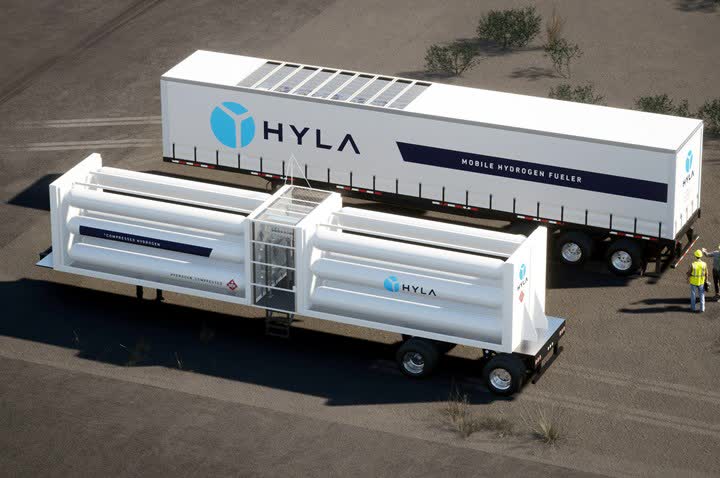
According to my estimates, Nikola has raised at least $350 million in cash since the end of the last quarter, more than sufficient to cover the company’s projected H2 cash usage of $220 million but still well short of the $600 million allegedly required to fully fund the revised business model.
However, considering the BEV truck recall and resulting pause in deliveries, I would expect the company to reduce its full-year outlook for truck sales and revenues even further in the upcoming Q3 earnings release on November 2.
Bottom Line
While the company’s operating performance remains impacted by the BEV truck disaster, dilution for common shareholders is likely to continue unabatedly.
Since the end of Q2, outstanding shares have increased by at least 26% and this number does neither include potential additional sales under the company’s $600 million equity distribution agreement with Citigroup (C) nor likely conversions of the September notes.
Quite frankly, I wouldn’t be surprised to see the number of outstanding shares disclosed in the company’s upcoming 10-Q in early November being closer to 1.1 billion.
With up to $160 million in additional convertible notes likely to be issued to 3i over the next couple of months and ongoing open market sales under the equity distribution agreement, I would expect Nikola’s stock price to remain under pressure for the time being.
Considering the likelihood of another guidance revision in early November as well as the massive overhang from convertible debt issuances and open market sales, investors should consider selling existing positions and moving on.
Risks
Shares have been subject to a number of violent momentum rallies in recent months, with traders apparently using any temporary selling pressure relief to move the stock.
Should the company for some reason pause its open market sales and abstain from issuing additional convertible notes, another momentum run might be in the cards.
Read the full article here

