


Unlock the Editor’s Digest for free
Roula Khalaf, Editor of the FT, selects her favourite stories in this weekly newsletter.
Tether’s ability to maintain its peg to the US dollar has been called into question by S&P Global Ratings, which downgraded the stablecoin operator’s reserves to its lowest measure due to rising exposure to high-risk assets.
In a note on Wednesday, the rating agency downgraded its assessment of Tether’s assets to “weak” from “constrained”. It also flagged “an increase in high-risk assets” backing the stablecoin, with corporate bonds, precious metals, bitcoin and secured loans accounting for 24 per cent of total reserves at the end of September, up from 17 per cent a year ago.
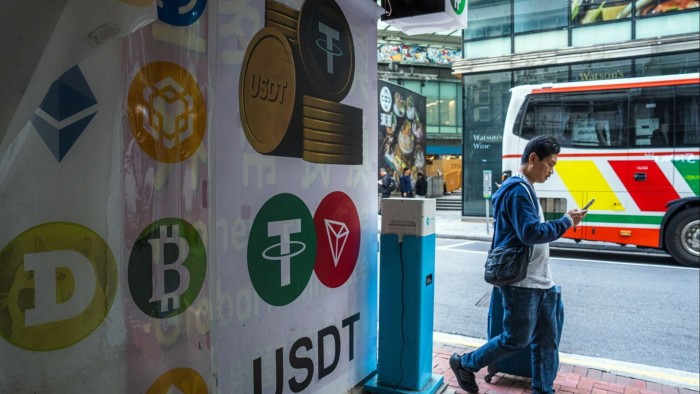
Tether runs USDT — by far the world’s biggest stablecoin with about $184bn in circulation — a form of digital cash outside the banking system that is pegged to the dollar and mostly backed by high-quality securities such as US Treasuries.
The rating agency warned that the company has “limited transparency on reserve management and risk appetite, lack of a robust regulatory framework [and] no asset segregation to protect against the issuer’s insolvency”.
It also cited Tether’s lack of disclosures regarding its custodians, bank account providers and counterparties, as well as how it decides which risky assets to buy and what to do if the value of some assets drops significantly.
“A decline in the price of bitcoin or the value of other higher-risk assets, could therefore reduce collateral coverage and result in USDT becoming under-collateralised,” S&P analysts wrote. They added that the rising share of risky assets exposed the token’s reserves “to greater market fluctuations”.
US commerce secretary Howard Lutnick has previously said Cantor Fitzgerald, of which he was formerly chief executive, custodies Tether’s Treasuries, but S&P said “reports on the reserve still do not disclose information on the custodians, counterparties or bank account providers of the assets.”
Tether said it “strongly disagrees with the characterisation presented in the report” and said the stablecoin “has consistently maintained full resilience through banking crises, exchange failures, liquidity shocks and extreme market volatility.”
Tether added that it “leads the industry in transparent reserve reporting, publishing real-time data and quarterly independent attestations since 2021 — standards that exceed those of many regulated financial institutions”.
In 2022 Tether failed to maintain its peg with the dollar after coming under heavy selling pressure. In an interview at the time, Paolo Ardoino, now the company’s CEO, declined to provide details about the hoard of government bonds kept in reserve, as he did not “want to give our secret sauce”.
The broader crypto market has tumbled in recent weeks as investors concerned about tech stock valuations and the trajectory of US interest rates have trimmed their positions in risky assets.
Bitcoin has fallen about 30 per cent since its latest peak in early October, leaving the value of the digital token down 6 per cent since the start of the year, despite the Trump administration’s crypto-friendly policies.
Tether is one of the world’s biggest buyers of US Treasuries, which comprise 75 per cent of its collateral, a decrease from 81 per cent, according to the rating agency’s last review. It made $10.1bn in net profits this year to September. The company largely makes money by pocketing the interest that it earns from holding Treasuries.
In September the company entered into talks to raise as much as $20bn in a private funding round that would value the El Salvador-based group at half a trillion dollars.
Since being founded 11 years ago, Tether has been dogged by concerns over its poor disclosures and a lack of transparency. Ardoino has previously said that hiring an auditor was a top priority, but the company still puts out attestations — reviewed by BDO Italia — instead of full audits of the reserves backing its stablecoin.
Read the full article here

