


Unlock the Editor’s Digest for free
Roula Khalaf, Editor of the FT, selects her favourite stories in this weekly newsletter.
Back in the 1990s, when I was a student at a state university in Iran, sneaking a lipstick into class and daring to wear it felt like a small revolution: thrilling, defiant and absurdly exhilarating. It meant the female security guards stationed at the entrance, who searched our bodies and bags in a cramped back room, hadn’t found the cosmetics we smuggled in with daily creativity. We were covered from head to toe, but even then they couldn’t fully tame us. Our fringes and front strands of hair slipped free no matter how often guards patrolled the hallways to enforce the dress code.
The risks were real. Too much rebellion could jeopardise your education. One of my high-school classmates learned this cruelly when she was expelled for disobedience, which included something as innocent as carrying a love letter in her bag. Another was sent home to change her white socks under long black trousers because, the principal said, men in the street could be attracted to the colour.
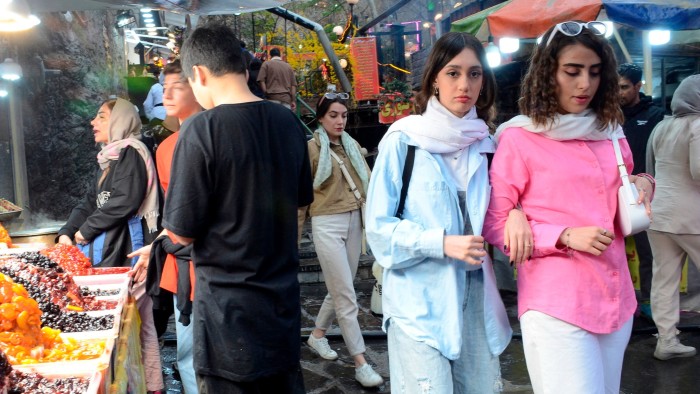
Today, such restrictions are mind-blowing to recall. Women walk freely in the streets without Islamic hijab. A young generation that sees no future amid economic hardship and international isolation refuses to surrender social freedoms, such as how to dress and what kinds of fun to have.
What is happening in Tehran surprises its older residents daily. We check the dateline of viral videos to see if they show the expatriate community in Dubai or Los Angeles, only to see that these events are unfolding here at home. Street music events now happen openly, and women sing solo. Art and entertainment events fill middle-class neighbourhoods, shopping malls, coffee shops and concert halls.
What is equally astonishing is how quickly many have forgotten what has been endured to reach this moment.
Some Iranians argue that today’s limited social freedoms have been granted by the Islamic republic as gestures to “normalise” its relationship with society and deter foreign threats. These concessions, they say, will ensure the regime’s survival. In private circles, among families and friends, they argue that these gestures should not be accepted, insisting that people must reject such hypocrisy if they want the Islamic republic to collapse.
Others argue that we cannot wait for ever. “This is like telling me: waste the rest of your life and wait for the regime to collapse. What if it doesn’t?” a filmmaker told me.
But these freedoms were not freely given. They have been taken through decades of resistance. They were paid for with courage, defiance and, at times, with lives — most tragically during the 2022 Woman, Life, Freedom movement, when more than 300 people were killed, according to Amnesty International.
Amid the country’s ongoing struggle between tradition and modernity, a modern generation has emerged in Iran that listens to no one. Not to the regime’s threats, nor to the opposition’s warnings that enjoying life is a trap set by the religious leaders. They follow their own instincts. They refuse to take orders from anyone: left or right, pro- or anti-regime. They don’t wish to identify as a “burnt generation” like those that came before them.
Even if occasional crackdowns persist, the momentum feels irreversible. Bars — real bars — have quietly emerged, serving a surprising variety of alcoholic drinks from whisky to cocktails and gin and tonic. The judiciary and police have vowed to shut down any venue that serves alcohol but demand keeps outpacing their threats. And now, authorities warn they will act against “half-naked” women, no longer daring to frame the issue as enforcing hijab.
Despite its problems, Tehran remains vibrant. Iranians have heard such warnings countless times before, from seizures of DVDs and satellite dishes to, in effect, bans on women motorcyclists. This month, thousands of men and women participated in the country’s largest marathon on the southern island of Kish, sparking outrage among hardliners.
The youth behave as if they neither follow the news nor hear the threats. Instead, it is the officials who are following their lead. For a generation not connected to any ideology but to the world, their demand is very simple: to live a normal life.
Read the full article here

