


Unlock the White House Watch newsletter for free
Your guide to what the 2024 US election means for Washington and the world
The writer was permanent secretary of the Department for International Development from 2008-2011 and is leading a review of international development for the UK government
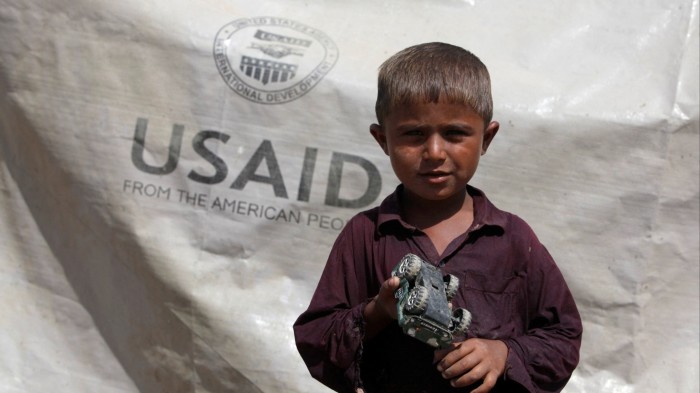
The wanton destruction of the US Agency for International Development by the Trump administration is misguided, shortsighted and will have devastating consequences for millions of poor people around the world. It is a more extreme version of the decision taken by Boris Johnson in 2020 to merge the UK’s Department for International Development with the Foreign and Commonwealth Office while imposing massive cuts. But it will result in even worse outcomes — reputational damage, the loss of American soft power, and the destruction of capability to address global problems that inevitably spill over on to national shores.
Other than urging the Trump administration to rethink its approach, what should the rest of the world do in response? In the near term, the most pressing issue is to save the lives now at risk given the US represents 40 per cent of the world’s humanitarian spending. Such spending accounted for around 10 per cent of total aid in 2012. Global conflict means that by 2023 this figure had risen to 25 per cent.
Even without the destructive policies of the Trump administration, the two other pillars of international aid — support for poverty reduction and financing of global public goods — were ripe for a rethink. Developing countries have long complained that the current system is not responsive to their needs and does not give them adequate voice. And among traditional aid donors, fiscal constraints and weakening support for international solidarity have meant aid budgets are under pressure.
But global flows to developing countries are at an all-time high. New donors such as China, India, Russia, Saudi Arabia, Turkey and the United Arab Emirates are becoming increasingly important players, often with clear geostrategic or commercial objectives.
In addition to new sources of aid, what it is being spent on is changing. As well as rising expenditure on humanitarian crises, spending on global issues like climate and refugee costs has almost doubled — increasing from about 37 per cent of the total to 60 per cent between 2017-2021. As a result, aid for poverty reduction at the country level is increasingly being squeezed.
What could a better system of international development look like? First, we need radical reform of the humanitarian system to make it more efficient and responsive, while bringing in new donors to provide stable and predictive funding. More investment in preventing conflicts and crises in the first place would be far more cost effective than trying to respond after people’s lives and livelihoods have been destroyed.
Second, reducing poverty at the country level may be most efficiently achieved through multilateral institutions which can provide loans on favourable terms at scale. Of course, bilateral donors will always have partnerships with key countries. But the heavy lifting on financing the UN’s sustainable development goals might best be delivered through development banks which have balance sheets they can leverage and therefore provide donors with more bang for their buck. That approach would also help assuage domestic audiences who are reluctant to finance public services abroad when those at home are stretched.
The third pillar of the system — global public goods — has grown rapidly over the past decade, in part because there is political support for fighting climate change and pandemics in many countries and because there is private sector appetite to invest. This is welcome, but what we currently have — for example, over 80 different funds to address climate change, all of which are too small to move the dial — is not a system. Now would be an opportune moment to radically reform climate finance to get greater efficiency and scale. It would also be a good time to acknowledge that helping developing countries adapt to climate change — whether that is flooding, changing weather patterns, the need for new crops and energy sources or managing adverse effects on health — is a core development challenge and merits additional support for low income countries.
The crisis of international aid in the US should be a clarion call for the rest of the world. Important new thinking is starting and needs to continue, with or without the American government, on a new development architecture that brings together all stakeholders, mobilises new sources of finance and rationalises and reforms existing institutions. Maybe out of the ashes of the Trump administration’s slash and burn policies can rise the phoenix of a new consensus on international development. One that is fitter, fairer and more effective.
Read the full article here

