


Unlock the Editor’s Digest for free
Roula Khalaf, Editor of the FT, selects her favourite stories in this weekly newsletter.
The writer is director of the US Centers for Disease Control
A new administration and a new Congress will have new priorities for public health in America. That’s to be expected. But when it comes to the US Centers for Disease Control and Prevention, which I’ve been privileged to lead, it is critical that changes be based on the agency’s current reality, not on outdated criticisms or partisan misimpressions.
More broadly, it is vital that changes to US public health policy continue to prioritise national security and preparedness. This is central to our ongoing ability to protect the health and wellbeing of the American people and the US economy.
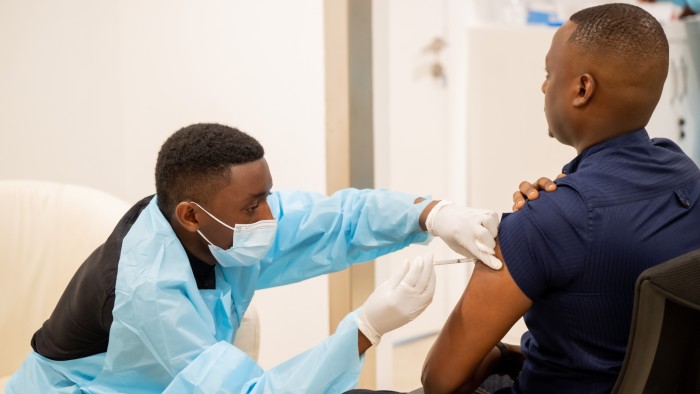
People who care about public health in America have reason for concern. Vast funding cuts for the CDC were proposed last year by the House of Representatives, while the latest House budget eliminates all work on reducing overdose deaths and on suicide prevention. It also drains resources for the CDC’s global health work, which has been crucial in containing outbreaks of infections like Marburg, a virus similar to Ebola, in Rwanda. Such cuts would rob the agency of the ability to stop viruses before they reach our own shores.
In addition to the budget threat, there are voices in Washington now suggesting the CDC be broken apart, separating infectious disease work from non-infectious. Others argue the agency should focus on chronic disease instead of emerging infectious disease threats, like avian flu. Those cuts would take away crucial resources from CDC and by extension state and local health departments, which currently receive four out of every five of CDC’s domestic dollars.
Many of these ideas seem rooted in the assumption that the CDC isn’t up to the job of protecting the health of America. However, it would be a mistake to make changes based on outdated pandemic-era frustrations. Yes, the CDC could have done better during the pandemic response. But the agency took responsibility for those shortcomings and has changed. We listened, we learned and we took action.
To understand what’s now at risk, it’s important to understand the progress we’ve made. In the wake of Covid, we knew the agency had significant work to do. It was clear that improvements were needed in three major areas: strengthening our ability to detect new threats; modernising our data infrastructure; and changing the way we communicate with the public.
First, in order to better detect emerging health threats, we have developed new ways to identify and understand what is making Americans sick. During the pandemic we saw how real-time, visually accessible and efficient data systems were essential to tracking and controlling health threats. New visual tools — such as the HeatRisk Dashboard and the Respiratory Illnesses Data Channel — help officials and communities to take action to protect community health.
We’ve also dramatically improved how we communicate so that the public understand, trust and act upon our recommendations. We’ve become faster in putting out new data and issuing guidance, and have made a concerted effort to break down scientific jargon and speak in simple, digestible language. And we’ve overhauled our website, reducing content by more than 60 per cent so it’s easier for people to find the health information they need when they need it.
While the work is not finished, today the CDC is more prepared, efficient and effective. We have laid the foundations needed to keep Americans as healthy as possible. And there is now momentum that can power even greater progress — if we keep building on the changes we’ve already made.
Take opioid overdoses — a top priority of the CDC, given that they killed around 100,000 people in 2023. According to the most recent data, fatal overdoses decreased by nearly 17 per cent from 2023 to 2024, continuing a downward trend that has been fuelled by investments in communities across the US in strategies that we know work.
This is not the time to roll back such progress, but to build on it — to continue investing in a stronger CDC rather than endangering it. Further changes need to be made with a scalpel, not an axe. If our work to treat and prevent diseases stagnates or is forced into reverse, and if we fail to continue to invest in modernising our data and strengthening our partnerships, America — and Americans — will be less safe.
In an emergency, we are forced to rely on the public health system that we have at the time the threat emerges. But today, we are closer than ever to creating the public health system we need — one that will shield us not just from current emergencies, but from future ones as well. We must protect the gains we’ve made and invest in resources that will allow us to build on our work. Nothing less than the health of America is at stake.
Read the full article here

