


Unlock the White House Watch newsletter for free
Your guide to what the 2024 US election means for Washington and the world
Every day, the journalist’s worldview clashes with the academic historian’s. Journalists tend to emphasise the role of individuals in making history. Perhaps that’s because no storyteller ever thought, “The thing that would really drive this narrative are some impersonal structural forces.”
The focus on individuals used to be called “Great Man theory”. Its chief proponent, 19th-century historian Thomas Carlyle, wrote, “The history of the world is but the biography of great men”. Diarmaid MacCulloch of Oxford university has proposed removing the sexist and approbatory labels by renaming it “Big Beast history”. But historian Jane Ridley straightforwardly dismisses “Carlyle’s great man theory” as “a piece of romantic claptrap”.
Modern historians tend to be wary of ascribing change to individuals. They are more likely to identify “the fish that changed the world” (to quote the subtitle of Mark Kurlansky’s book Cod) than a human who did. Most historians prefer impersonal structural forces: geography for the French Annales school, economics for Marxists, technology for others, while there’s been a recent surge of interest in climate change and pandemics.
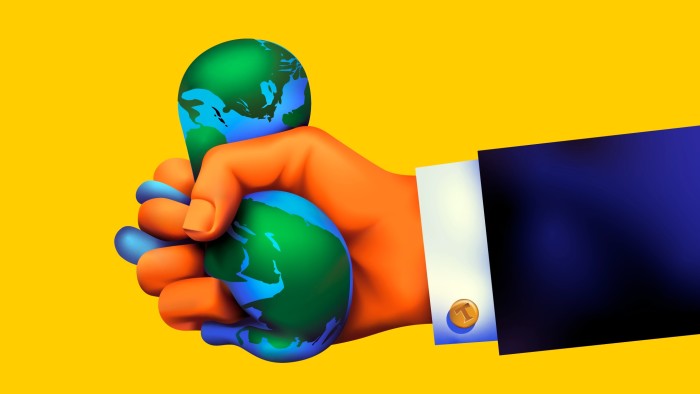
But having said all that, here comes Donald Trump. He provides the biggest test of Great Man theory in our lifetimes. His supporters, enemies and the man himself (“I alone can fix it”) depict him as an agent of historical change. Are we all suffering from Trump Derangement Syndrome? Or will this individual really change history?
A structural-forces historian could build a strong case against Trump’s importance. Sure, the historian would say, individual autocrats can sometimes change history — Vladimir Putin’s personal quirks probably prompted Russia’s invasion of Ukraine — but not the leader of a democracy of such dispersed power as the US. Trump cannot even appoint his preferred attorney-general.
The historian would emphasise the power of technological change, especially in an era when tech determines how we spend our days and use our minds. (That’s even before AI conquers everything, possibly accelerated by Trump slashing regulations.) Trump’s Maga may matter less than the rival “Maga” of Meta, Amazon, Google and Apple. Trends towards increased racial tolerance, and renewable energy, also run counter to Trumpism.
It’s all true, yet Trump probably has the best shot at changing history of any democratic leader since 1945. First, he runs the most powerful democracy. And, whereas in 2016 he was essentially a corporate raider who had acquired a minority stake in the Republican party, he has now completed his takeover. Trump loyalists will control Congress, the Supreme Court and the upper reaches of the federal bureaucracy.
Trump is probably the second-most powerful person on earth after Xi Jinping, who controls a bigger bureaucracy and understands better how it works. Moreover, Trump aspires to shift the course of history. He differs from previous modern presidents on the rule of law, the legitimacy of elections, global trade, scientific findings, the value of allies and how to treat political opponents.
The question then becomes: how will he wield this power in historically more consequential ways than using the Department of Justice to go after his enemies? The starting point is that his human machinery consists overwhelmingly of the military-security complex. To quote the Congressional Budget Office: “The federal government employs about 2¼ million military personnel (of whom about 1 million are reservists) and about 2¼ million civilian personnel (of whom nearly 60 per cent work for the Departments of Defense, Veterans Affairs, and Homeland Security).”
Trump doesn’t seem keen on sending troops into foreign wars, but he has spoken of using them at home, to attack his opponents or deport immigrants. He could create some kind of militia, staffed by Trumpist officers, which is loyal to him personally. Given improved drone technology, he could also fight foreign wars in which his troops never leave base. And he could change the history of other continents by abandoning Nato or encouraging Israel to broaden its wars.
Then there’s his impact on the culture. He has created a language and worldview that his supporters have adopted, and he seems to want to polarise the US on a neighbourhood level. And since he’s doing all this in English, by now surely the most widely understood language in history, he has unprecedented global cultural reach.
Trump could change the world, even if his biggest effects might be unintentional. We may need to write individuals back into history.
Email Simon at [email protected]
Read the full article here

