


Receive free US & Canadian companies updates
We’ll send you a myFT Daily Digest email rounding up the latest US & Canadian companies news every morning.
The writer is chair of Rockefeller International
As the artificial intelligence wave powers the tech sector higher, giants such as Microsoft and Alphabet are not only gaining dramatically, they are gaining in ways that are changing the arc of technological progress.
Earlier waves of the digital age brought new names to the top of the tech stock charts. But following the crash of 2000, a few huge companies began to entrench themselves, staying on top through the rise of the mobile internet in the 2010s, and flourishing anew in this year’s AI mania. Disruption is fading in the industry where it should be most powerful.
Expanding on historical work by Empirical Research, I looked at previous waves of innovation from the rise of mainframes in the late 1960s to personal computers in the early 1980s, the internet in 2000 and AI this year. Zeroing in on the largest gainers at the peak of each wave revealed that the leaders of the AI wave were older and far more dominant than those of the past.
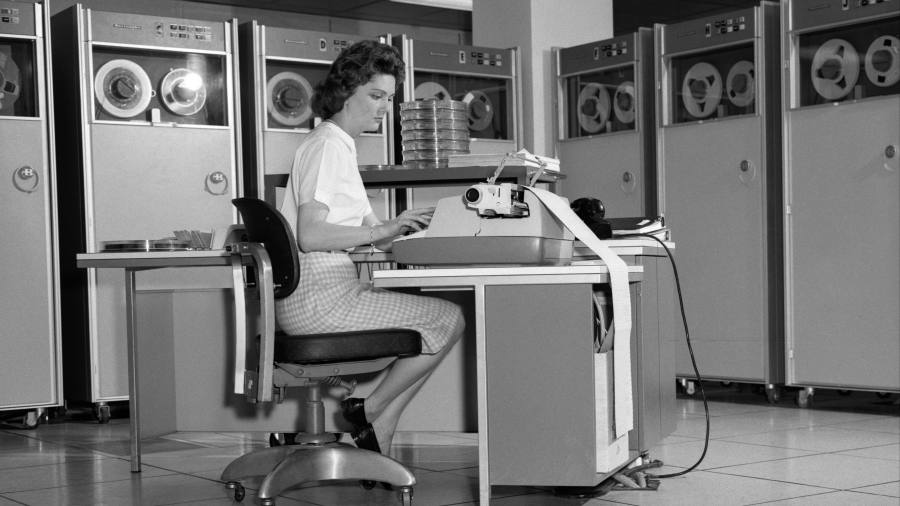
When the mainframe wave peaked in 1969, the tech market had just 25 stocks. The leaders were a mix of old office machine manufacturers such as Burroughs that had diversified into computers, and newcomers like DEC — the Digital Equipment Corporation — which avoided using the word “computers” because it was then seen as a red flag to investors. The average age of the top five companies was almost 40 years.
That dropped to 28 years at the PC peak in 1983, lowered by genuine newcomers such as Apple, which had been founded seven years earlier, and Tandon (eight). It plummeted again to just 12 years at the initial internet peak in 2000, when the oldest of the leading five was 19 (JDS Uniphase) and the youngest was four (Juniper Networks). Until then, from one wave to the next, no stock remained in the top five.
Since the 2000s though, churn has been replaced by a revolving door — the same names trading places at the top. The five largest, hottest names this year include Alphabet and Microsoft, which have launched popular generative AI apps. In there too are Apple and Amazon, which investors assume will do well because developing AI requires huge resources and stores of data.
Rising on optimism over their AI prospects, more than on actual AI revenue, investors are betting that the giants will rule for a long time. The average age of the tech top five is edging back up towards 40, with no newcomers. And their size is unprecedented.
At past peaks, the top five largest tech companies with the greatest price momentum accounted at most for 1.3 per cent of the total value of the S&P 500 index (in 2000). Today the top five are nearing a 20 per cent share — Apple alone is close to 7 per cent. Normally, the bigger a company becomes, the harder it is to grow rapidly. But since late last year, Apple and Microsoft are both up about 50 per cent to a combined value of nearly $5.7tn — more than the entire listed tech sector in 2000, when it had 1,850 companies.
The 10 largest stocks now account for a greater share of the market than at any time since at least the 1970s. Governments see what is happening and are trying to contain it — to no avail.
The key is to promote greater competition and reduce concentration without destroying Big Tech. After all, the giants have made huge investments that are helping to breathe life into AI, and possibly bringing to fruition its promises of greater productivity and prosperity. On that score they look like “good monopolies”, the kind that justify vast profits through contributions to the economy. Big is not by definition bad, if it is focused more on innovation than domination — but which is it now?
Government efforts to regulate the sector seem to have done more to entrench incumbents than allow new competitors to thrive. Rules designed to protect consumer privacy, for example, make it more expensive for tech companies to operate, and give the giants new opportunities to cement their positions through lobbying. In just over a decade, US internet businesses quintupled the dollars spent on lobbying to nearly $100mn. Three big tech companies have risen into the top 10 US corporations by lobbying spend, with Amazon and Meta now in first and second place.
By that measure they look like “bad” monopolies, the kind that dominate through political influence. Either way, the longer monopolies last, the less likely it is that they can be good. No contribution they make to society can compensate for declining competition and extreme concentration, particularly not in an industry that thrives on disruption. The fact that giants are dominating another wave of tech innovation points to deep dysfunction in the system.
Read the full article here

