


America’s large defence groups have for decades relied on international allies to boost the sales of many of their weapons. However, the Trump administration’s wavering commitment towards the Nato alliance has prompted several countries to question their reliance on US armaments — triggering growing alarm among some industry executives.
“I am concerned that pure politics could damage our prospects in future competitions,” said one executive at a leading US contractor.
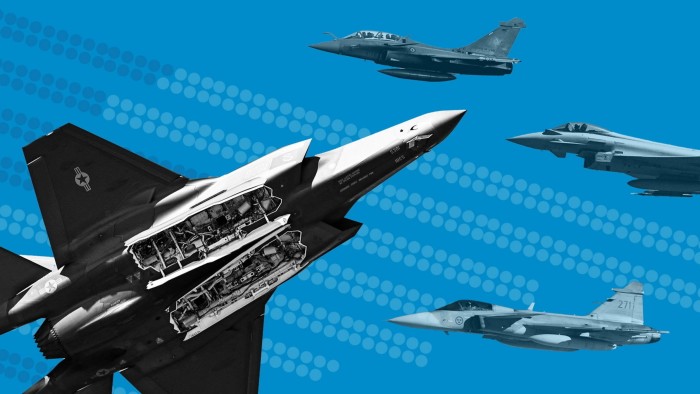
The concerns have put the spotlight on the F-35 fighter, America’s most expensive defence programme and the biggest single revenue generator for defence group Lockheed Martin. Although the stealth fighter is the backbone of modern western air forces, some are worried as to whether the US could immobilise weapon systems with a so-called kill switch.
Trump threatened to inflame tensions further last week, when he suggested selling “toned-down” jets to US allies in the future because “someday, maybe they’re not our allies”. The president was referring to a new generation of advanced fighters, known as the F-47, which are years away from being launched.
What is the F-35?
The F-35 is the world’s only advanced, long-range, stealth fighter. Its stealth technology makes it difficult for enemy radar or infrared sensors to track the aircraft, while its built-in “sensor suite” provides pilots with real-time information to locate enemy forces, jam radars and disrupt attacks.
The fighter is operated by the US as well as 19 allied nations, including some non-Nato members such as Japan. Several countries contribute to the manufacturing of the aircraft.
The UK is the sole level one partner on the programme, with many British components on the aircraft. BAE Systems is a subcontractor to Lockheed, building the rear fuselage for all jets. It is also responsible for some of the electronic warfare systems.
Other partners include Italy and Japan. The aerospace industries of key partners are “embedded into the programme, while many of [their air forces] are already operating the aircraft”, said Robert Stallard, analyst at Vertical Research Partners.
Why are governments concerned?
Although the Pentagon’s Joint Program Office recently denied the existence of a kill switch which could abruptly immobilise the F-35, some governments are reconsidering their options.
Canada and Portugal have recently signalled they are willing to consider alternatives. Although Lisbon has not made a formal commitment to purchase the aircraft, Ottawa had planned to buy 88 F-35s from the US and has funded the purchase of 16 jets.
Canada’s defence minister Bill Blair said in a statement to the Financial Times he had been asked to examine “other alternatives, whether we need all of those fighter jets to be F-35s or if there might be alternatives”, while stressing the government was not ending its contract for the aircraft.
Another vulnerability of the F-35 lies in the reliance on the processing in the US of mission data critical for electronic warfare.
“There is a dependency on the mission data files for a lot of F-35 customers,” said Justin Bronk, an aerospace expert at the Royal United Services Institute in London. While some countries were not reliant on the US, there was a “geopolitical risk” for those that were, he added.
What are the possible alternatives?
No direct alternatives to the F-35 exist, but there are other options, from the pan-European Eurofighter Typhoon to France’s Rafale.
“Realistically, if you are an F-35 customer and you want to stay at the high end of capability then you go for the Eurofighter Typhoon or the Rafale,” said Douglas Barrie, senior fellow for military aerospace at the International Institute for Strategic Studies.
Sweden’s Gripen, he added, was “very capable but had a single engine” unlike the twin-engined Rafale and Eurofighter. “None of these aircraft are [stealthy] and you also don’t have the benefit of operating the same type [of aircraft] as the US,” he added.

Another issue would be how quickly European suppliers could increase manufacturing capacity of their aircraft, said Byron Callan, managing director at research group Capital Alpha Partners. All three fighters — the Typhoon, the Rafale and the Gripen are being produced at “single-digit monthly rates”, he said in a recent note.
Germany last week said it would buy F-35 jets to replace its fleet of nuclear-capable Tornados, which can carry US nuclear weapons in the event of a conflict as part of Nato’s “nuclear-sharing” arrangement.
Michael Schoellhorn, chief executive of Airbus Defence and Space, which builds the Typhoon with European partners, this week said that in his “personal view” it made sense for Germany to stick with the F-35 for the nuclear-sharing element.
“You depend on the US anyway for the bomb so you might as well depend on the rest,” he said while at an Airbus event in Toulouse, although he added there was a “growing place for the Eurofighter”.
How bad is it for Lockheed Martin?
Despite the unease felt by some countries, it would be difficult for nations that fly the F-35 to opt out of future purchases, and especially hard for countries whose defence industries are key partners in the F-35 programme.
Troels Lund Poulsen, Denmark’s defence minister, on Wednesday said the Scandinavian country wanted to buy more F-35s from the US, despite an escalating dispute with Trump over Greenland.
He told Børsen newspaper that Copenhagen needed to strengthen its fleet of fighter jets, and that “it only makes sense” to buy more F-35s beyond the 27 it had ordered. Despite fears the US could disable the planes by stopping the provision of spare parts, Poulsen said Denmark was not large enough to support several different types of fighter jets, and that military independence from the US was an illusion.
Dak Hardwick, vice-president of international affairs at the US Aerospace Industries Association, said it would be difficult to sever the “bonds” between European and American companies “without long-term consequences” given the decades-old interconnectedness of the industrial bases and supply chains.
Lockheed is producing about 155 jets a year and had a backlog of 408 planes at the end of 2024. Earlier this year it estimated “potential opportunities” for domestic and international sales to be as high as 2,300 units. The jet’s pricetag, excluding maintenance and operational costs, ranges from about $80mn to $110mn depending on the variant.
The US Department of Defense’s 2025 request for 68 F-35s suggests the “importance of non-US customers in sustaining the current production rate into the late 2020s-early/mid 2030s”, said Callan of Capital Alpha.
While the US could buy more, Lockheed could also reach sales agreements with India, Saudi Arabia or other Asian and Middle Eastern states, he added.
Lockheed Martin declined to comment for the article ahead of its results.
The defence contractor and the US, said Barrie of the IISS, had been “very successful in Europe, pretty much winning every competition [the F-35] has gone into and you don’t want to see that unravel in any way”.
“Nobody likes to lose a customer. Once you’ve got somebody on the hook you like to keep them there,” he added.
Additional reporting by Richard Milne in Oslo
Read the full article here

