


Since its inception 70 years ago, the Small Business Administration (SBA) has helped millions of small American businesses. It plays an essential role in the U.S. economy, especially during economic crises. With the help of the SBA and others, Black/African American- and Hispanic/Latino women-owned businesses grew stronger coming out of the pandemic, unlike the 2008 financial crisis, according to the Wells Fargo 2023 Impact of Women-Owned Businesses.*
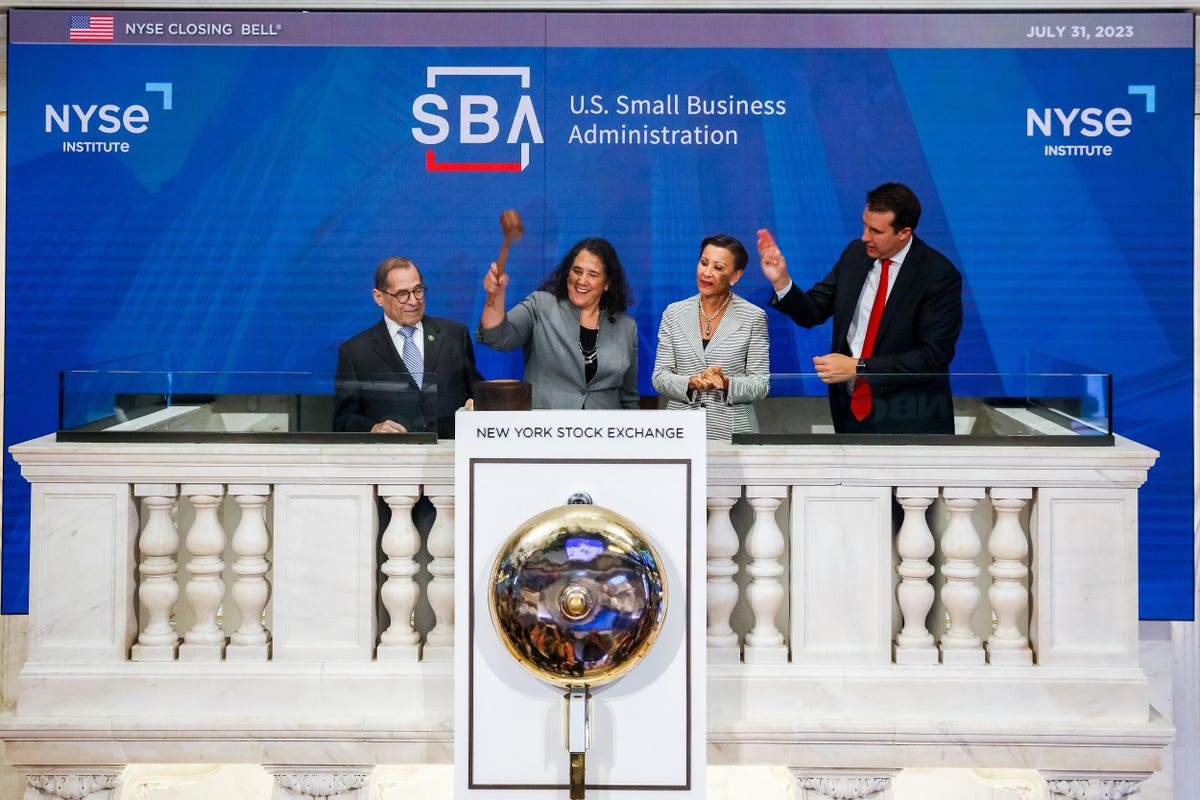
This past Monday, the SBA celebrated its anniversary when Isabella Casillas Guzman, SBA Administrator, rang the New York Stock Exchange (NYSE) closing bell.
But the SBA is about openings, not closings. During President Biden’s first 30 months in office, there has been record job growth and a historic small business boom, with entrepreneurs applying to start 12.2 million new small businesses.
Varied Programs Meet Small Businesses’ Changing Needs
The federal government focuses on small businesses because they:
- Makeup 99.9% of all businesses.
- Employ 46.4% of private sector employees.
- Are responsible for 62.7% of net jobs created.
- Are responsible for driving innovation, U.S. competitiveness, and productivity.
So important are small businesses that President Dwight D. Eisenhower authorized the SBA on July 30, 1953, to ensure they had what they needed to thrive.
“Two-thirds of businesses today are unable to access capital either all or partially of what they truly need to succeed,” said Guzman. “So our goal is to better expand the program to support our small businesses, especially with small-dollar loans where we see women and people of color over-indexed and who are under-invested in historically. We need to reverse those trends.” SBA capital programs have propelled some of the most iconic brands, including Apple, FedEx, Microsoft, Starbucks, and Whole Foods.
A look at some of the SBA’s programs demonstrates the breadth and importance of the agency and its responsiveness. “It’s not just about the loan,” said Guzman. “It’s about making sure that they have the revenue and potential to grow and repay that loan.” As the needs of small businesses and social values changed, so have the services of the SBA. Those changes include:
- Expanding its loan program by addressing long-standing persistent capital access gaps for entrepreneurial rural, veteran, women, and minority-owned businesses. The SBA’s loan programs are designed to provide small businesses access to capital they may not have traditionally obtained.
- Funding technical assistance programs operated by colleges and universities, chambers of commerce, and nonprofits; and government contracting programs, including 1,200 Small Business Development Centers (SBDCs) and 145 Women’s Business Centers (WBCs).
- Starting the Women-Owned Small Business (WOSB) program. The program helps women-owned businesses compete for government contracts.
- Developing programs to help small businesses win government contracts, such as its Mentor-Protege Program and Procurement Technical Assistance Centers.
- Internationalizing its programs and services, such as the SBA’s Export Assistance Centers and the SBA’s Export Loan Program.
- Partnering with private capital providers ensures that loans that seem riskier are made.
These changes have enabled the SBA to remain relevant and to provide valuable services to small businesses … like mine. I went to a WBC in the late ’90s when I started my first company and, as a WOSB, was awarded a federal contract.
During the pandemic, the SBA became even more essential and helped prevent the devastating impact that the 2008 financial crisis made on Black/African American- and Hispanic/Latino women-owned businesses. The Biden-Harris Administration helped ensure that small businesses—especially women and minority-owned businesses—had the resources to survive. These efforts helped to keep businesses open, employees on the payroll, and communities thriving.
These programs included:
- Providing billions of dollars in financial assistance through the Paycheck Protection Program (PPP), Economic Injury Disaster Loan (EIDL), and Restaurant Revitalization Fund.
- Expanding access to capital through mission-driven lenders, such as Community Development Financial Institutions (CDFIs) and Minority Depository Institutions (MDIs).
- Waiving fees for loan programs, such as the SBA’s Surety Bond Guarantee Program and Microloan Program.
- Leveraging technology and streamlining eligibility and fraud detection.
- Increasing the number of WBCs.
Lessons from pandemic relief programs have guided recent improvements to capital access programs. “We want our products to be simple,” said Guzman.
- The SBA is providing additional flexibility in credit criteria for loans under $500,000 to support SBA loans in reaching more credit-worthy small businesses.
- Streamlining lender procedures. The SBA is making it easier to understand who qualifies for an SBA loan is bringing eligibility determination in-house through technology upgrades.
- Increasing the distribution of SBA loans by broadening the network of lenders.
Despite The Pandemic, Women of Color (WOC) Make Progress
Economic shocks disproportionately impact Black/African American- and Hispanic/Latino women-owned businesses because these enterprises tend to be very small and have fewer cash reserves, and less access to capital. This was true for the 2008 financial crisis. Many minority and women-owned businesses never recovered from the impact of that economic downturn.
Not so after the pandemic.
Due to the numerous government, corporate, and philanthropies providing funding during the pandemic, Black/African American- and Hispanic/Latino-owned businesses were not as hard-hit by the economic crisis created by COVID-19 as the financial crisis. Major retailers boosted Black/African American women-owned businesses by offering training, mentorship programs, and financial support. The Buy Black movement gained momentum.
These interventions worked, and by 2023, average revenues for Black/African American- and Hispanic/Latino-owned businesses had grown from 2019 levels by 32.7% and 17.1%, respectively. These are highlights from the 2023 Impact of Women-Owned Businesses. The full report will be released at Women Impacting Public Policy Summit at the end of November.
How have you taken advantage of what the SBA offers?
Read the full article here

