


Unlock the Editor’s Digest for free
Roula Khalaf, Editor of the FT, selects her favourite stories in this weekly newsletter.
During the pandemic, the UK’s former prime minister Boris Johnson suggested that Brits should be more like Germans when it came to illness: “We have a habit of going back to work or going into work when we’re not well,” he complained. Exasperated experts were quick to point out why: the UK’s sick pay policy was miserly by international standards while Germany’s was one of the most generous in the world.
A few years on, the two countries find themselves at an interesting juncture: the UK’s new Labour government intends to increase the generosity of the country’s sick pay policy, while Germany is beginning to worry that its policy is, in fact, too generous by half.
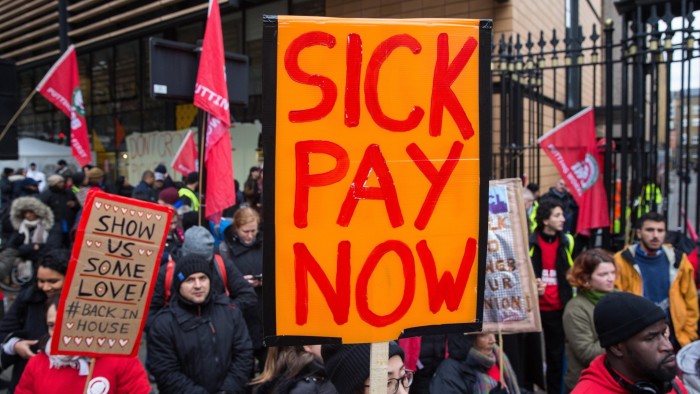
If you are reliant on statutory sick pay in the UK, you currently receive no pay for the first three days you are unwell (although Labour plans to introduce sick pay from day one). You then receive a flat £116.75 per week — just 16 per cent of median weekly earnings for full-time employees. In Germany, you receive 100 per cent of your salary from the first day of illness for up to six weeks.
Is this a luxury Germany can no longer afford? Its sickness absence rates — already high by international standards — appear to have increased sharply, based on data from health insurance companies. International data from the OECD and the World Health Organization, though a little patchy, suggests German workers now take off more than 20 days sick per year. (In contrast, Brits took roughly 6 days in 2022, the latest data available for the UK).
There are a number of explanations for the increase in Germany, including more respiratory illnesses and mental health issues post-pandemic (a factor common to other countries) and a badly overstretched childcare sector which means nurseries can close due to staff illness at short notice, with knock-on effects on parents’ ability to work.
Some employers suspect that a pandemic-era change making it easier to get a sick note from the doctor (you can now get one over the phone) has led to more shirking, too. But Nicolas Ziebarth of the ZEW-Leibniz Centre for European Economic Research, an expert on sick leave policies, told me he believes the biggest factor is an efficient new system which transmits sick notes automatically from doctors to health insurers, rather than relying on paper slips. If that is right, it suggests absences were actually under-recorded before.
Either way, you can see why German employers are unhappy with such high sickness absence rates, especially at a time when some fear the country’s entire economic model is under threat.
One obvious response would be to cut the generosity of the benefit. In Sweden, for example, employees receive 80 per cent of their salary for the first two weeks of sickness. The data suggests this would be effective. Ziebarth says there is a strong correlation between the generosity of a country’s sick pay system and the number of absences per worker.
But there are two dangers. The first is that, by imposing a financial cost to going off sick, you will probably dissuade some shirking but you might also incentivise people to go into work when they are unwell. This carries costs of its own, from slowing the speed of their recovery to spreading infectious illnesses to other workers. In the first year of the pandemic, half of all OECD countries initiated or expanded their sick pay systems, such as by making it payable from day one — an implicit acknowledgment that their policies had not been adequate to incentivise people to stay at home when ill. This is one big reason why the UK government now plans to make sick pay payable from day one.
The “optimal” policy from an economic point of view, then, would set generosity at the level that minimises shirking but also minimises the number of people going to work when sick. But there isn’t enough data on who truly is and isn’t sick in order to know.
There is also the problem of fairness: once you cut sick pay below 100 per cent, you penalise people who are unlucky enough to get sick, and especially those who are chronically sick. In the UK, I wonder if this is one explanation for the rise in the number of people who don’t work and claim health-related benefits instead: if you’re struggling with a long-term condition and it’s very financially punishing to hang on to your job because you lose most of your wage every time you’re too ill to go in, that might be a push to leave employment altogether.
What is the right balance between the British and German systems? Sadly, there are no simple answers to converge on, only trade-offs to weigh.
Read the full article here

